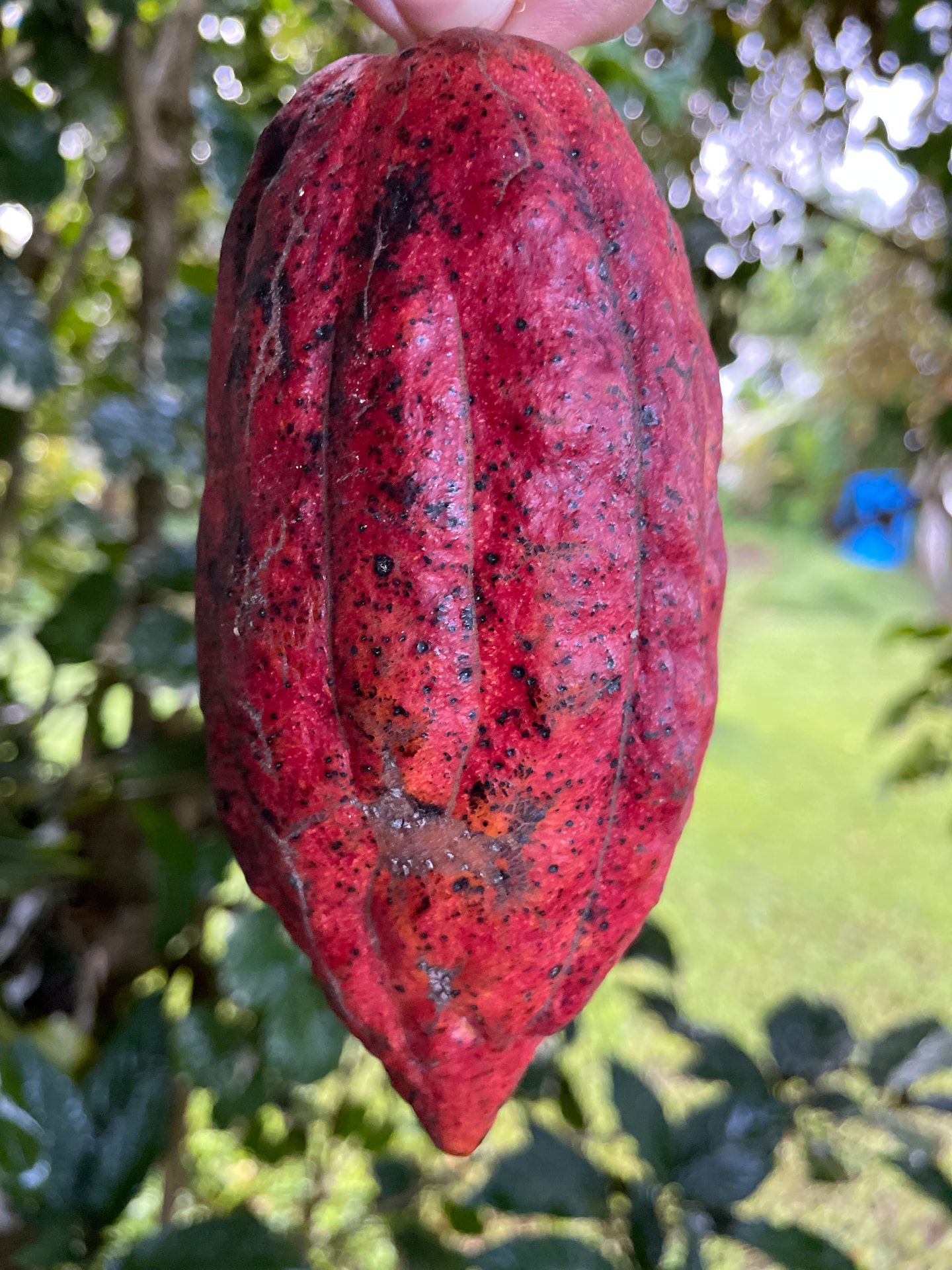
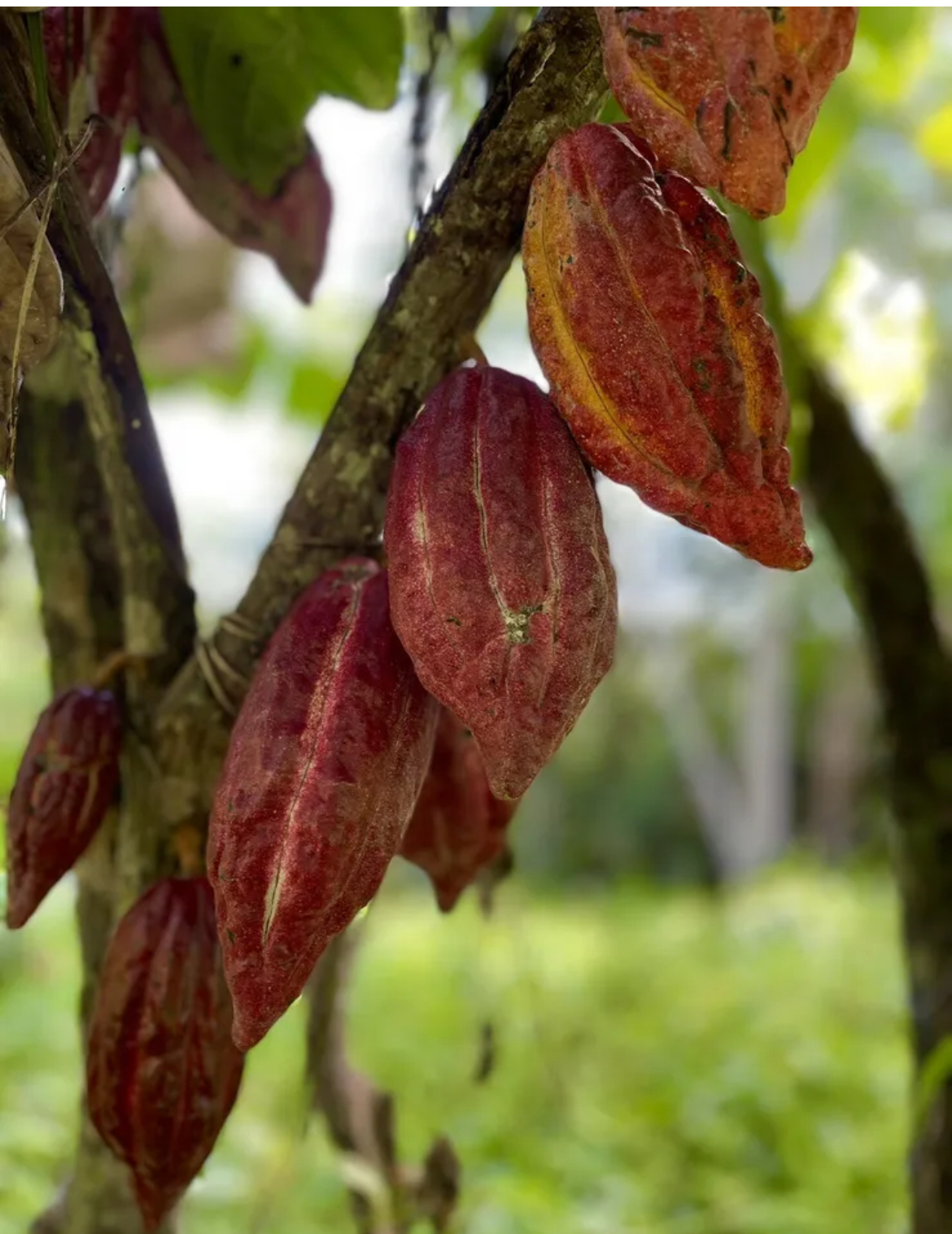
About the speciesABOUT THE SPECIES — Red cacao pods on older woody growth, demonstrating cauliflory. FRUIT AND CACAO PODS ARE NOT INCLUDED.
Tropical Fruit Plants
Red Cacao Live Plant
Theobroma cacao L.
Theobroma cacao • Red Pod Source • Cacao Rojo
$18.89for 1 live Theobroma cacao plant
LIVE CACAO PLANT
FREE SHIPPING
In stock — live plants are carefully prepared and dispatched within 1–2 business days
YOU RECEIVE: 1 LIVE THEOBROMA CACAO PLANT from a RED POD SOURCE, with FREE SHIPPING. Fruit and cacao pods are not included.
1
One live Theobroma cacao plant from a red mature pod source. Explore cacao's cauliflorous tree form with free shipping; fruit, pods and cacao beans are not included.
- Free shipping on this listing
- Secure encrypted checkout
- Carefully packed in Puerto Rico
- Detailed growing guide included
- Scientific name
- Theobroma cacao L.
- Family
- Malvaceae
- Product type
- 1 live cacao plant
- Source
- Red mature cacao pod source
- Genetic identity
- No Criollo, Forastero, Trinitario or named-cultivar claim
- Botanical feature
- Cauliflorous flowering and pod development on mature wood
- Light
- Protected filtered light when young, increased gradually
- Water
- Consistent moisture in a fertile, freely draining root zone
- Climate
- Warm, humid and frost-free
Theobroma cacao is an evergreen tropical tree with one of the plant world's most recognizable fruiting structures. Instead of carrying flowers only at new branch tips, cacao produces them directly on the trunk and established branches.
A mature pod encloses many seeds in pale pulp. Removed from the fruit, those seeds are still far from chocolate: fermentation, drying, roasting and further processing transform cacao beans into familiar cocoa materials.
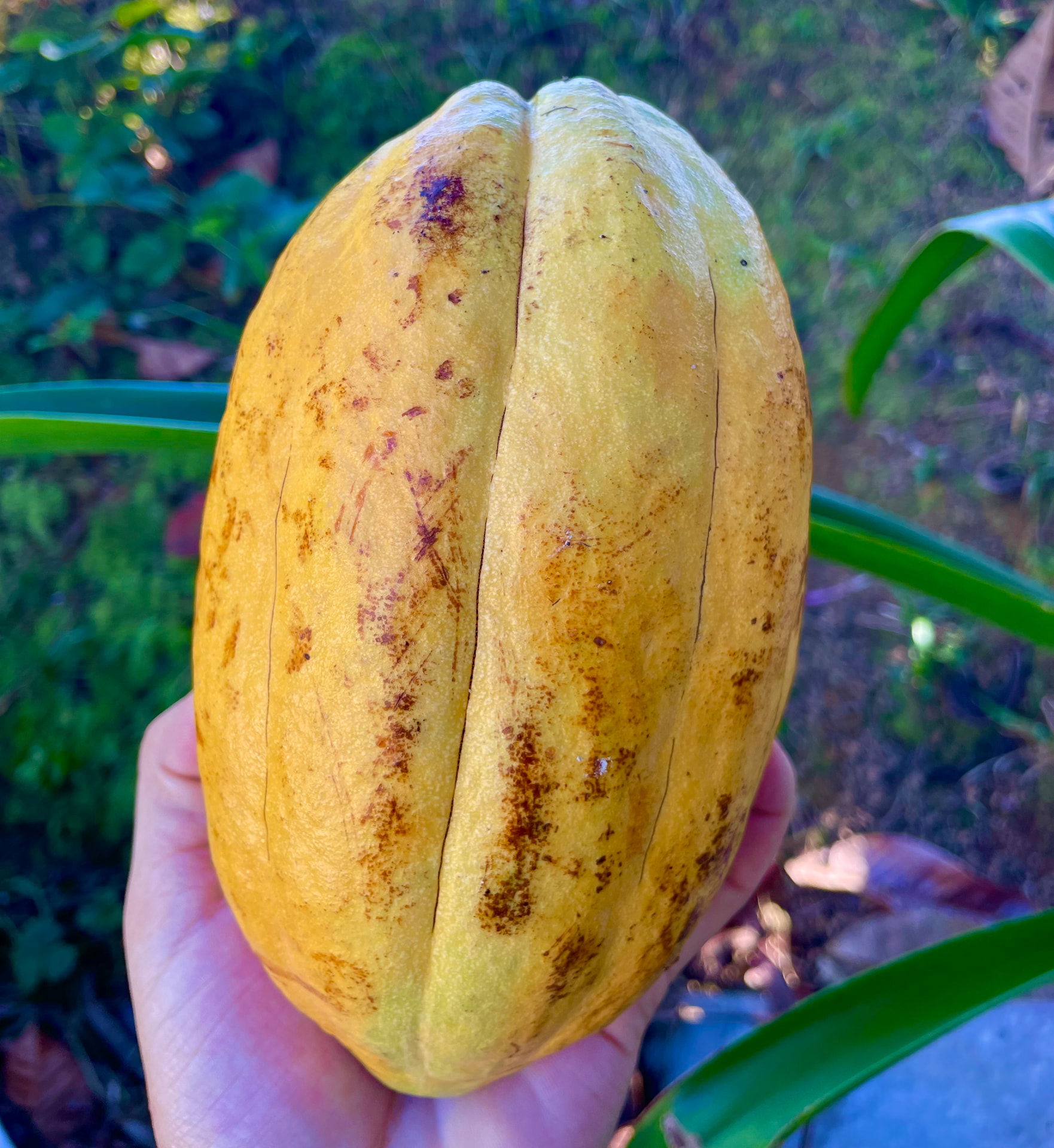
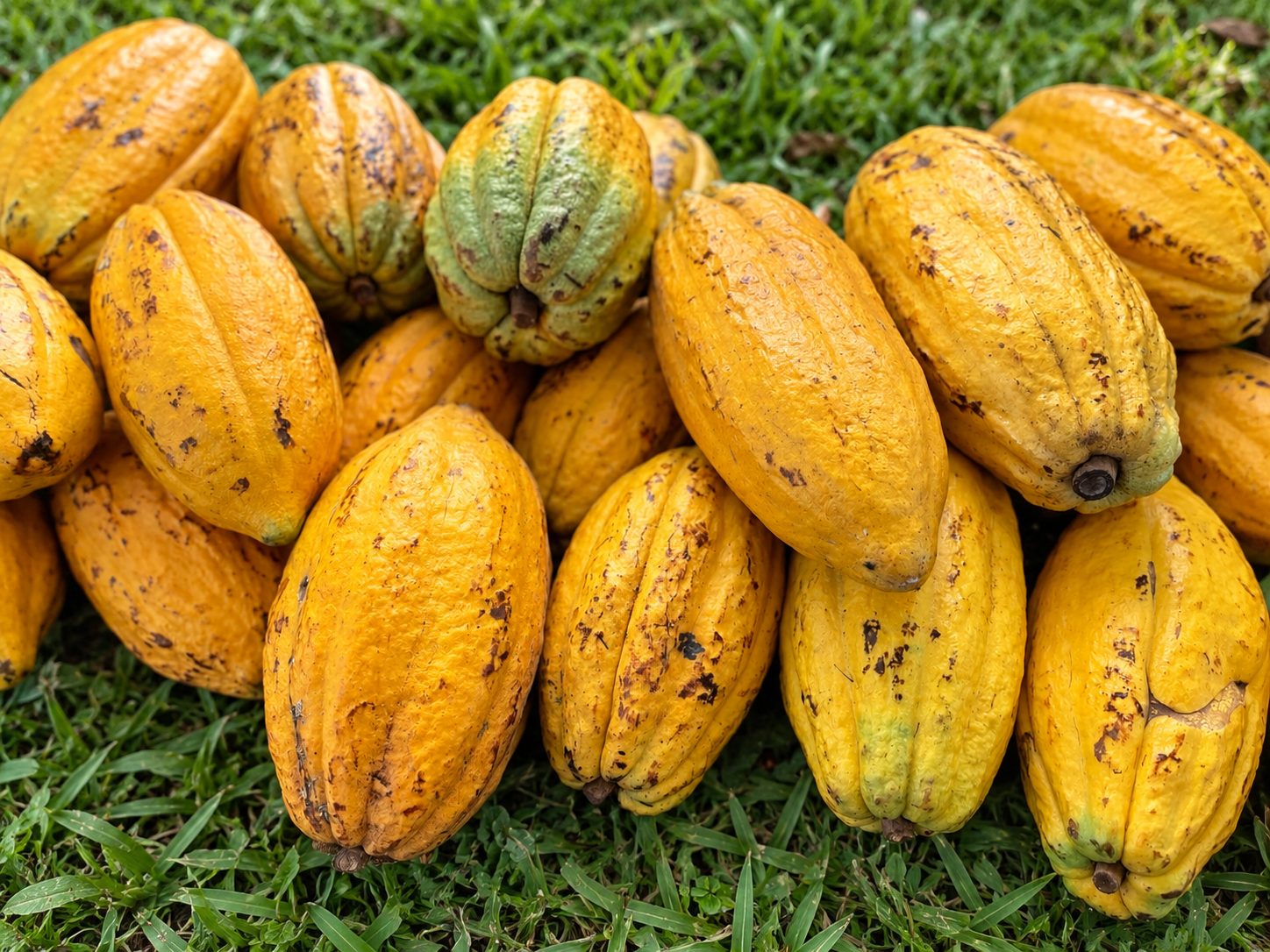
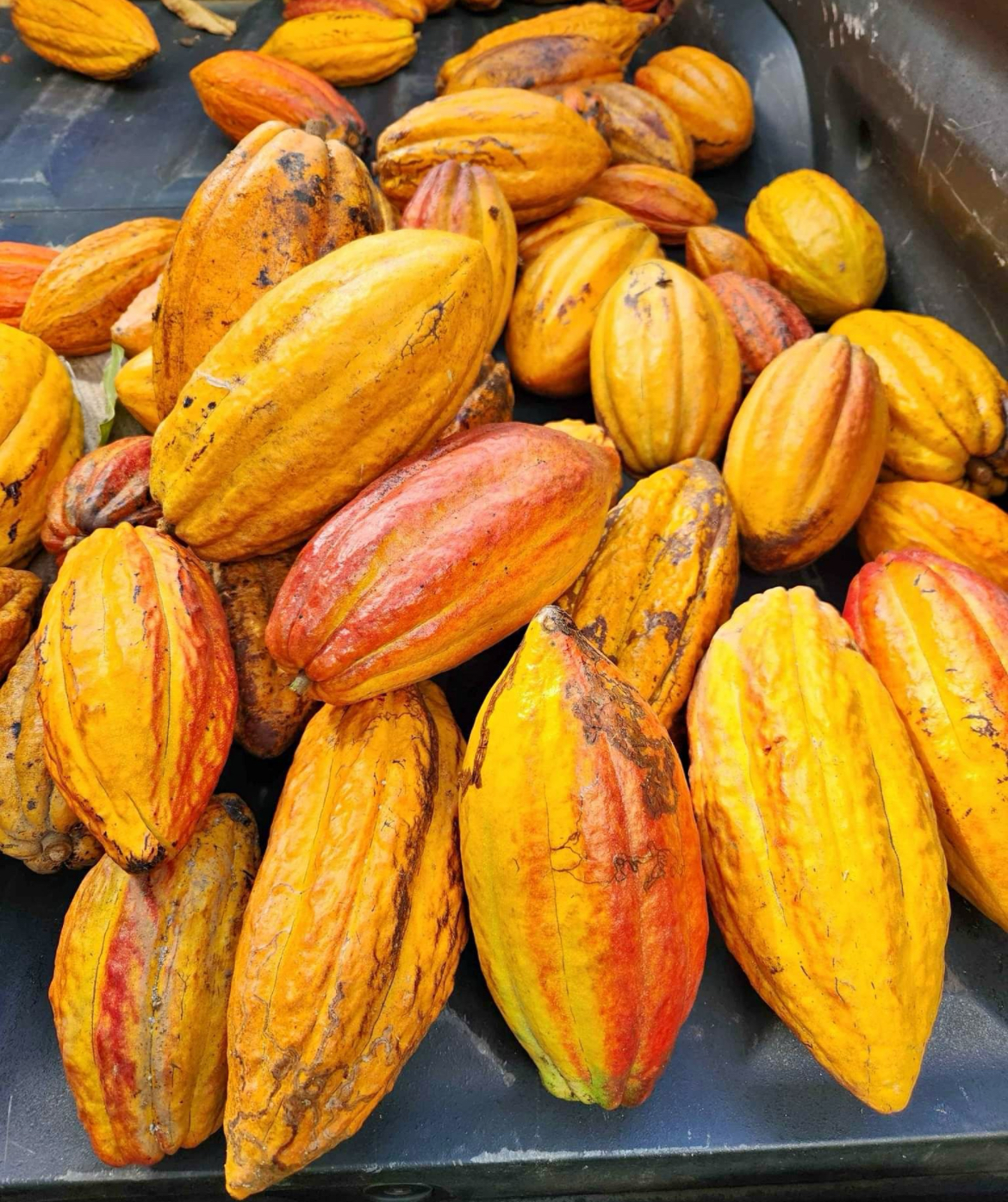
The red pod images document the trees associated with this source. Color is a visible source characteristic, not a reliable shortcut to cultivar or genetic-group identification, and seed-grown offspring vary.
You receive one live plant represented by the seller-supplied photograph. Cacao pods, fruit, loose seeds and processed cacao are not included.
What You Receive
- 1 live Theobroma cacao plant
- Red mature pod source
- The real seller-supplied plant photograph represents the product form
- FREE SHIPPING
- Fruit and cacao pods are not included
YOU RECEIVE: 1 LIVE THEOBROMA CACAO PLANT from a RED POD SOURCE, with FREE SHIPPING. Fruit and cacao pods are not included.
Source Color Is Not a Cultivar Name
The source trees were identified by red mature pod coloration. Red pods occur across cacao diversity and do not prove Criollo, Forastero, Trinitario or another genetic-group identity.
Because this is seed-grown cacao rather than a clone, a future tree is not guaranteed to repeat the parent's exact red shade, pod form, flavor, productivity or timing.
After shipping, protect the young foliage in warm filtered light, inspect moisture before watering and avoid immediate heavy feeding or unnecessary root disturbance.
Arrival pathway
Receiving a Red-Source Cacao Plant
- 1
Release the foliage carefully
Unpack promptly without pulling soft leaves or the growing tip, then inspect the stem, pot and drainage.
- 2
Check rather than assume
Feel the medium. Water deeply and drain only when it is becoming dry; do not compound transit stress with waterlogged roots.
- 3
Choose a protected first position
Use warm, bright filtered light with humidity and gentle airflow, sheltered from direct afternoon sun and cold drafts.
- 4
Watch the existing leaves
Allow leaf posture to stabilize before increasing exposure. Introduce brighter light in small steps instead of one abrupt move.
- 5
Wait before feeding
A shipped plant needs stability more than fertilizer. Begin light feeding only after active growth resumes.
- 6
Transplant on evidence
Repot when roots fill the container or drainage requires it, preserving the root ball and increasing pot size modestly.
Flowers Where Branches Have Already Formed
Cacao's tiny flowers emerge from specialized points on the trunk and older branches. This cauliflorous habit places developing pods against the tree's woody framework rather than among only the newest leaves.
It also changes how a mature cacao tree is read and pruned: established bearing wood has biological importance, while a young plant first needs time to build its trunk and branch structure.
Inside the Cacao Pod
Beneath a mature pod's thick, ribbed wall are many seeds arranged through pale pulp. Fresh seeds are moisture-sensitive living material; harvested beans become useful for cocoa only through an entirely separate postharvest sequence.
Fermentation changes flavor precursors, drying stabilizes the beans, and roasting and processing take them further toward cocoa and chocolate. The live plant offered here is the beginning of the botanical story, not a ready source of chocolate.
Forming a Healthy Tropical Specimen
- Protect broad young leaves from sudden intense sun and drying wind after shipping.
- Maintain stable root-zone moisture while ensuring water can leave the container freely.
- Keep the plant warm; cold and abrupt environmental swings interrupt active tropical growth.
- Move into deeper containers gradually and disturb the root ball as little as practical.
- In frost-free ground, choose a sheltered site with long-term room; in cooler regions, retain container mobility for protection.
From Germinated Seed to Established Plant
This listing begins after the fragile radicle-handling stage. The buyer receives a rooted young cacao plant with living leaves to acclimate and continue growing.
The companion Red Cacao germinated-seed listing offers the earlier propagation pathway. Both point to the established Red Cacao guide, which preserves seed instructions and now includes live-plant receiving care.
Why grow it
A closer look at cacao biology
One established young Theobroma cacao plant
Red mature pod source with no unsupported genetic claim
Cauliflorous flowers and pods on mature woody growth
A living view into the species behind cocoa
Conservative expectations for seed-grown variation
Free shipping and an established cacao guide
You may also like
Related products