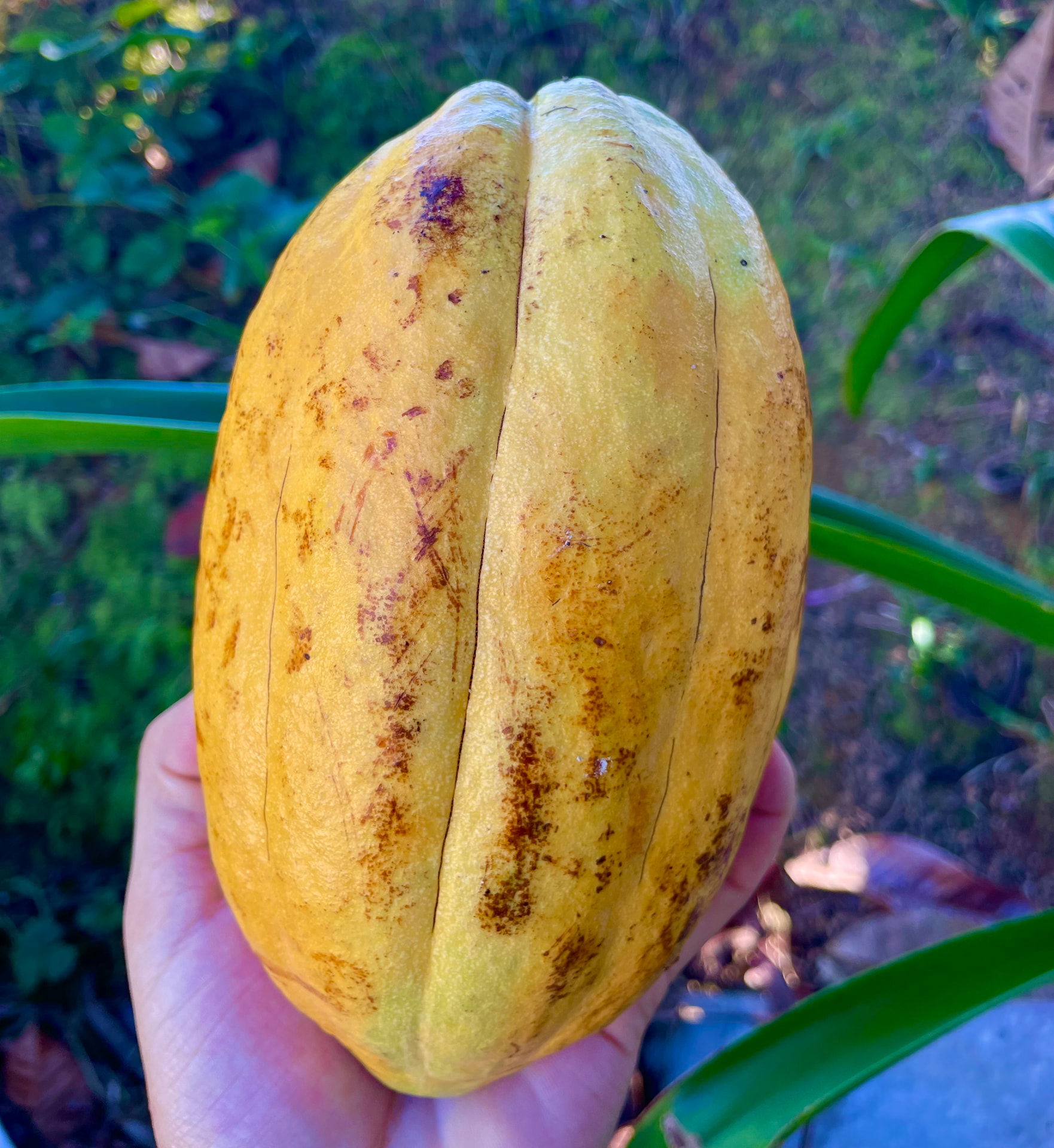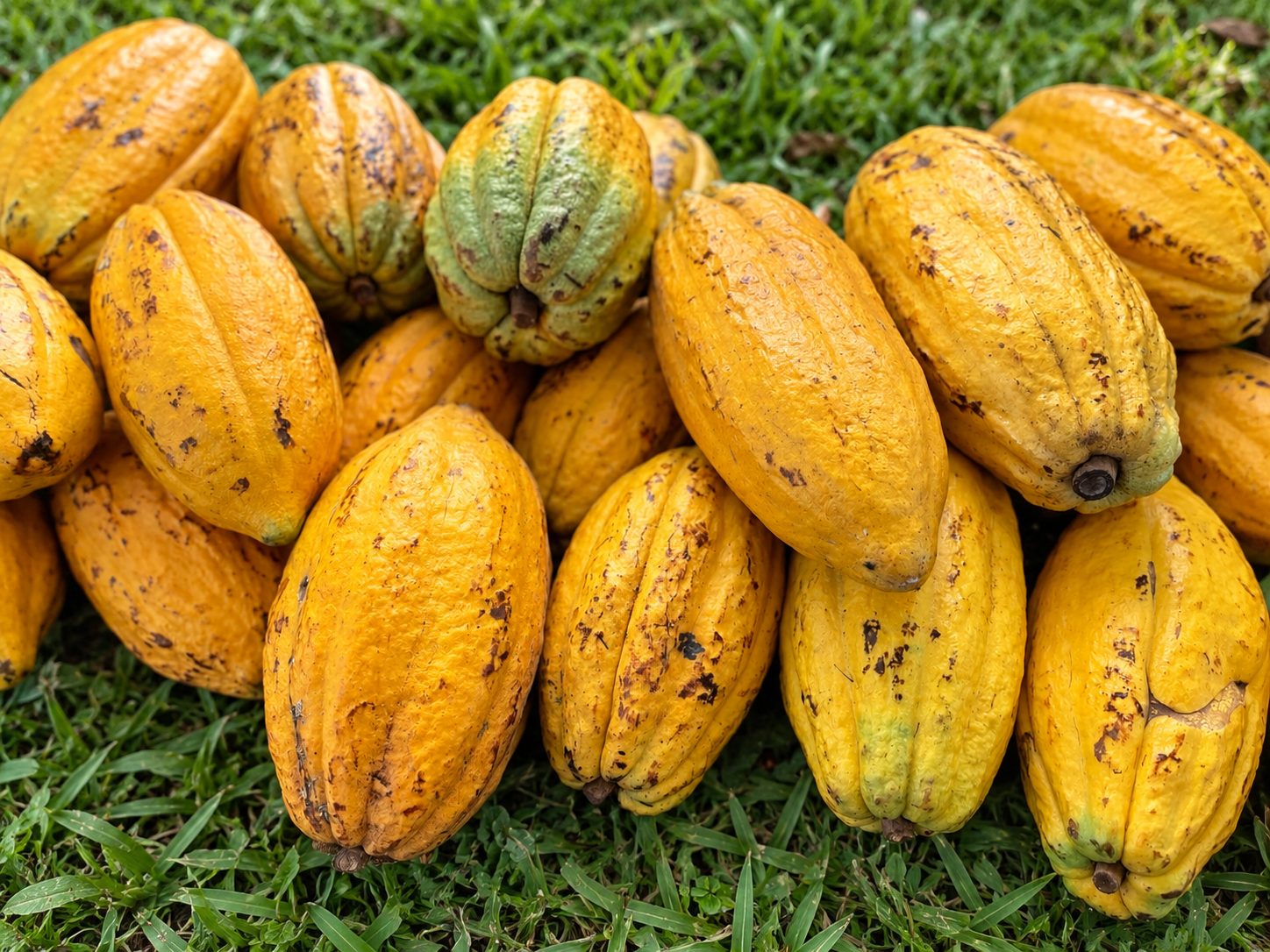
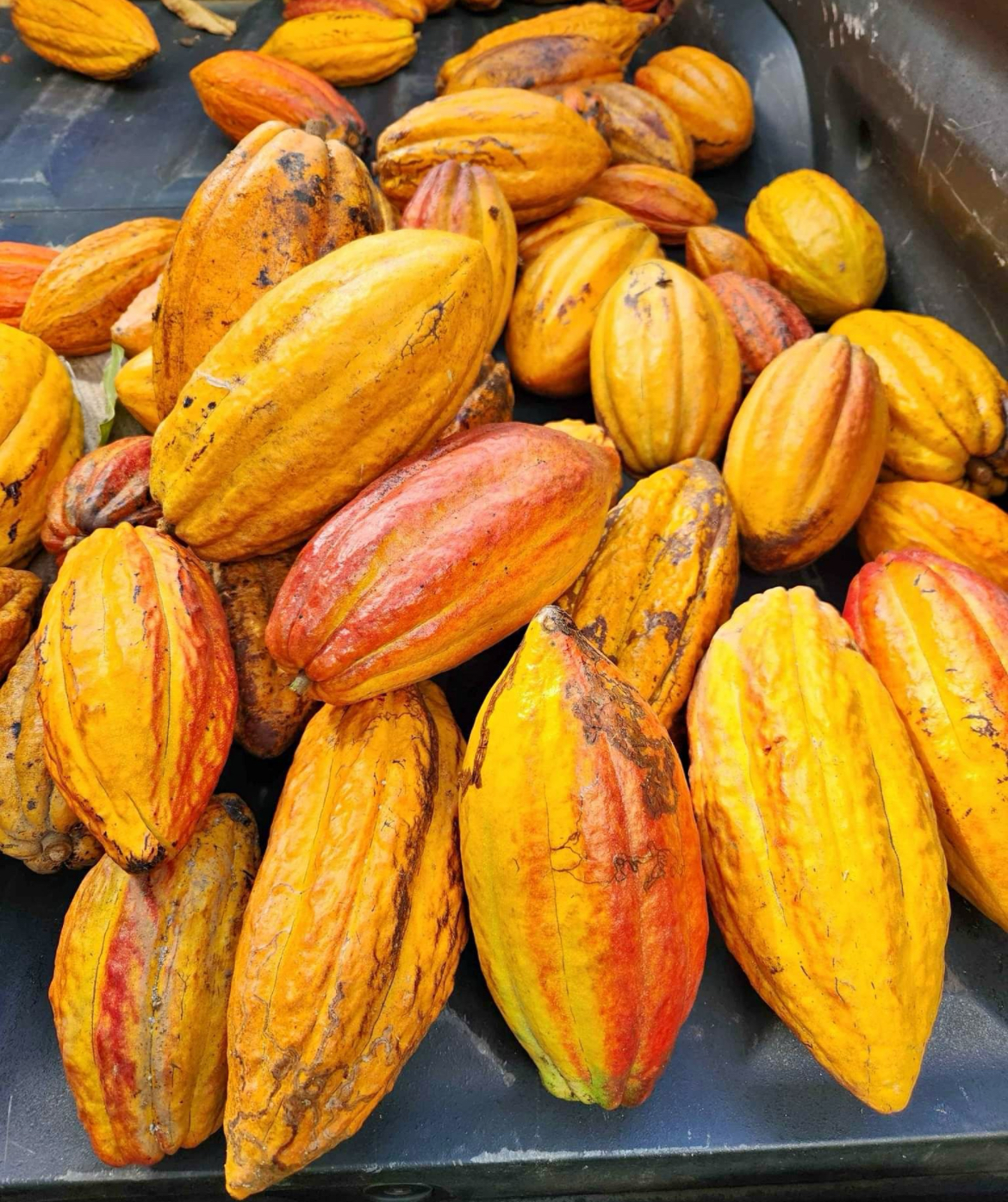
About the speciesABOUT THE SPECIES — Mature yellow-source cacao pods. FRUIT AND CACAO PODS ARE NOT INCLUDED.
Tropical Fruit Plants
Yellow Cacao Live Plant
Theobroma cacao L.
Theobroma cacao • Yellow Pod Source • Cacao Amarillo
$18.89for 1 live Theobroma cacao plant
LIVE CACAO PLANT
FREE SHIPPING
In stock — live plants are carefully prepared and dispatched within 1–2 business days
YOU RECEIVE: 1 LIVE THEOBROMA CACAO PLANT from a YELLOW POD SOURCE, with FREE SHIPPING. Fruit and cacao pods are not included.
1
One live Theobroma cacao plant from a yellow mature pod source. A young tropical understory tree with free shipping; cacao pods, fruit and beans are not included.
- Free shipping on this listing
- Secure encrypted checkout
- Carefully packed in Puerto Rico
- Detailed growing guide included
- Scientific name
- Theobroma cacao L.
- Family
- Malvaceae
- Product type
- 1 live cacao plant
- Source
- Yellow mature cacao pod source
- Cultivar
- Not identified; pod color does not establish a genetic group
- Growth habit
- Tropical evergreen understory tree
- Light
- Bright filtered light while young; adjust progressively after shipping
- Water
- Stable moisture with excellent drainage and no standing water
- Climate
- Consistently warm and humid; frost-sensitive
Theobroma cacao is the living tree behind cocoa and chocolate. Its early life is quieter: large, soft leaves expand in flushes, often bronze or pale before hardening green, as the young plant builds the structure of a tropical understory tree.
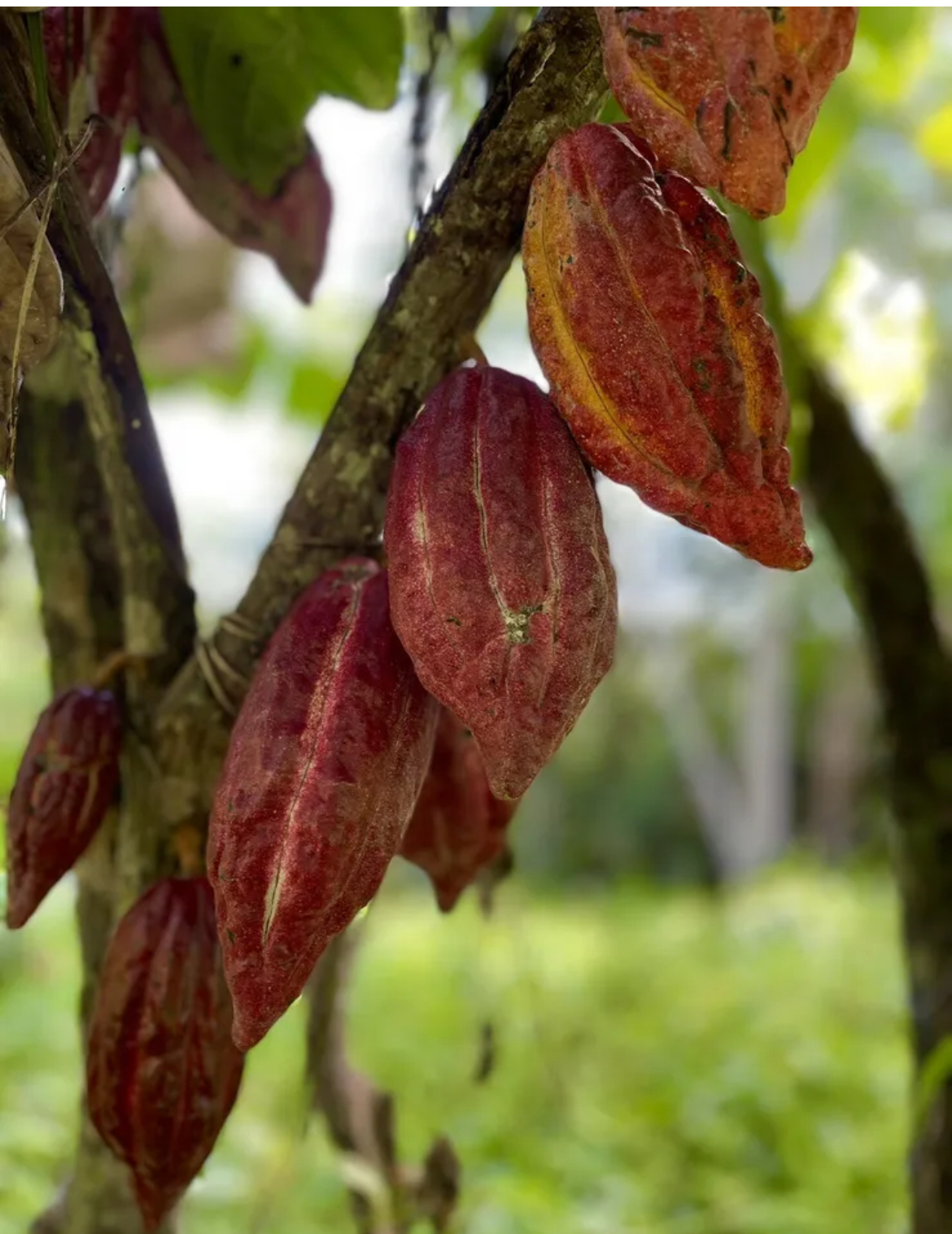
On mature cacao, tiny flowers arise directly from the trunk and established branches. This botanical habit, cauliflory, allows later pods to occupy older woody growth rather than the tips of new shoots.
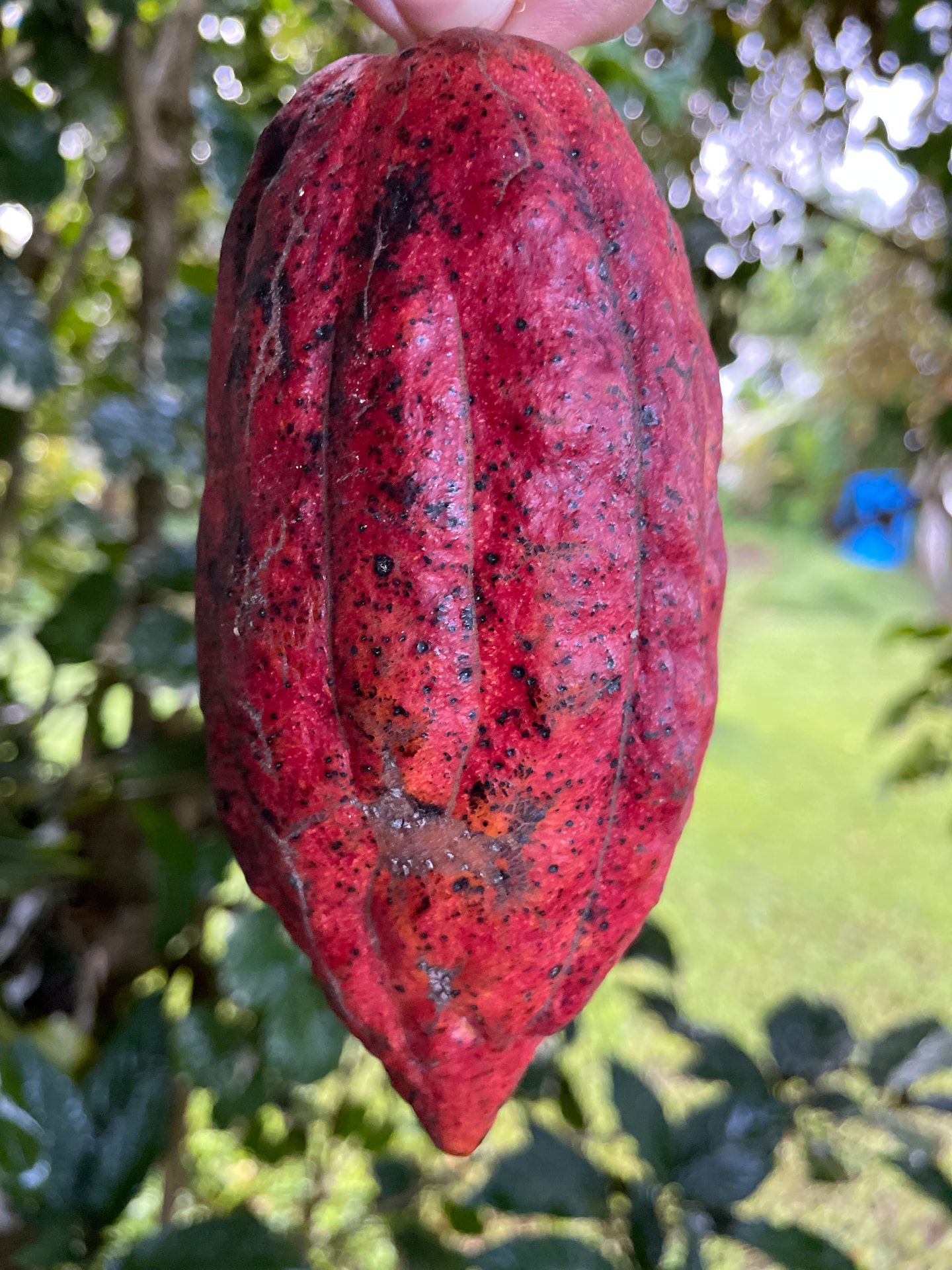
The yellow pod photographs document the source context. Pod color alone cannot establish Criollo, Forastero, Trinitario or any named cultivar, and a seed-grown plant may not reproduce every parent characteristic identically.
You receive one live plant—not germinated seeds, cacao fruit, beans for processing or chocolate. Individual plants naturally vary.
What You Receive
- 1 live Theobroma cacao plant
- Yellow mature pod source
- The real seller-supplied plant photograph represents the product form
- FREE SHIPPING
- Fruit and cacao pods are not included
YOU RECEIVE: 1 LIVE THEOBROMA CACAO PLANT from a YELLOW POD SOURCE, with FREE SHIPPING. Fruit and cacao pods are not included.
A Shade-Grown Young Tree in Transition
Cacao's broad young leaves respond quickly to abrupt changes in light, humidity and moisture. Unpack promptly, inspect the root zone and let the plant recover in warm filtered light before making larger changes.
Fresh cacao leaves may emerge bronze, coppery or pale and deepen toward green as they harden. That normal flush is different from a mature leaf progressively losing color.
Yellow describes the mature fruit color associated with the source plants. It is not a cultivar claim or a guarantee of future pod color, fruiting age, yield or survival.
Arrival pathway
Settling In a Young Yellow-Source Cacao Plant
- 1
Unpack without delay
Remove protective material gently and examine the tender leaves, stem, pot and drainage before deciding on water or repotting.
- 2
Read the root-zone moisture
Water thoroughly only if the medium is becoming dry, then let it drain. Do not add water to an already wet cacao pot.
- 3
Restore a sheltered climate
Place the plant in warm, bright filtered light with humidity and gentle airflow, away from cold drafts and drying wind.
- 4
Progress light slowly
Allow the existing foliage to adjust before introducing stronger exposure. Cacao is naturally shade-adapted when young.
- 5
Wait for stability
Postpone fertilizer and an optional transplant until leaves are settled or active growth resumes.
- 6
Preserve the root ball
When potting up is needed, use a deeper container only modestly larger, free-draining medium and minimal root disturbance.
An Understory Tree Before It Is a Chocolate Crop
Young cacao is adapted to the moderated light and humidity of a tropical understory. Its large leaves gather filtered light, while shelter from strong wind helps reduce moisture loss across their broad surface.
Container cultivation can recreate part of that environment when warmth, root-zone drainage and humidity are balanced. A container also makes cold protection practical, although the tree's space needs increase with age.
Yellow Pods on Older Wood
Cacao's flowers and pods develop directly on the trunk and mature branches—a feature called cauliflory. Yellow is one possible mature pod color across diverse cacao genetics, not proof of a particular lineage.
Inside a mature pod, many seeds sit in white pulp. Only after harvest, fermentation, drying, roasting and processing do those seeds become the raw material familiar as cocoa and chocolate.
Building the Plant Gradually
- Let soft new leaf flushes expand without rubbing against walls or exposure to drying wind.
- Judge watering from the medium itself; combine even moisture with open drainage rather than constant saturation.
- Increase container size incrementally and keep the root ball intact whenever possible.
- Begin light feeding only after active growth confirms that the plant has settled.
- In a suitable frost-free climate, move toward a sheltered outdoor position rather than immediate exposed full sun.
Live Plant or Germinated Seed?
This plant has already completed germination and early seedling establishment. It gives the grower living foliage and an established root ball to acclimate rather than a visible radicle to plant.
Alpha Tropic's Yellow Cacao germinated-seed listing offers the earlier propagation experience. Both product forms use the same authoritative Theobroma cacao guide.
Why grow it
The living cacao experience
One established young cacao plant
Yellow mature pod source without an unsupported cultivar claim
Flushes of broad tropical foliage
The cauliflorous tree behind cocoa and chocolate
Suited to progressive container cultivation
Free shipping and the shared cacao growing guide
You may also like
Related products