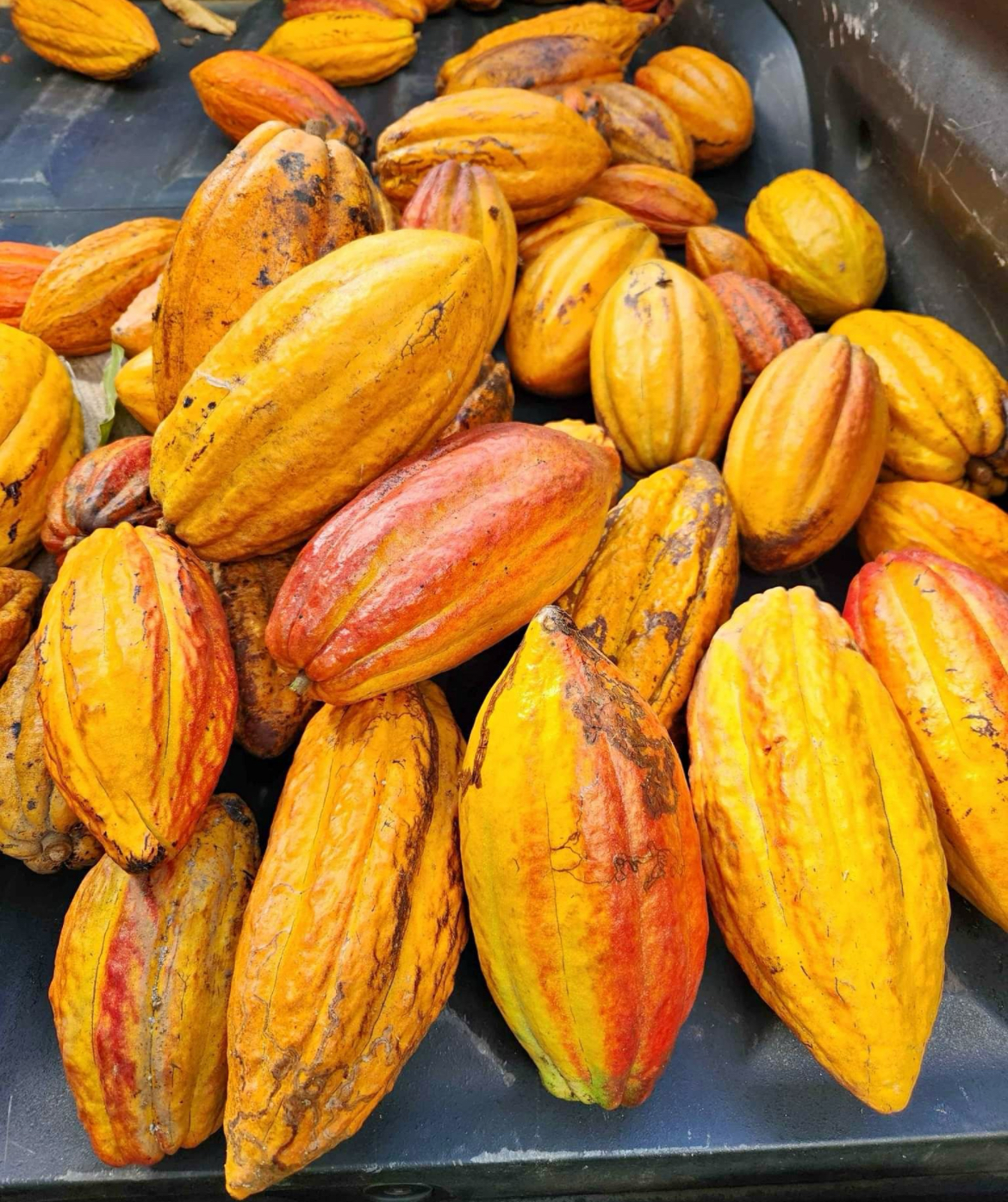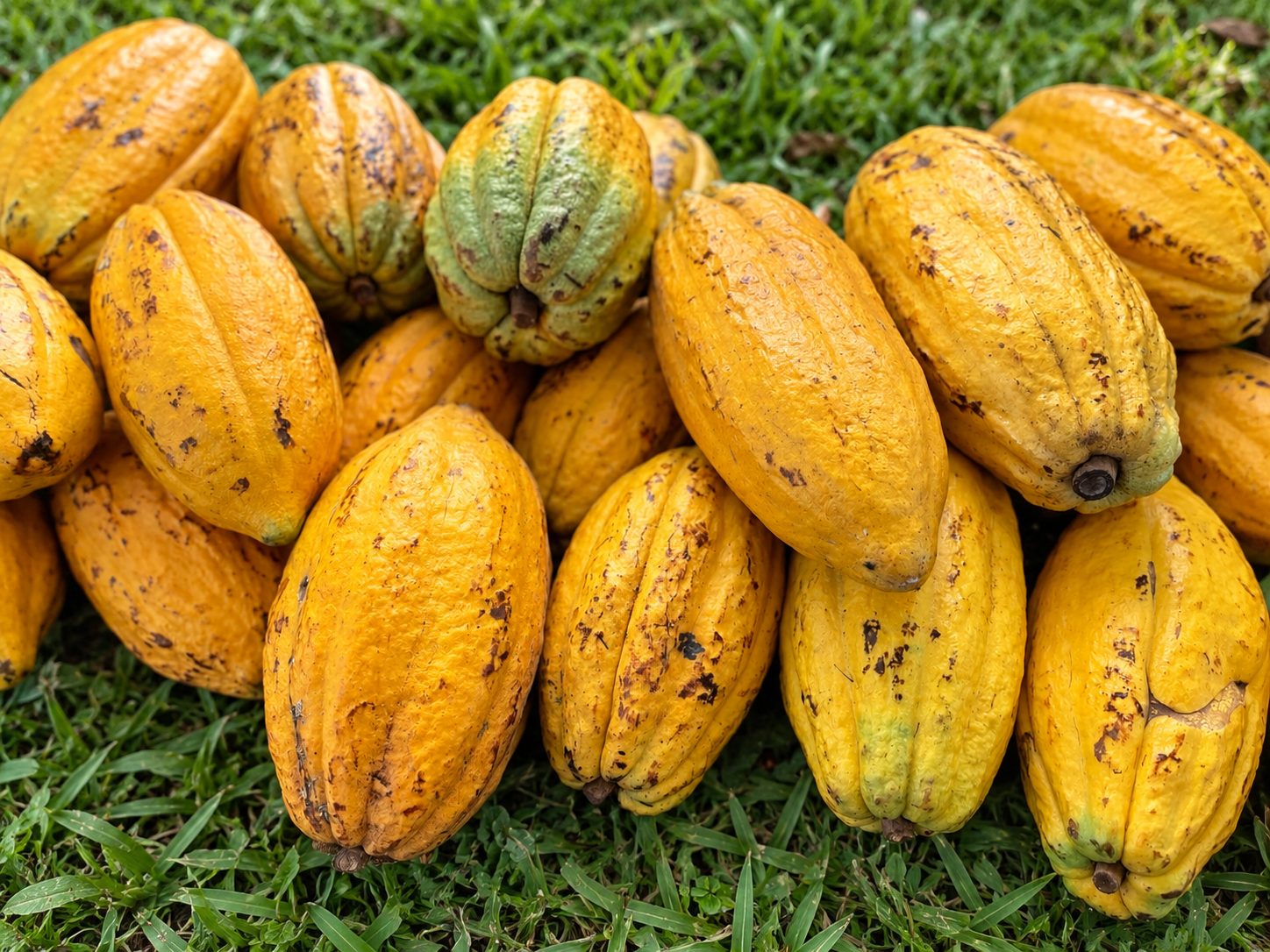
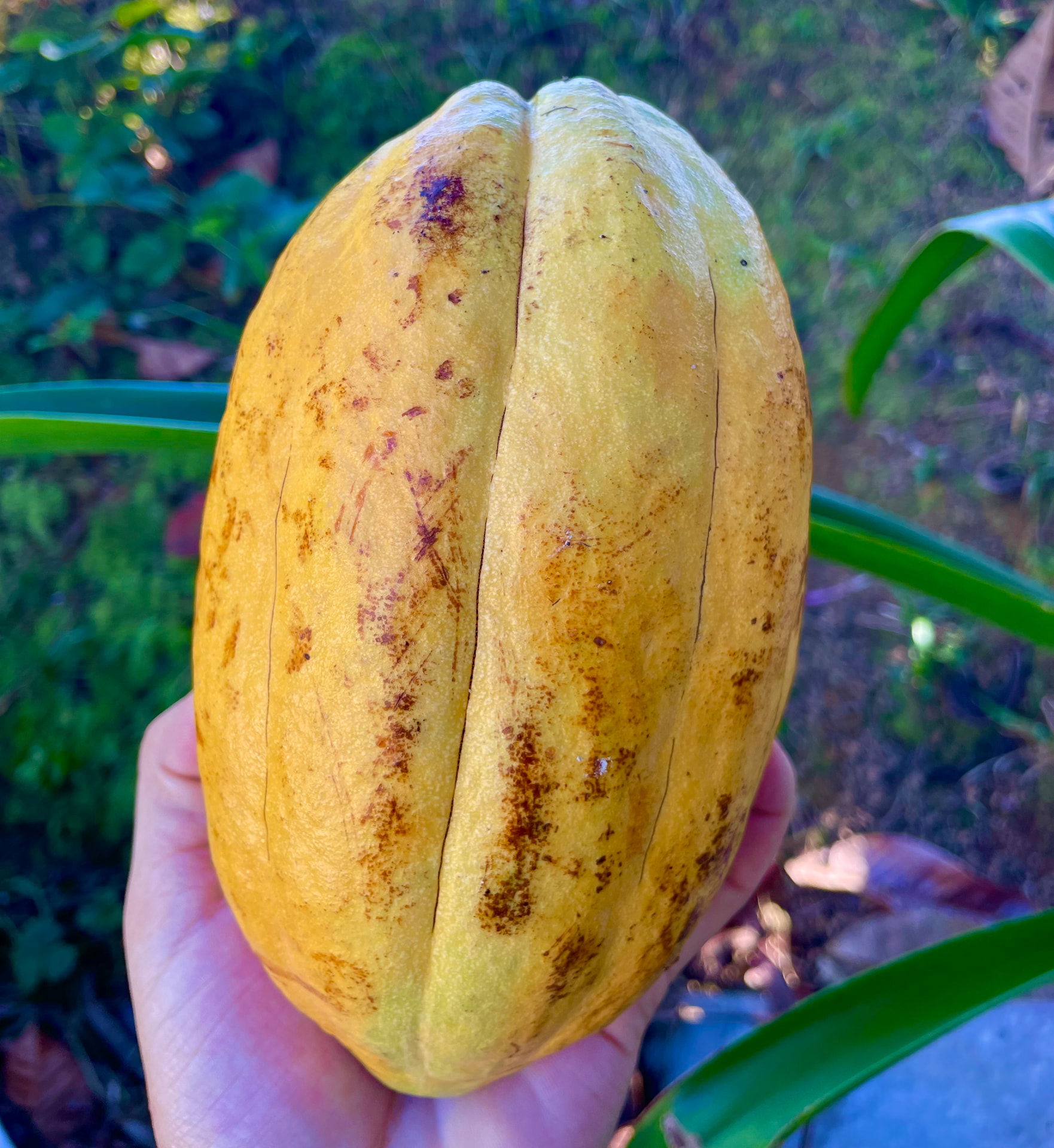
About the speciesABOUT THE SPECIES — Mature yellow Theobroma cacao fruit. Fruit is shown for species identification and is not included.
Rare Tropical Fruit
15 Germinated Theobroma cacao Seeds
Theobroma cacao L.
Cacao • Cocoa • Cacao Amarillo • Yellow Cacao
$21.89for 15 germinated seeds
15 GERMINATED SEEDS
FREE SHIPPING
In stock — germinated seeds, packed and shipped within 1–2 business days
This listing is for 15 GERMINATED Theobroma cacao seeds — not dry dormant seeds, not a live potted plant, not cacao fruit, and not processed cocoa/chocolate.
1
15 germinated Theobroma cacao seeds from yellow-fruited cacao. Living, already-sprouting tropical cacao seeds for planting — free shipping and a full cacao growing guide.
- Free shipping on this listing
- Secure encrypted checkout
- Carefully packed in Puerto Rico
- Detailed growing guide included
- Scientific name
- Theobroma cacao L.
- Family
- Malvaceae
- Product type
- 15 germinated seeds
- Climate
- Tropical, warm and humid
- Light
- Young cacao benefits from partial/filtered shade. Avoid intense direct sun on newly establishing seedlings.
- Water
- Consistent moisture with good drainage; avoid drought and prolonged waterlogging
- Soil
- Fertile, organic-rich and well draining
- Temperature
- Warm tropical conditions preferred
- Humidity
- Moderate to high humidity with appropriate airflow
- Cold
- Protect from cold temperatures and frost
- Germination
- Already germinated — plant promptly on arrival
- Difficulty
- Moderate — freshness, moisture, warmth and young-plant light management matter
Theobroma cacao L. is a tropical evergreen tree in the Malvaceae family, native to tropical America and cultivated for its seeds for thousands of years.
Cacao is cauliflorous: flowers and pods develop directly from the trunk and larger branches rather than at the branch tips. Each mature pod contains numerous seeds surrounded by a sweet white pulp.
Cacao seeds are the raw botanical material from which cocoa and chocolate ultimately originate, but only after harvesting, fermentation, drying, roasting and industrial processing. The seeds in this listing are sold for GROWING, not for consumption.
These seeds come from cacao trees and fruits identified by the seller by their yellow mature pod color. No cultivar or genetic group is claimed — they are not sold as Criollo, Forastero, Trinitario or any other named type.
This listing is for 15 GERMINATED Theobroma cacao seeds — not dry dormant seeds, not a live potted plant, not cacao fruit, and not processed cocoa/chocolate.
What You Receive
- 15 germinated Theobroma cacao seeds
- Yellow-fruited cacao source
- Carefully prepared for shipping
- FREE SHIPPING
- Detailed Cacao Growing Guide
This listing is for 15 GERMINATED Theobroma cacao seeds — not dry dormant seeds, not a live potted plant, not cacao fruit, and not processed cocoa/chocolate.
Germinated Seed Notice
Cacao seeds are recalcitrant and freshness-sensitive. Unlike conventional dry garden seeds, they should not be intentionally dried for storage — drying destroys viability.
These seeds have already begun germination. Plant them promptly after arrival rather than storing them.
If a root (radicle) is already visible, handle it very gently: never pull or bend it unnecessarily, and orient the emerging root downward when planting.
Do not allow the germinated seed or its root to dry out. Maintain steady moisture without keeping the substrate waterlogged.
These are GERMINATED SEEDS for planting. They are not intended for eating or for making chocolate.
Germination
Planting germinated cacao seeds
- 1
Plant promptly after arrival
Open the package the day it arrives and plant as soon as possible. Germinated cacao seeds are living material and do not store well.
- 2
Prepare containers first
Use individual containers or appropriate seedling containers with drainage holes, one seed per container, filled before you handle the seeds.
- 3
Use the right growing medium
A fertile, moisture-retentive but well-draining medium works best — quality potting soil or coco coir with perlite and some compost.
- 4
Handle the germinated seed carefully
Hold each seed by its body, not by the root. Separate seeds slowly if they are stuck together in the packing material.
- 5
Orient the root downward
If the root/radicle is visible, position it downward into the growing medium without forcing, breaking or sharply bending it. Seeds with no visible root can be laid flat.
- 6
Cover appropriately
Cover the seed with medium, but avoid excessively deep planting. A shallow covering is enough for the shoot to push through.
- 7
Water and keep evenly moist
Water thoroughly and let excess drain, then keep the medium consistently moist but never saturated.
- 8
Maintain warm tropical conditions
Cacao establishes best in steady warmth and humidity. Cold, drafty conditions slow or stop development.
- 9
Give bright filtered light
Provide bright filtered or indirect light rather than immediately exposing young cacao seedlings to intense direct sunlight.
- 10
Manage light gradually as it grows
Once established, increase light gradually according to the plant's development instead of moving it into full sun abruptly.
CORRECT ✓
Germinated seed just covered by moist, fertile, free-draining medium with any visible root pointing straight down.
AVOID ✕
Seed buried deeply, planted root-up, allowed to dry out, or left sitting in saturated, poorly drained medium.
About cacao
Theobroma cacao is native to tropical America and has been cultivated for its seeds for thousands of years. It grows as a tropical evergreen tree with large, drooping leaves.
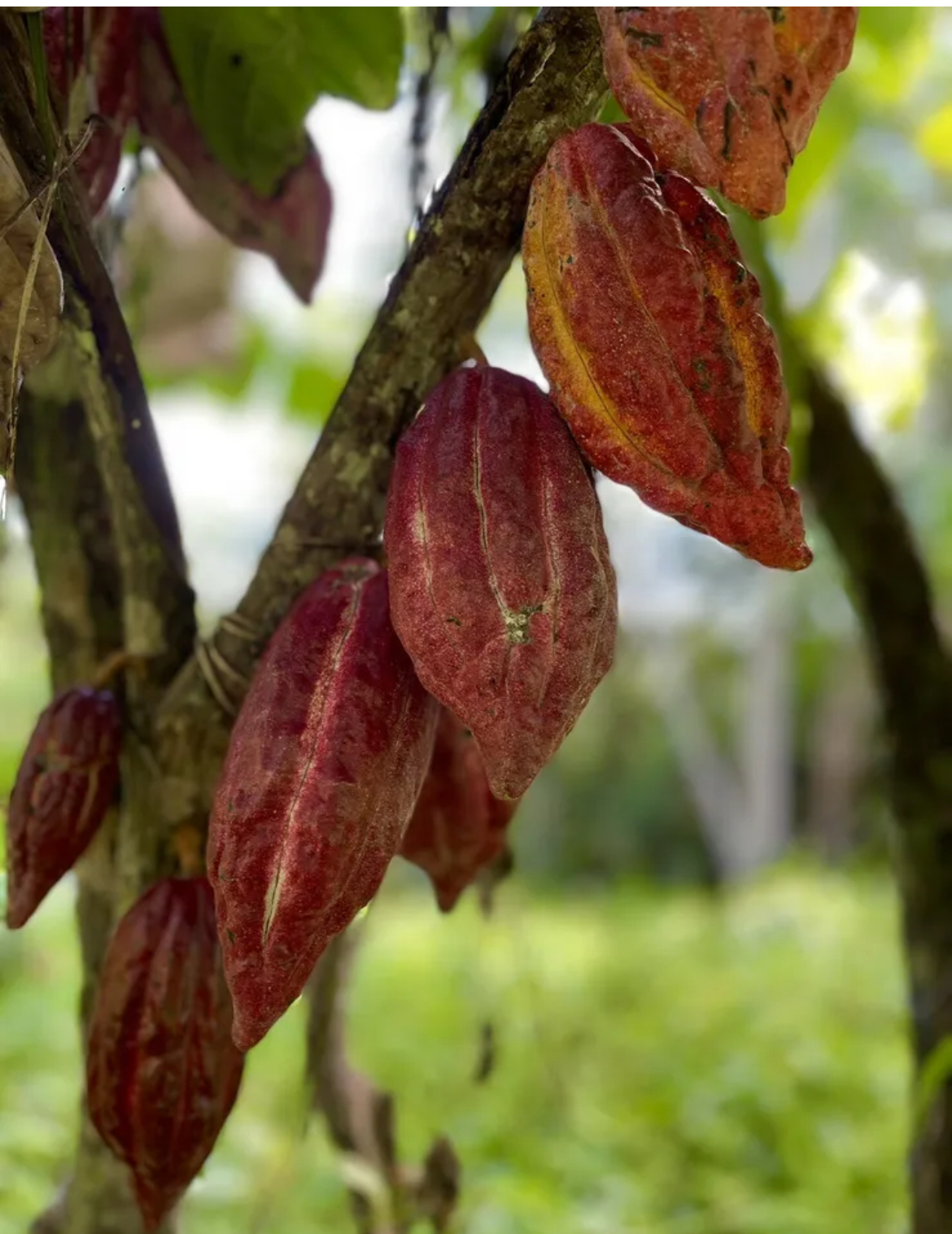
Cacao has an unusual fruiting habit called cauliflory: the small flowers, and later the pods, develop directly from the trunk and mature branches rather than from new shoots.
Mature cacao pods contain numerous seeds surrounded by a sweet white pulp. Those seeds — not the pulp — are the botanical starting point for cocoa.
About yellow cacao pods
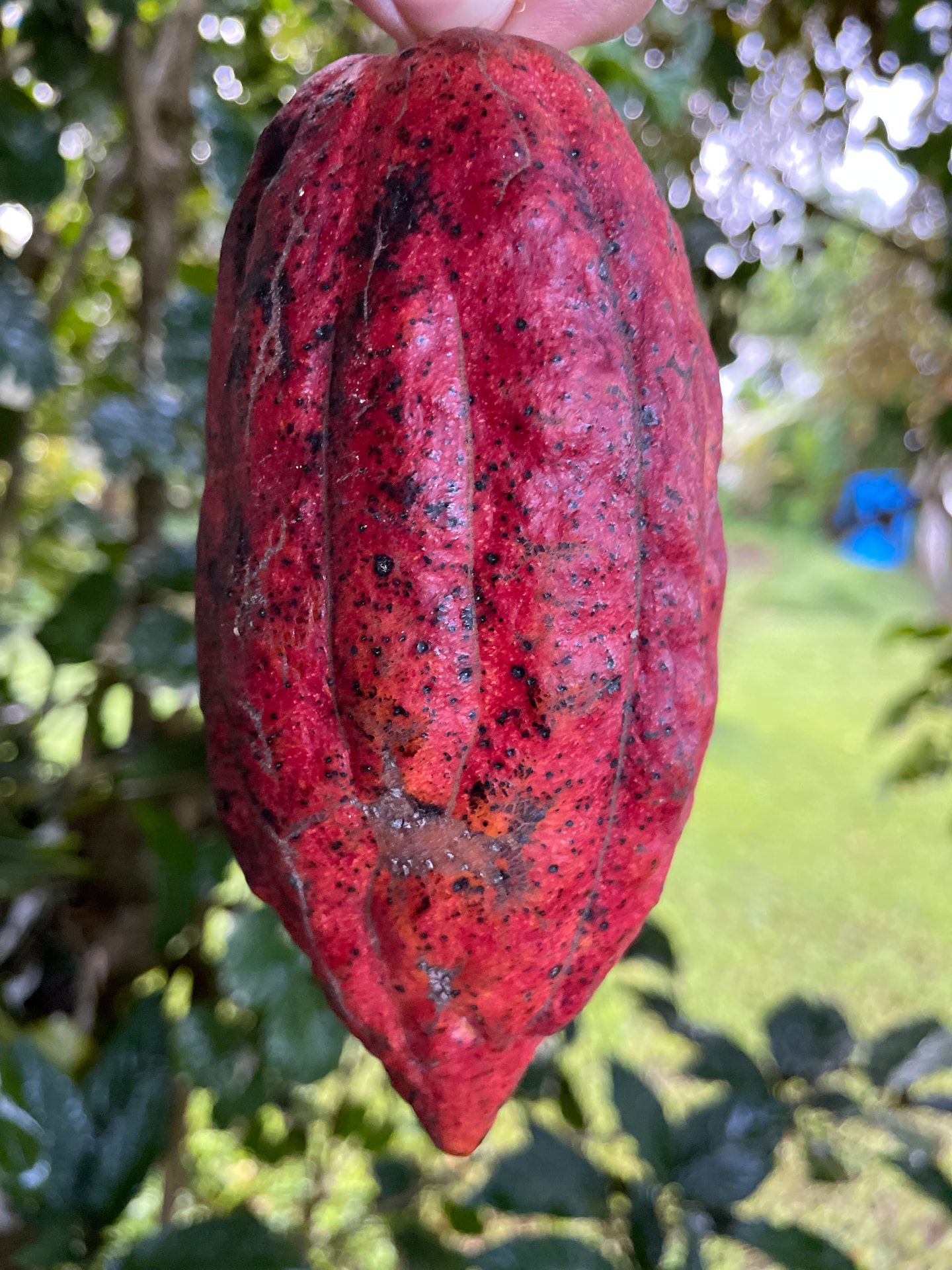
Cacao pod color, shape and size vary substantially among cacao genetics, and yellow is a common mature pod color across various cacao types.
These seeds come from trees and fruits identified by the seller by their yellow mature pod color. Pod color alone cannot be used to assign cacao to Criollo, Forastero, Trinitario or any other cultivar or genetic group, and no such claim is made here.
Cacao grown from seed shows natural genetic variation. Future plants and fruits are not guaranteed to be genetically identical to the parent tree, nor to produce identical pod color, shape, size or flavor.
From cacao tree to chocolate
- Cacao tree — a tropical evergreen grown in warm, humid climates.
- Cacao pod — develops on the trunk and branches and ripens over several months.
- Cacao seeds/beans — numerous seeds surrounded by pulp inside each pod.
- Fermentation — harvested seeds with pulp are fermented, which develops flavor precursors.
- Drying — fermented beans are dried to a stable moisture content.
- Roasting and processing — dried beans are roasted, cracked, winnowed and ground.
- Cocoa and chocolate products — the processed result of all the steps above.
- The GERMINATED seeds in this listing are intended for propagation only, and are NOT for making or eating chocolate.
Seedling shade and gradual light management
Cacao naturally developed as an understory tropical tree, so young plants benefit from protection from excessive sun and wind.
Start seedlings in bright filtered or indirect light. As the plant develops and hardens, increase light gradually over weeks rather than moving it into strong sun in one step.
Watering, humidity and soil
- Keep the medium consistently moist with good drainage; avoid both drought and prolonged waterlogging.
- Moderate to high humidity is beneficial, paired with appropriate airflow to discourage fungal issues.
- Use fertile, organic-rich, well-draining soil; heavy compacted mixes hold too much water.
- Containers must have drainage holes, and saucers should never be left full of water.
Repotting and fertilization
Pot up one size at a time as roots fill the container, keeping the root ball intact — cacao dislikes root disturbance. Deeper containers suit its rooting habit.
Do not fertilize germinated seeds or very young seedlings. Once the plant is established and actively growing, feed lightly with a balanced fertilizer at label rates during active growth.
Temperature, cold protection and container growing
- Warm tropical temperatures are preferred throughout the year.
- Protect from cold temperatures and frost; cacao is not cold hardy.
- In cooler climates, grow in containers and move plants to a warm, bright sheltered space before cold weather.
- Container plants stay smaller and need more attentive watering and humidity than plants in the ground.
Outdoor planting in suitable tropical climates
- Plant outdoors only in tropical or frost-free climates with warmth and humidity year-round.
- Choose a sheltered site with partial shade while the plant is young, ideally under taller trees.
- Provide fertile, well-draining soil and mulch to keep roots cool and evenly moist.
- Shelter from strong drying wind, which damages the large leaves.
Pruning, flowering and pod development
Light formative pruning shapes the tree, removes damaged growth and keeps the canopy open to airflow.
Mature cacao produces many small flowers directly on the trunk and older branches. Only a small fraction of flowers are pollinated and develop into pods; pollination in cacao is carried out by tiny insects.
Pods ripen slowly over several months. Time to flowering, pod set and yield depend entirely on climate, care and growing conditions — no fruit production or fruiting age is guaranteed.
Common growing mistakes
- Storing the germinated seeds instead of planting promptly.
- Letting the seed or emerging root dry out.
- Pulling, bending or breaking the radicle while handling.
- Planting the seed root-up or burying it too deeply.
- Keeping the medium saturated in a container without drainage.
- Placing young seedlings in intense direct sun.
- Fertilizing too early or too strongly.
- Exposing plants to cold, frost or drying wind.
Why grow it
Why grow Theobroma cacao?
15 germinated, living Theobroma cacao seeds — not dry dormant seed
From yellow-fruited cacao (seller-identified pod color)
No cultivar claim — sold simply as Theobroma cacao
The tropical tree behind cocoa and chocolate
Cauliflorous species: pods form on the trunk and branches
Sold for growing, not for consumption
Free shipping and a detailed cacao growing guide
You may also like
Related products