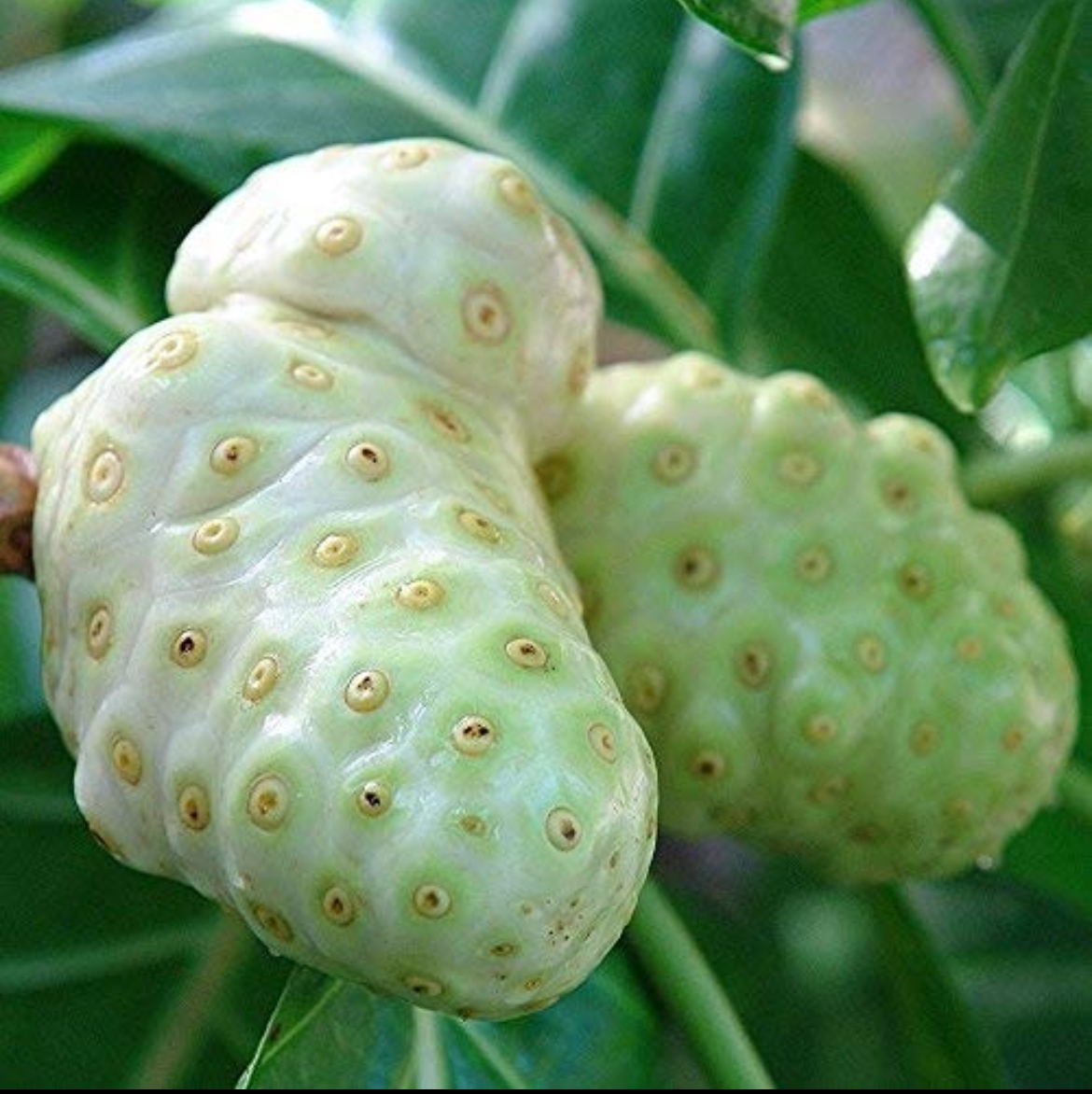
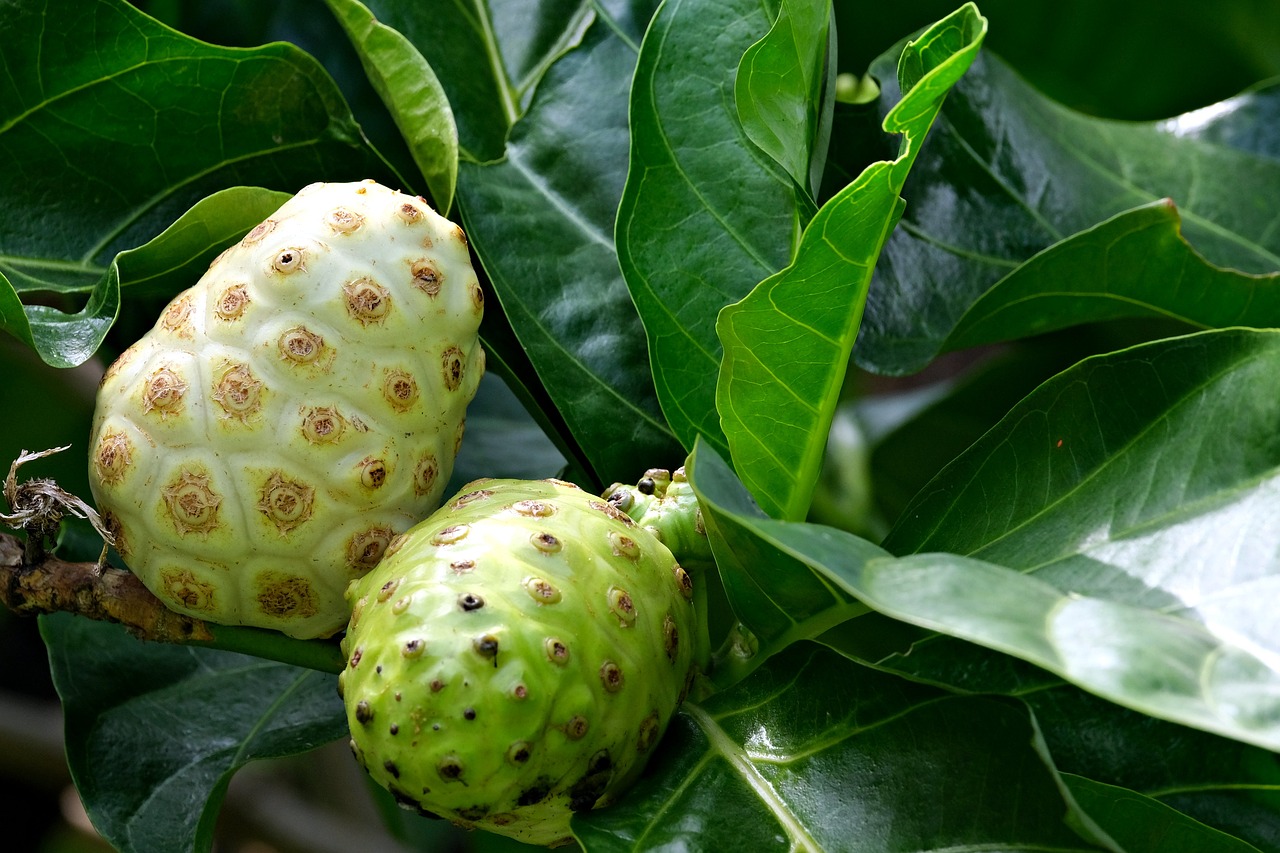
About the speciesABOUT THE SPECIES — Morinda citrifolia fruit at two stages among its glossy evergreen foliage. This listing contains seeds for planting; fruit is not included.
Tropical Fruit Tree Seeds
Noni Seeds – Morinda citrifolia
Morinda citrifolia L.
Noni • Indian Mulberry • Great Morinda
$5.89for 10 Seeds
SEEDS FOR PLANTING
FREE SHIPPING
In stock — packed and shipped within 1–2 business days
This listing contains Morinda citrifolia SEEDS FOR PLANTING—not fruit. Select your quantity above; FREE SHIPPING applies to every option.
Choose your pack size
Home garden
Grower pack
Free shipping applies to every pack size.
1
Seeds of Noni (Morinda citrifolia), the glossy-leaved tropical evergreen of the coffee family with its unusual pale multiple fruit. 10, 25, 50 or 100 seeds with free shipping.
- Free shipping on this listing
- Secure encrypted checkout
- Carefully packed in Puerto Rico
- Detailed growing guide included
- Scientific name
- Morinda citrifolia L.
- Family
- Rubiaceae
- Product type
- Seeds for planting
- Habit
- Tropical evergreen shrub or small tree
- Light
- Full sun to partial shade
- Sowing depth
- About 1/4 inch
- Germination
- Slow and irregular; often several weeks to months
- Soil
- Well-drained; tolerant of varied soil types
- Climate
- Warm tropical; frost sensitive
Noni is a plant of tropical coastlines and gardens: a sturdy evergreen with deep-green, glossy, prominently veined leaves that often grow large and give it a lush presence even while young.
Its fruit is botanically unusual. Many small white flowers open over time on a rounded head, and their ovaries fuse into a single multiple fruit. The 'eyes' across the surface are the remnants of those individual flowers.
Fruit develops from green to yellowish and finally a pale, almost translucent white as it ripens and softens. At that stage it releases a strong, pungent aroma that many describe as cheese-like—distinctive, and part of the species' identity.
Inside are numerous small brown seeds, each with an air-filled chamber that helps them float—one reason noni is widely dispersed along tropical shores. That hard, buoyant seed also explains its slow and uneven germination.
What You Receive
- 10 Noni (Morinda citrifolia) seeds
- Seeds for planting
- Seeds only—fruit is not included
- Free shipping
- Access to the dedicated Noni growing guide
This listing contains Morinda citrifolia SEEDS FOR PLANTING—not fruit. Select your quantity above; FREE SHIPPING applies to every option.
Seeds Only — Fruit Is Not Included
The photographs show Morinda citrifolia fruit and foliage for species reference. This package contains seeds for planting, not fruit.
Noni germination is naturally slow and uneven. Germination rate, timing, flowering, fruiting age and yield are not guaranteed.
Traditional uses are mentioned as cultural context only; no health claims are made.
Patience rewarded
Starting Noni Seeds
- 1
Soften the coat
Soak seeds 24 hours in warm water. Some growers lightly nick the hard coat on one edge to help water enter.
- 2
Sow shallowly
Plant about 1/4 inch deep in a light, free-draining seed mix.
- 3
Provide steady warmth
Consistent warmth is the single biggest factor. Cool conditions can stall germination for a long time.
- 4
Keep evenly moist
Maintain moisture without saturation over the long germination window; a covered tray helps.
- 5
Wait patiently
Emergence is often spread over weeks to months. Don't discard trays early—late seedlings are common.
- 6
Pot on seedlings
Once seedlings have a few true leaves, move each to its own pot with the root ball intact.
CORRECT ✓
Soaked seed sown about 1/4 inch deep in a warm, evenly moist, free-draining mix, left undisturbed for as long as it takes.
AVOID ✕
Cold trays, waterlogged media, burying seed deeply, or giving up after a few weeks.
Unusual Fruit, Coffee-Family Roots
Noni shares Rubiaceae with coffee, a relationship visible in its glossy opposite leaves and small, fragrant white tubular flowers.
Its multiple fruit is what sets it apart: dozens of flowers on one head fuse into a single knobbly fruit that pales and softens as it ripens, developing its well-known pungent aroma.
Fresh fruit FAQ
Questions about fresh cacao pods
- Why are noni seeds slow to germinate?
- The seed has a hard coat and an air chamber adapted for floating. Water uptake is slow, so emergence is often spread over weeks or months. Patience and steady warmth matter more than anything else.
- Is noni related to mulberry?
- No. 'Indian mulberry' is only a common name. Noni belongs to Rubiaceae, the coffee family; true mulberries are Morus in Moraceae.
- Can I grow noni in a pot?
- Yes, especially while young. It adapts well to containers with free drainage and bright light, and can later move to the ground in frost-free climates.
- Does noni have health benefits?
- Noni has a long history of traditional use in parts of the Pacific and elsewhere, which we mention only as cultural context. We make no claims that it treats, cures or prevents any condition.
From Seedling to Tree
Young plants grow steadily in warmth and bright light, producing large leaves early. Containers suit this stage well, allowing protection from cold.
In frost-free climates, established plants develop into multi-stemmed shrubs or small trees and can flower and fruit through much of the year once mature. Timing is not guaranteed.
Fresh fruit FAQ
Questions about fresh cacao pods
- Why are noni seeds slow to germinate?
- The seed has a hard coat and an air chamber adapted for floating. Water uptake is slow, so emergence is often spread over weeks or months. Patience and steady warmth matter more than anything else.
- Is noni related to mulberry?
- No. 'Indian mulberry' is only a common name. Noni belongs to Rubiaceae, the coffee family; true mulberries are Morus in Moraceae.
- Can I grow noni in a pot?
- Yes, especially while young. It adapts well to containers with free drainage and bright light, and can later move to the ground in frost-free climates.
- Does noni have health benefits?
- Noni has a long history of traditional use in parts of the Pacific and elsewhere, which we mention only as cultural context. We make no claims that it treats, cures or prevents any condition.
Cultural Context
Noni has been cultivated and used for generations in Pacific Island, Southeast Asian and other tropical communities for food, dye and traditional purposes. We share this history as botanical and cultural context only and make no health or therapeutic claims.
Fresh fruit FAQ
Questions about fresh cacao pods
- Why are noni seeds slow to germinate?
- The seed has a hard coat and an air chamber adapted for floating. Water uptake is slow, so emergence is often spread over weeks or months. Patience and steady warmth matter more than anything else.
- Is noni related to mulberry?
- No. 'Indian mulberry' is only a common name. Noni belongs to Rubiaceae, the coffee family; true mulberries are Morus in Moraceae.
- Can I grow noni in a pot?
- Yes, especially while young. It adapts well to containers with free drainage and bright light, and can later move to the ground in frost-free climates.
- Does noni have health benefits?
- Noni has a long history of traditional use in parts of the Pacific and elsewhere, which we mention only as cultural context. We make no claims that it treats, cures or prevents any condition.
Sun, Soil and Water
- Bright light to full sun once established; partial shade tolerated
- Free-draining soil; noni tolerates varied soils, including sandy ones
- Regular water while young; established plants handle drier spells
- Moderate feeding during active growth
- Protect from frost and prolonged cold
Fresh fruit FAQ
Questions about fresh cacao pods
- Why are noni seeds slow to germinate?
- The seed has a hard coat and an air chamber adapted for floating. Water uptake is slow, so emergence is often spread over weeks or months. Patience and steady warmth matter more than anything else.
- Is noni related to mulberry?
- No. 'Indian mulberry' is only a common name. Noni belongs to Rubiaceae, the coffee family; true mulberries are Morus in Moraceae.
- Can I grow noni in a pot?
- Yes, especially while young. It adapts well to containers with free drainage and bright light, and can later move to the ground in frost-free climates.
- Does noni have health benefits?
- Noni has a long history of traditional use in parts of the Pacific and elsewhere, which we mention only as cultural context. We make no claims that it treats, cures or prevents any condition.
Common Mistakes
- Abandoning seed trays too soon
- Germinating in cold conditions
- Overwatering seedlings in dense mix
- Keeping young plants in deep shade
- Exposing plants to frost
Fresh fruit FAQ
Questions about fresh cacao pods
- Why are noni seeds slow to germinate?
- The seed has a hard coat and an air chamber adapted for floating. Water uptake is slow, so emergence is often spread over weeks or months. Patience and steady warmth matter more than anything else.
- Is noni related to mulberry?
- No. 'Indian mulberry' is only a common name. Noni belongs to Rubiaceae, the coffee family; true mulberries are Morus in Moraceae.
- Can I grow noni in a pot?
- Yes, especially while young. It adapts well to containers with free drainage and bright light, and can later move to the ground in frost-free climates.
- Does noni have health benefits?
- Noni has a long history of traditional use in parts of the Pacific and elsewhere, which we mention only as cultural context. We make no claims that it treats, cures or prevents any condition.
Why grow it
Why grow Noni?
Glossy tropical evergreen of the coffee family
Botanically unusual multiple fruit
Adapts well to containers while young
Tolerant, sturdy plant once established
Rich ethnobotanical history
Free shipping on every quantity
You may also like
Related products