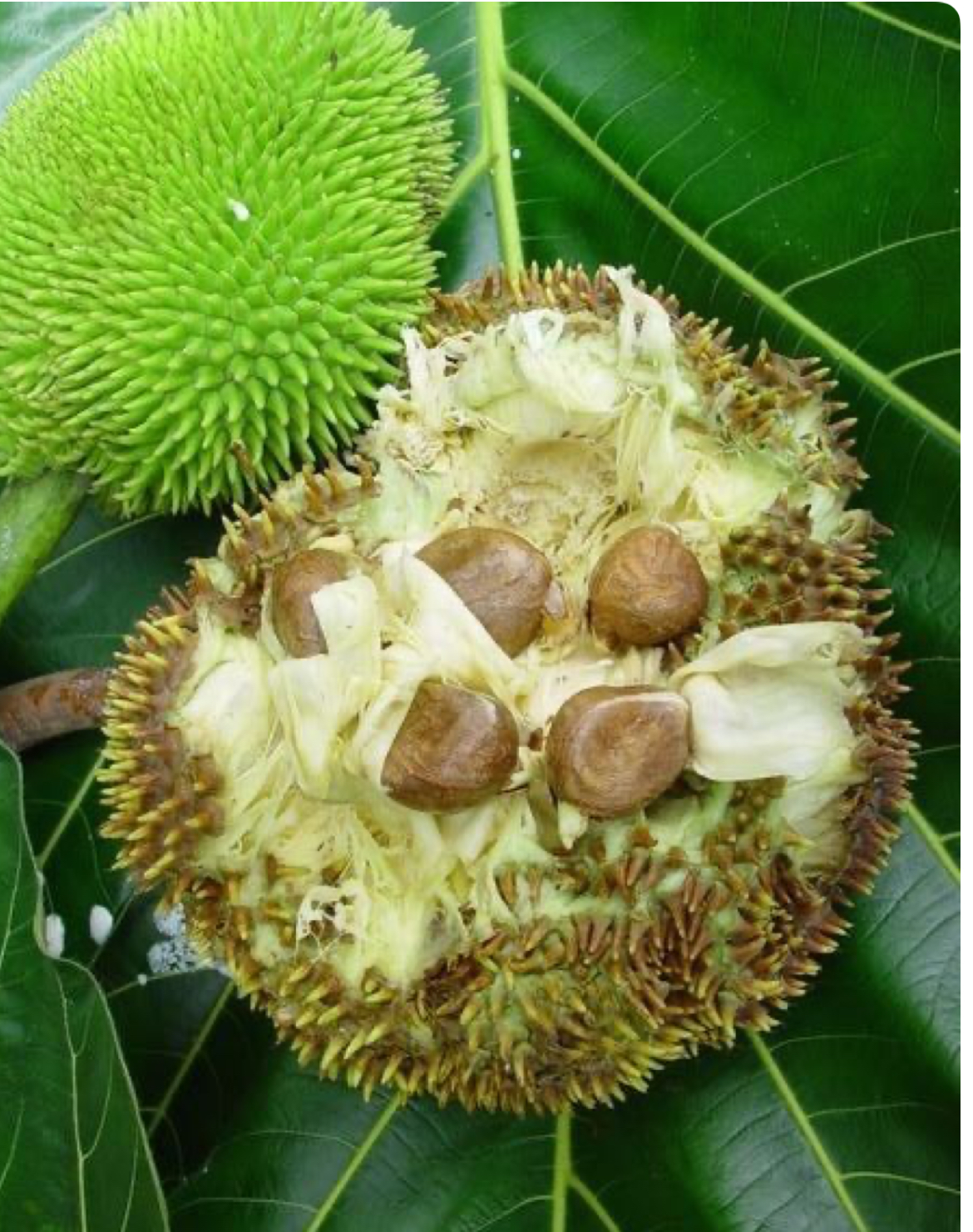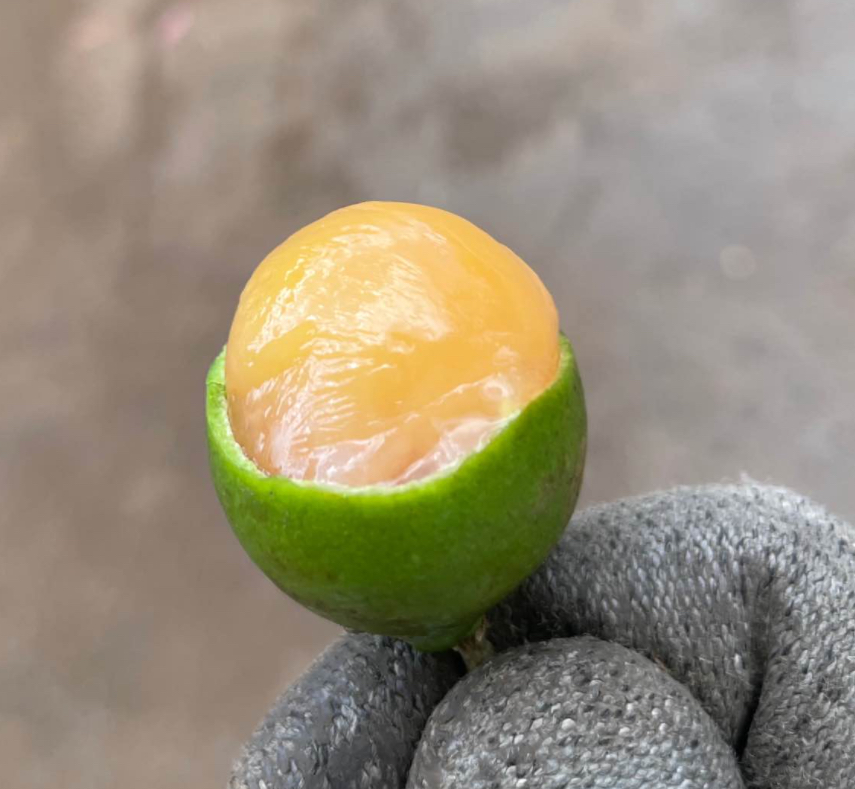
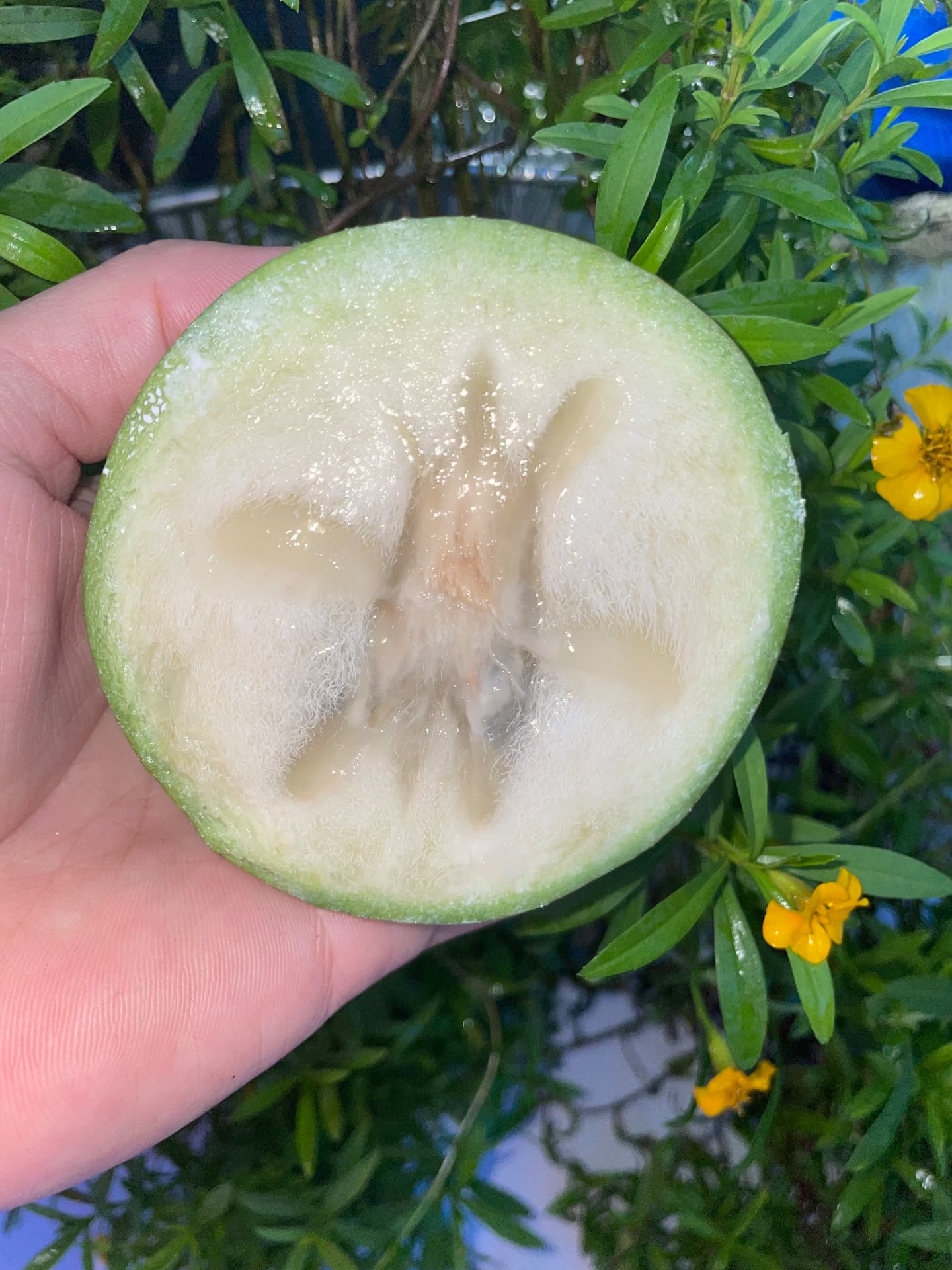
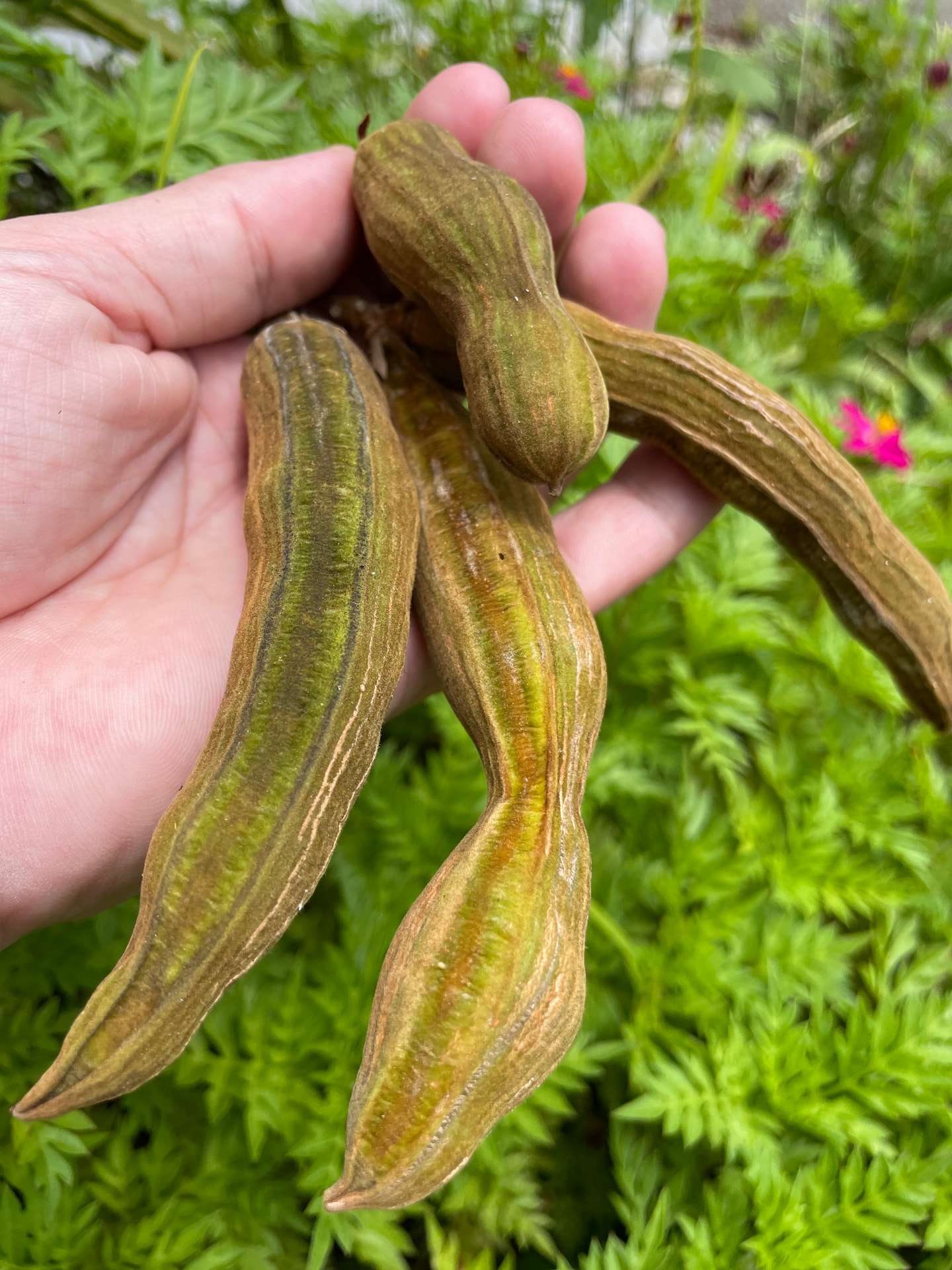
About the speciesAbout the species: ripe Inga vera pods, ribbed and gently twisted. FRUIT NOT INCLUDED — this listing is for 15 germinated seeds.
Tropical Fruit Tree Seeds
Inga vera – 15 Germinated Seeds
Inga vera Willd.
Guaba • Puerto Rico native • Coffee shade tree
$21.49for 15 germinated seeds
GERMINATED SEEDS
FREE SHIPPING
In stock — germinated seeds, packed and shipped within 1–2 business days
This listing is for 15 GERMINATED Inga vera seeds — actively germinating living planting material, not dry dormant seed, not a potted tree and not fruit. Plant promptly after arrival.
1
15 germinated Inga vera (Guaba) seeds from Puerto Rico. A native leguminous fruit tree with recalcitrant, moisture-sensitive seeds — shipped already germinating and ready to plant. Free shipping.
- Free shipping on this listing
- Secure encrypted checkout
- Carefully packed in Puerto Rico
- Detailed growing guide included
- Scientific name
- Inga vera Willd.
- Family
- Fabaceae
- Genus
- Inga
- Plant type
- Tropical perennial leguminous tree
- Quantity
- 15 germinated seeds
- Native range
- Tropical Americas and the Caribbean, including Puerto Rico
- Seed type
- Recalcitrant / moisture-sensitive — sold germinated
- Light
- Bright light with protection while establishing; acclimate gradually as the seedling develops
- Water
- Consistently moist root zone with real drainage — never swampy
- Soil
- Airy, organic, moisture-retentive but free-draining
- Climate
- Warm tropical conditions; no frost tolerance
- Difficulty
- Easy to Moderate — plant promptly on arrival
Some seeds are designed to wait. Inga vera is not one of them. Inside the fleshy pods of this tropical legume are unusually moisture-rich seeds, biologically adapted to continue quickly toward growth rather than drying down into the long dormant state familiar from many garden seeds.
That unusual seed biology is exactly why this offering arrives as 15 germinated seeds. You are receiving planting material that has already begun the transition from seed to young tree.
Native to Puerto Rico and a broad region of the tropical Americas, Inga vera is much more than an edible-fruited tropical tree. On the island it has a genuine connection with traditional shade-grown coffee systems, where trees known locally as Guaba were used to create the layered, shaded environment associated with mountain coffee agriculture.
As the tree develops, its compound foliage, white brush-like flowers and leguminous pods reveal its membership in the bean family, Fabaceae. Inside the mature pods, the seeds are surrounded by edible fleshy material — one of the characteristics for which Inga species are appreciated throughout the tropical Americas.
For collectors, tropical fruit growers and agroforestry enthusiasts, Inga vera combines edible-fruit interest, unusual seed physiology and a real ecological and agricultural story. This listing is for 15 germinated seeds — not a potted tree and not fruit.
What You Receive
- 15 GERMINATED Inga vera seeds
- Fresh, actively developing planting material
- Puerto Rico source / provenance
- A species native to Puerto Rico
- Free shipping
- Species-specific Alpha Tropic growing guide
This listing is for 15 GERMINATED Inga vera seeds — actively germinating living planting material, not dry dormant seed, not a potted tree and not fruit. Plant promptly after arrival.
Germinated Seeds — Not Dry Seeds
You are receiving germinated seeds, not a potted tree and not ordinary dry seed. Inga seeds are recalcitrant: they mature moisture-rich, tolerate drying poorly, store badly by conventional means and move quickly toward germination instead of settling into a long dry quiescent phase. Research on Inga vera seed maturation describes exactly this behavior — embryos progressing toward germination without the pronounced desiccation phase seen in many conventional seeds.
In plain terms, these are seeds biologically built to keep moving. Once the radicle (the first root) has emerged, a seed is no longer something to store on a shelf for later. It is living, actively developing planting material — which is why Alpha Tropic ships this product germinated rather than dry.
Plan to open the package and plant promptly. Handle each seed by its body rather than by the emerging root, do not trim or break the radicle, and never let it dry out. No germination percentage is promised or implied.
Planting
Planting germinated Inga vera
- 1
Open the package promptly
These seeds are already biologically active. Unpack them the day they arrive rather than leaving the box closed for several days.
- 2
Inspect, don't intervene
Look the seeds over and note which ones have a visible radicle. Do not remove, trim, shorten or break the emerging root, and do not scrub the seed body.
- 3
Handle by the seed body
Lift each seed by its body rather than pulling on the radicle. The young root is fragile and is the seedling's entire connection to water and nutrients.
- 4
Prepare containers first
Have pots filled and pre-moistened before you unwrap the seeds, so they are never left sitting exposed to dry air while you mix soil.
- 5
Choose the medium
Use an airy, organic, moisture-retentive but free-draining mix — a quality potting mix opened up with perlite or coarse bark works well. Use a container with real drainage holes.
- 6
Set the orientation naturally
Where a root has already emerged, guide it downward or simply let it lie naturally into the medium. Do not sharply bend a developed radicle to force an artificial orientation.
- 7
Plant shallowly
Cover lightly. The developing seed should not be trapped beneath a heavy, compacted layer of soil where oxygen cannot reach it.
- 8
Water in, then keep it even
Water thoroughly and let the excess drain away. From then on keep the root zone evenly moist — never letting the seed or radicle dry completely, and never leaving the pot standing in water.
- 9
Warmth and filtered light
Keep the pots warm and in bright but protected light while the seedling establishes. Harsh all-day sun on a freshly planted germinated seed is a common way to lose it.
CORRECT ✓
Seed set shallowly in an airy, pre-moistened mix with any emerged radicle guided naturally downward into the medium and lightly covered.
AVOID ✕
Seed buried deep under heavy, compacted soil, its radicle bent or broken, or the pot left saturated with standing water.
Meet Inga vera
The accepted botanical name of this species is Inga vera Willd., in the family Fabaceae — the same family as beans, peas and tamarind. It is an evergreen, perennial tropical tree, and Royal Botanic Gardens, Kew recognizes Inga vera Willd. as an accepted species.
Its native distribution extends through portions of Mexico, Central America, South America and the Caribbean. Puerto Rico falls inside that native range: this is not an introduced ornamental on the island but a tree that belongs there.
Current Kew taxonomy recognizes two accepted infraspecific taxa within Inga vera. Alpha Tropic does not assign these seeds to a subspecies, because that identification has not been botanically verified for this seed lot. We would rather tell you what we know than invent a name.
Botanical name matters
The species sold here is Inga vera Willd. It should not be confused with the historical name "Inga vera Kunth" — an illegitimate later homonym that is treated taxonomically in connection with Inga edulis.
The distinction matters when you research the species online: sources using the old Kunth name may actually be describing a different plant.
A Puerto Rican tree with a coffee connection
USDA-NRCS identifies Inga vera — known locally as Guaba, and in English as river koko — among the native tree species traditionally used by coffee producers in Puerto Rico as shade trees. That single fact opens up the more interesting story.
A coffee farm does not have to be a field containing only coffee plants. Shade trees form an upper canopy above the coffee layer, turning the planting into a layered agroecosystem. That structure can influence microclimate and shade levels, protect soil from direct rain and sun, cycle organic matter through leaf litter, and add habitat complexity for pollinators and wildlife.
Inga species — Inga vera among them — have also been studied in coffee agroforestry systems elsewhere in tropical America. So this is not trivia attached to a fruit tree: it connects the species directly with the agricultural history of the mountains where Puerto Rican coffee is grown.
Growing coffee too?
If you already grow coffee — or plan to — Inga vera is a species worth understanding, because it has historically been used as a shade tree over coffee in Puerto Rico and elsewhere in tropical America.
Alpha Tropic also offers Coffea arabica germinated seeds from Puerto Rico, both red-fruited and yellow-fruited. Pairing the two is an educational relationship between species rather than a package deal: shade tree above, coffee layer below, the way traditional mountain plantings were structured.
A seed that doesn't like to wait
- Traditional dry garden seed: matures → dries down → dormancy and storage → planted later → germinates.
- Inga vera: matures while moisture-rich → remains metabolically active → can move rapidly toward germination → needs prompt planting.
- This is a simplified educational comparison, not a claim that every individual seed behaves identically.
Botanical curiosity — polyembryony
Research on Inga vera material has documented polyembryony: the capacity of some seeds to produce more than one embryo, and therefore potentially more than one seedling. Among tropical legumes it is a genuinely fascinating trait, and it hints at how differently these seeds behave compared with the dry seed most gardeners know.
To be completely clear: this is educational botanical information only. Alpha Tropic does not promise that your seeds will produce multiple seedlings, does not advertise "2 plants per seed," and does not count it toward quantity. You receive exactly 15 germinated seeds.
Inside the pod
Because Inga sits in Fabaceae, its fruit is botanically a legume — a pod, closer in structure to a bean than to a berry. In Inga vera the pod is elongated, ribbed and often gently twisted, and it protects a row of large seeds inside.
Each of those seeds is wrapped in fleshy material, and it is this soft white flesh — not the seed itself — that people eat. Across tropical America, fruits of Inga species have traditionally been eaten fresh, straight from the opened pod, and Inga vera itself has documented food use.
We describe it that way deliberately. Flavor and quality vary between individual trees and growing conditions, and we do not copy the flavor claims made for other Inga species onto this one.
Not all Inga are the same
"Ice Cream Bean" is a broad commercial common name applied to more than one Inga species, which is why buying by common name alone can be misleading. Alpha Tropic identifies this plant botanically: Inga vera Willd.
It is not Inga spectabilis and it is not Inga edulis. Those are separate botanical species, and Inga species can differ in pod morphology, foliage, growth characteristics, geographic distribution and other botanical traits.
This matters here in particular, because Alpha Tropic also offers fresh Inga spectabilis (Guaba Machete) seeds. If you are deciding between the two, compare them as the distinct species they are rather than as two labels for the same tree.
Look closer at an Inga leaf
Inga foliage is worth learning to read. The leaves are compound, with leaflets arranged in opposite pairs along a central axis rather than as single blades — and in many Inga the rachis between those leaflet pairs is winged, carrying a flange of leaf tissue along its length.
Between the leaflet pairs sit small interfoliolar glands — extrafloral nectary structures that secrete nectar outside the flower. Once you know to look for the paired leaflets, the winged rachis and those little glands, recognizing a member of the genus in the field becomes much easier.
Young growth often flushes a softer, paler tone before hardening off. We deliberately avoid quoting subspecies-specific leaflet measurements for this seed lot, since its infraspecific identity has not been verified.
From white flowers to pods
Inga flowers are unmistakable once seen: clustered or spike-like heads of pale to white flowers whose conspicuous elongated stamens create a soft, brush-like or powder-puff appearance.
Flowers that are successfully pollinated can eventually be followed by developing leguminous pods. Flowers of this general type are widely visited by insects and other flower visitors, though we do not claim a specific pollinator relationship for this seed source.
Flowering and fruiting depend on maturity, climate, space and management. No fruiting outcome or timeline is guaranteed.
More than fruit
Inga vera has documented environmental and agroforestry uses beyond its edible pods. It is planted for shade, used within agroforestry systems including coffee, and appears in restoration and land-cover contexts.
Its leaf litter contributes organic matter to the soil surface, and its canopy adds structural habitat — both reasons the genus is valued in tropical farming systems. As a legume, Inga can associate with nitrogen-fixing bacteria in root nodules, part of why legume trees are used in soil-improvement plantings.
That ecological concept deserves care, though. Nitrogen fixation is a plant–bacteria relationship operating mainly around the tree's own root zone and litter; planting one tree does not fertilize a whole garden.
Why moisture matters so much
A germinated Inga seed and a dry tomato or pepper seed should not be treated the same way. Inga vera's recalcitrant physiology makes severe drying particularly dangerous — a dried radicle usually does not recover.
But "keep moist" does not mean standing water. Roots still need oxygen, and a saturated, airless medium suffocates and rots them just as effectively as drought kills them.
The target to aim for is a combination: consistent moisture, real drainage, and air in the root zone. That is far more useful than a fixed watering schedule.
From radicle to young tree
After planting, expect a sequence rather than a date: the germinated seed puts energy into root establishment first, then a shoot emerges, young foliage expands, the seedling progressively strengthens, and over time it begins to woody up into a juvenile tree.
How quickly that happens depends on temperature, root space, moisture, nutrition and light. Warm, bright, evenly moist and well-drained conditions move it along; cool, dark or waterlogged conditions stall it. No fixed growth rate is promised.
Light, acclimation and root space
Do not place a newly planted germinated seed straight into harsh all-day tropical sun. Give it bright conditions with protection during initial establishment, then increase exposure gradually as the seedling develops leaves and roots. A vulnerable establishing seed and an established tropical tree have very different tolerances.
Remember that Inga is ultimately a tree, so seedling containers are temporary. As roots develop, move the plant progressively into appropriately sized containers or to its permanent location — avoiding both severe root restriction held too long and an oversized, persistently wet pot around a tiny seedling.
Tropical growing conditions
Kew documents Inga vera primarily from wet tropical biomes, and the species is best understood as a tree of warm, humid environments. It wants warmth, consistent moisture during establishment, good drainage, organic matter, gradual light acclimation and eventual space to become a tree.
No frost tolerance is claimed. Growers in cold climates should understand that tropical trees need protection from damaging cold — container culture with indoor or greenhouse shelter through the cold season, or a genuinely frost-free site.
Common mistakes with germinated Inga seeds
- Waiting days to plant them — these seeds are already biologically active.
- Letting the radicle dry — Inga seeds are moisture-sensitive and a dried root rarely recovers.
- Breaking the root while unpacking — handle the seed by its body, not the radicle.
- Burying too deeply in heavy soil — compact, oxygen-poor conditions smother a germinating seed.
- Keeping the pot constantly saturated — moisture is essential, stagnant water is not.
- Immediate harsh sun — let young growth establish and acclimate first.
- Treating them like dry stored seeds — this is living, germinated planting material.
- Forgetting that this becomes a tree — plan ahead for root and canopy space.
Why grow it
Why grow Inga vera?
Native to Puerto Rico and the wider tropical Americas
Shipped as 15 germinated, actively developing seeds
Recalcitrant, moisture-sensitive seed biology explained in full
Traditional shade tree in Puerto Rican coffee agroforestry
Edible fleshy material surrounds the seeds inside the pod
Distinctive compound leaves with a winged rachis and nectary glands
Brush-like white flowers typical of the genus Inga
Nitrogen-fixing legume family (Fabaceae)
You may also like
Related products