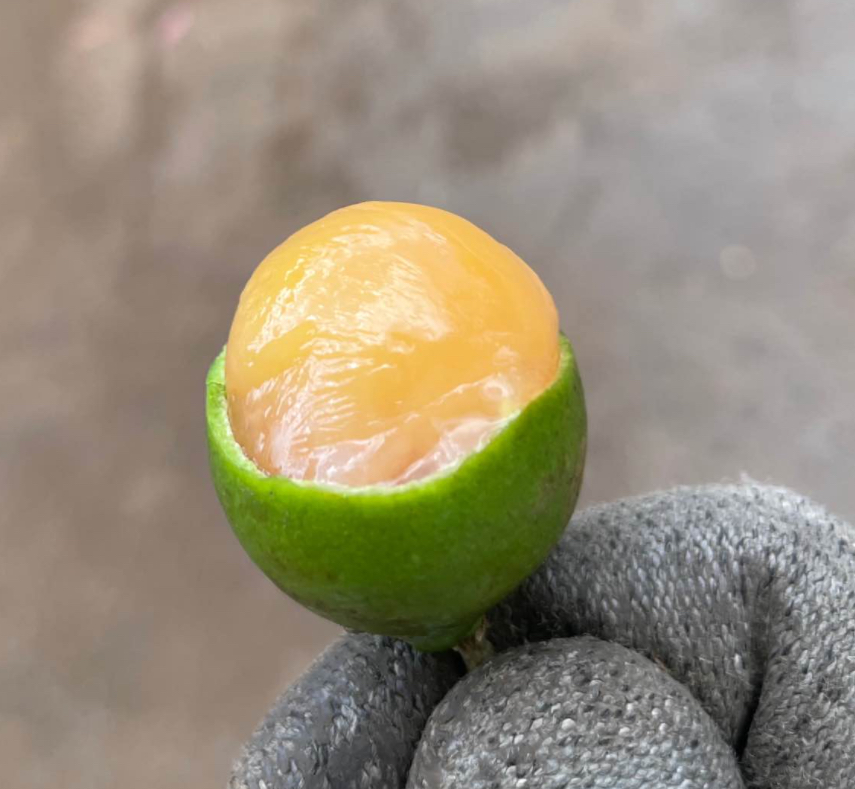
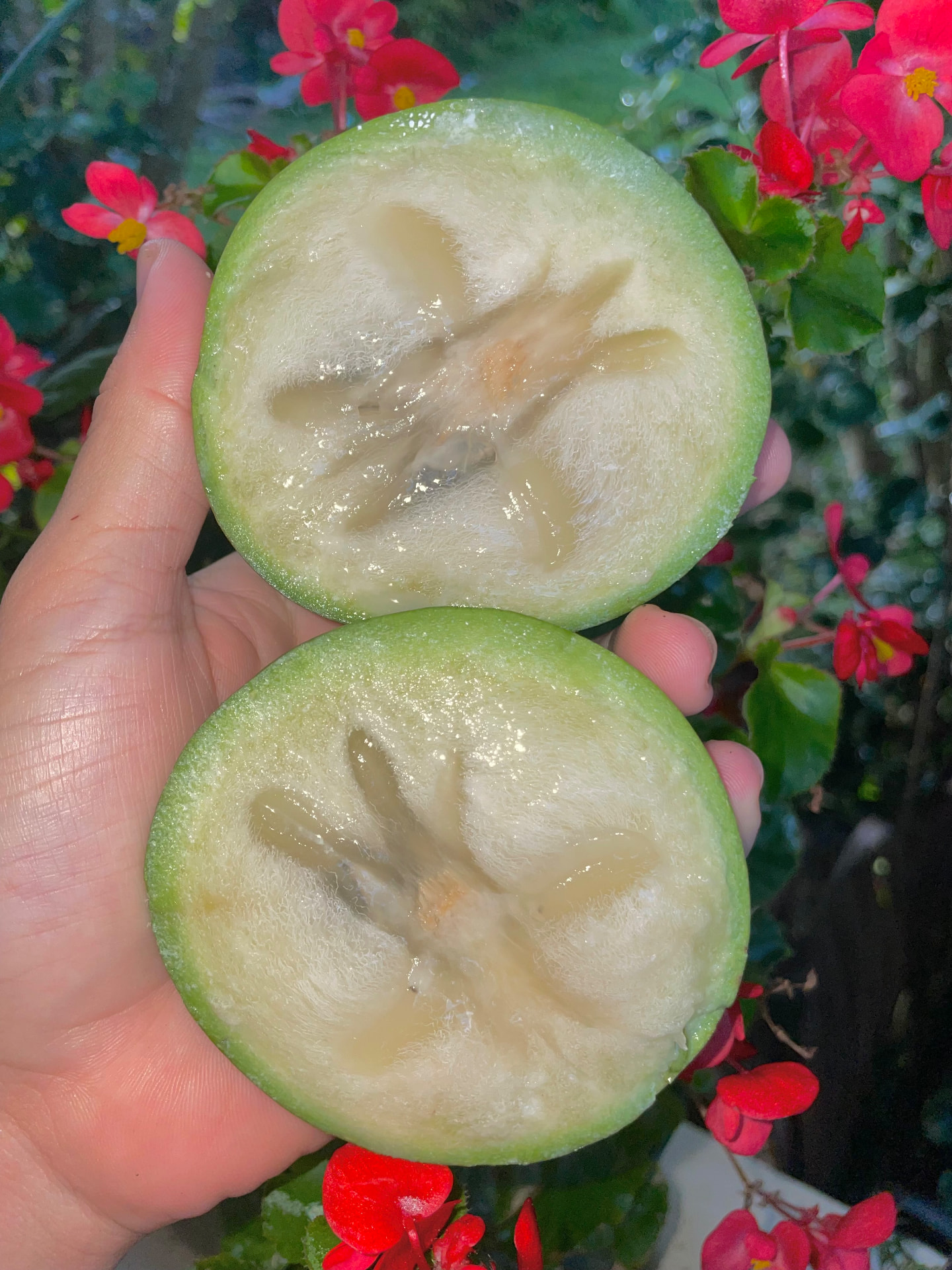
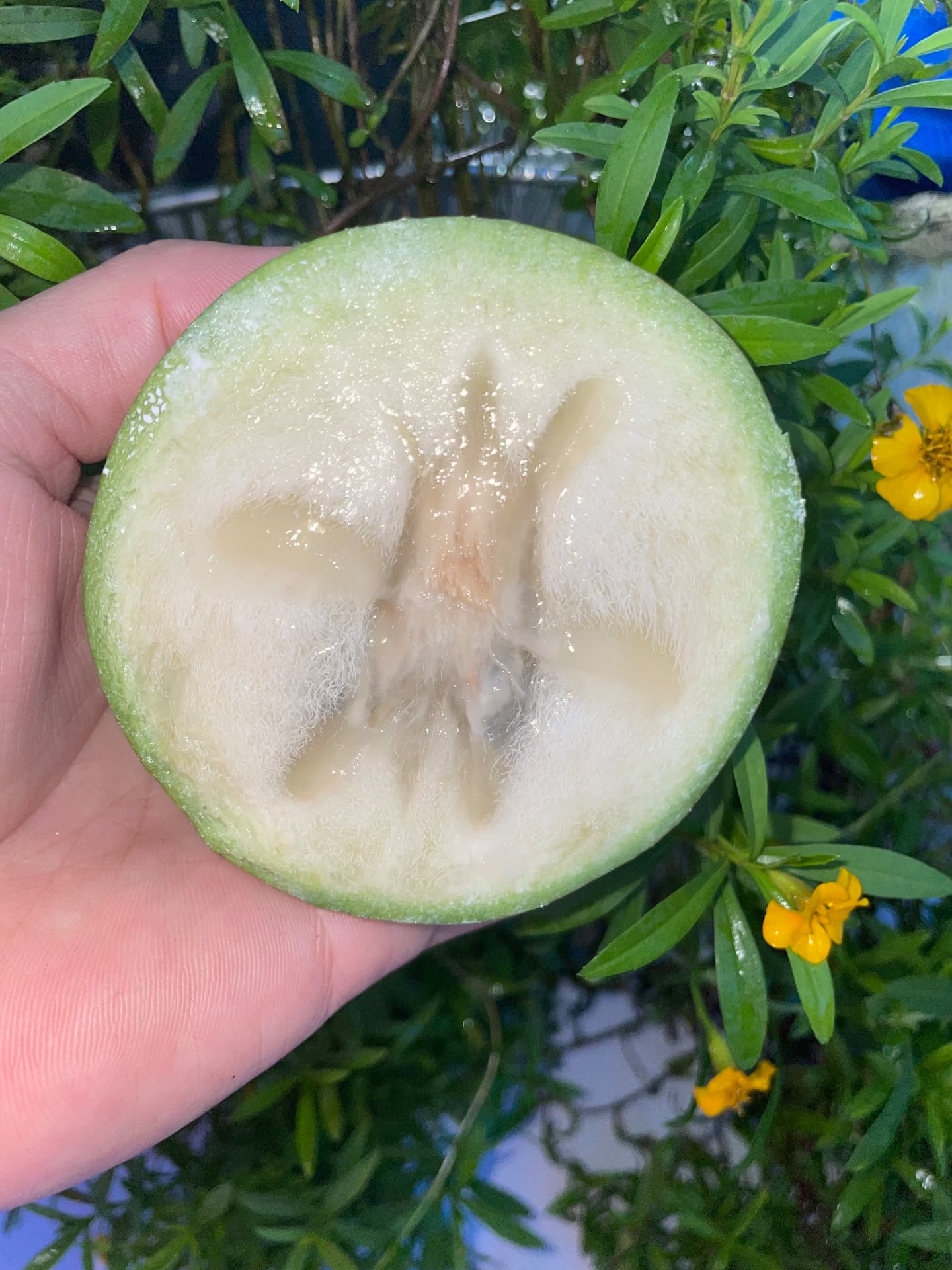
About the speciesABOUT THE SPECIES — Soft caimito pulp and the interior seed pattern. This purchase is for 15 fresh seeds; fruit is not included.
Tropical Fruit Tree Seeds
15 Fresh Caimito Seeds
Chrysophyllum cainito L.
Star Apple • Chrysophyllum cainito
$20.89for 15 fresh seeds
15 FRESH SEEDS
FREE SHIPPING
In stock — fresh seeds, packed and dispatched within 1–2 business days
YOU RECEIVE 15 FRESH CAIMITO SEEDS. This listing is not for a live plant or fruit. FREE SHIPPING.
1
15 fresh Chrysophyllum cainito seeds for planting. Grow caimito, or Star Apple, a Sapotaceae fruit tree with star-patterned fruit and unmistakable two-tone foliage. Free shipping.
- Free shipping on this listing
- Secure encrypted checkout
- Carefully packed in Puerto Rico
- Detailed growing guide included
- Scientific name
- Chrysophyllum cainito L.
- Family
- Sapotaceae
- Product type
- 15 fresh seeds for planting
- Common names
- Caimito, Star Apple
- Climate
- Tropical to warm subtropical; protect young growth from frost and prolonged cold
- Light
- Bright filtered light for seedlings, progressing gradually toward stronger sun
- Water
- Stable moisture in a freely draining medium; avoid saturation
- Soil
- Clean, airy and moisture-retentive propagation mix
- Seed handling
- Clean and sow fresh seed without unnecessary prolonged storage
- Growth habit
- Evergreen tropical fruit tree with distinctive two-tone foliage
The name Star Apple makes sense the moment a caimito is cut across: the soft interior can reveal a star-like arrangement around the seeds.
Chrysophyllum cainito L. belongs to Sapotaceae. Like other members of that family, its tissues and fruit contain latex. Its foliage is equally memorable — polished green above, with a silky coppery to reddish-brown underside that flashes as leaves move.
Green and purple fruit forms are known, but these seeds are not offered as a named cultivar or a promise of a particular fruit color. Every seedling carries natural genetic variation.
This listing is for 15 fresh caimito seeds. The gallery documents the mature species; fruit and live plants are not included.
What You Receive
- 15 fresh Chrysophyllum cainito seeds
- Seeds for planting
- Free shipping
- Access to the shared Caimito growing guide
- Fruit and live plant not included
YOU RECEIVE 15 FRESH CAIMITO SEEDS. This listing is not for a live plant or fruit. FREE SHIPPING.
Fresh Caimito Seed Notice
Clean fresh seed should be sown promptly. Avoid unnecessary prolonged storage when fresh planting material is available.
Seedlings are genetically variable. Purple and green fruit forms exist, but no named cultivar, mature fruit color, fruit quality or future production is promised.
The gallery uses existing fruit photographs to identify the species. Fruit is not included.
Seed to first leaves
Starting Fresh Caimito Seeds
- 1
Clean the seed
Remove every trace of pulp and latex-bearing residue with clean water. Surface residue encourages mold in a warm propagation tray.
- 2
Choose individual containers
Use small pots or deep cells with open drainage so emerging roots can develop without an early tangle.
- 3
Sow at a sensible depth
Set each seed on its side and cover shallowly, about one seed thickness. Firm gently so the seed contacts the medium without compacting it.
- 4
Balance moisture and air
Water to settle the mix, drain completely and maintain steady moisture. The goal is damp and aerated, not saturated.
- 5
Hold steady warmth
Keep the tray warm and protected from large temperature swings. Do not compensate for cool conditions by adding more water.
- 6
Read the new growth
After emergence, move seedlings into bright filtered light. Increase direct exposure in stages as leaves firm and new growth continues.
CORRECT ✓
Clean fresh seed on its side, shallowly covered in a warm, airy medium that remains evenly moist.
AVOID ✕
Fruit residue, deep burial, cold wet mix, sealed containers without airflow or abrupt exposure of soft seedlings to harsh sun.
The Star Is Inside
Caimito's best-known feature is hidden until the fruit is opened. A crosswise cut can reveal pulp chambers arranged like a star, while the soft edible portion surrounds smooth seeds at the center.
The fruit may contain visible latex, a characteristic familiar across Sapotaceae. Let the photographs introduce the mature species; the packet itself contains seeds only.
A Tree Recognizable by Its Leaves
Even without fruit, caimito has an identity. The upper leaf surface is glossy green, while the underside carries a silky copper, bronze or reddish-brown sheen. A breeze turns that contrast into one of the tree's most ornamental traits.
Seedlings need time to build that mature character. Early growth should be judged by steady leaf development and a healthy root system, not by resemblance to a fruiting tree.
From Shared Tray to Individual Tree
As soon as seedlings are established, give each one its own draining container. Move the root ball intact rather than teasing delicate roots apart, then keep the plant in filtered light while it settles.
Step up container size gradually. In suitable warm climates, established plants can transition outdoors toward stronger sun and eventually a well-drained permanent site; protected container growing is the practical path where cold arrives.
Variation Is Part of Growing from Seed
A seed is not a clone. Growth rate, foliage and any eventual fruit can differ among seedlings, even when all came from the same source fruit.
The species includes green and purple fruit forms, but these seeds carry no cultivar claim. That makes them appropriate for growers who value the species and the process rather than a guaranteed mature result.
Why grow it
Why start Caimito from seed?
Star-patterned fruit interior
Glossy green leaves with silky coppery undersides
A distinctive evergreen member of Sapotaceae
A seed-grown tree with natural individual variation
Shared species guide for seed and live-plant growers
You may also like
Related products