
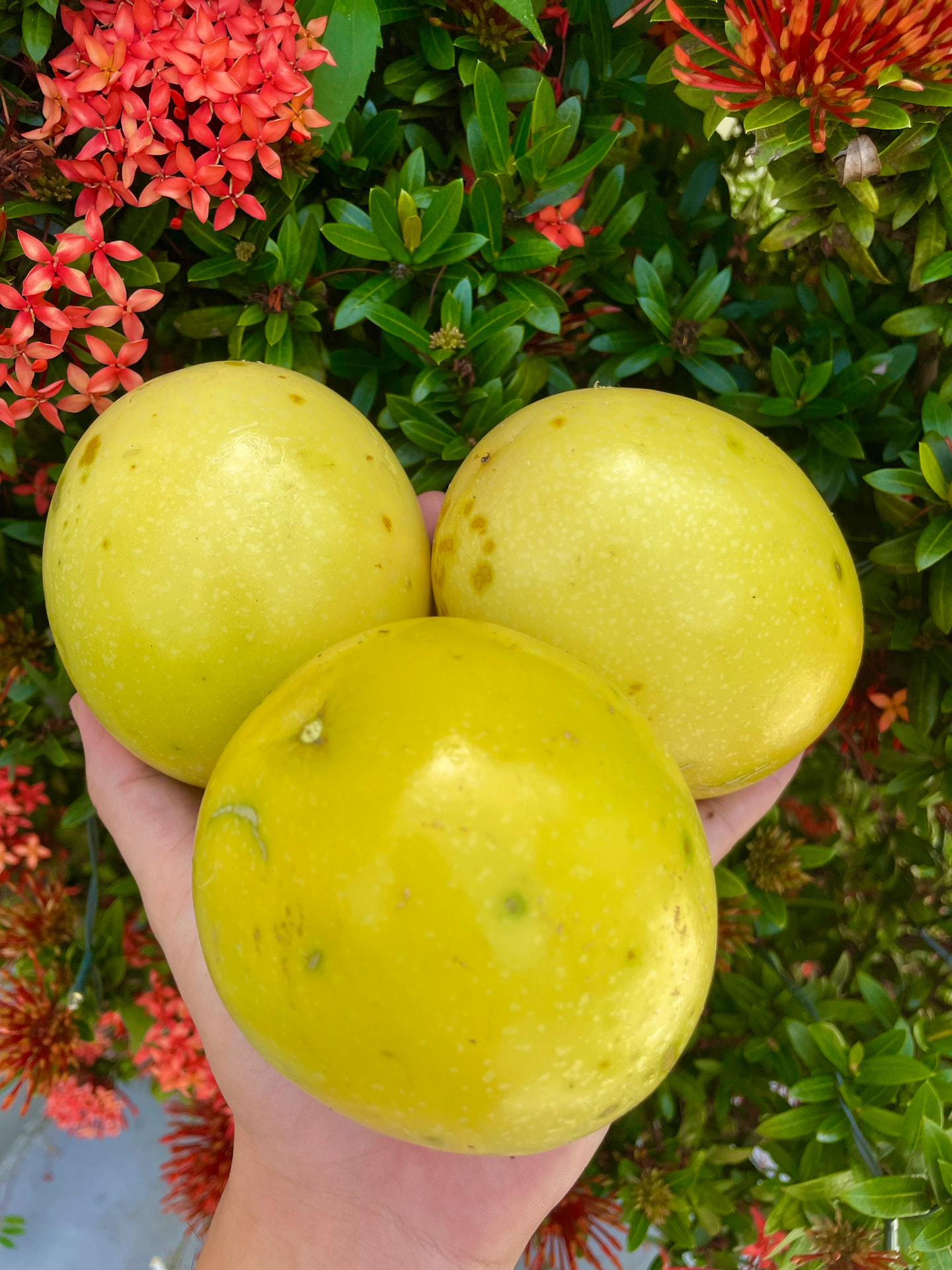
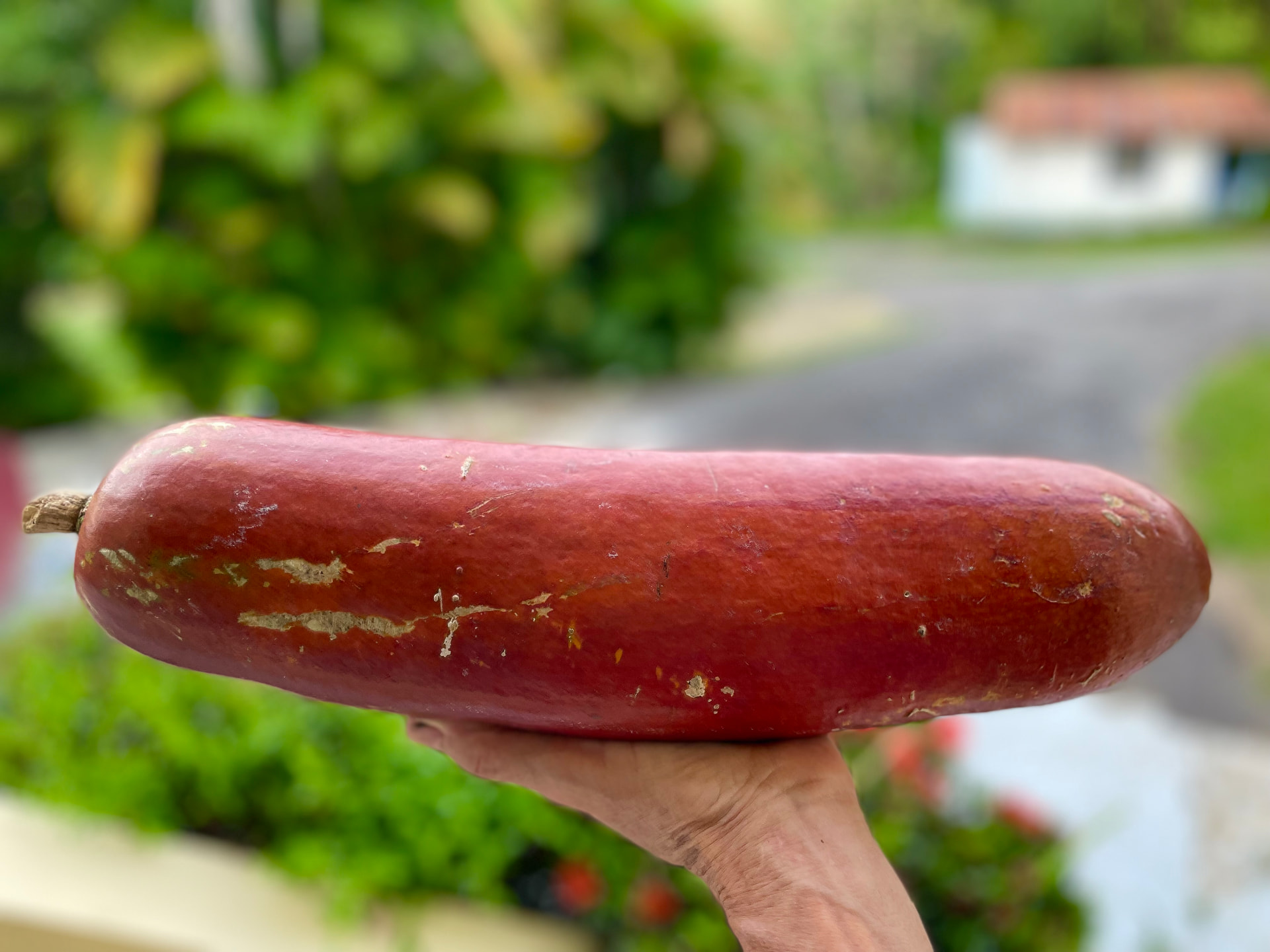
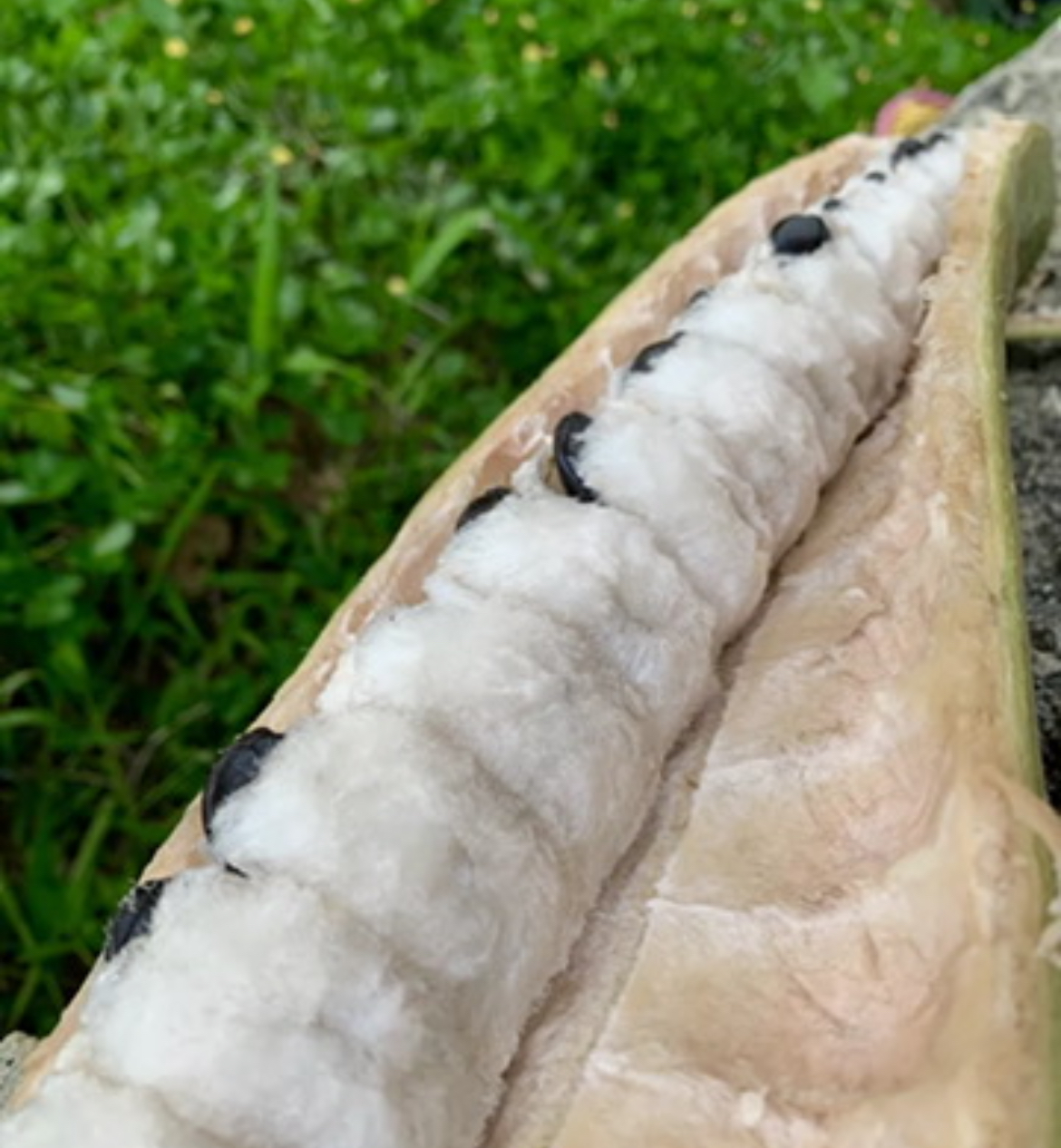
About the speciesABOUT THE SPECIES — A mature Sicana odorifera fruit with its firm, smooth rind. This listing contains seeds for planting; fruit is not included.
Passion Fruit & Fruiting Vines
Pepino Angolo / Cassabanana Seeds
Sicana odorifera (Vell.) Naudin
Cassabanana • Pepino de Olor • Musk Cucumber
$3.89for 15 Seeds
SEEDS FOR PLANTING
FREE SHIPPING
In stock — packed and shipped within 1–2 business days
This listing contains Sicana odorifera SEEDS FOR PLANTING—not fruit. Select your quantity above; FREE SHIPPING applies to every option.
Choose your pack size
Home garden
Grower pack
Free shipping applies to every pack size.
1
Seeds of Pepino Angolo (Sicana odorifera), the vigorous tropical climbing cucurbit whose long, fragrant red fruit perfumes a room. 15, 30, 60 or 100 seeds with free shipping.
- Free shipping on this listing
- Secure encrypted checkout
- Carefully packed in Puerto Rico
- Detailed growing guide included
- Scientific name
- Sicana odorifera (Vell.) Naudin
- Family
- Cucurbitaceae
- Product type
- Seeds for planting
- Habit
- Vigorous tendril-climbing tropical vine
- Support
- Strong trellis, arbor or fence required
- Light
- Full sun
- Sowing depth
- About 1/2 to 1 inch, seed on edge
- Germination
- Often 1–3 weeks in warm soil; variable
- Soil
- Fertile, rich in organic matter, well-drained
- Climate
- Warm, frost-free season; long growing period needed
Few garden plants announce themselves like Pepino Angolo. Sicana odorifera is a perennial-tending tropical cucurbit that climbs with branched tendrils and, given warmth and a sturdy structure, can cover a large arbor, fence or even a tree canopy in a single season.
Its fruit is the attraction: long, cylindrical and heavy, with a hard, smooth rind that ripens from green through orange to red, maroon or near-purple. As it matures it releases a sweet, melon-like perfume—traditionally a ripe fruit was left in a room or closet simply for its scent.
Inside, yellow-orange flesh surrounds a central cavity packed with flat seeds. Ripe flesh is eaten fresh or cooked into sweets and preserves in parts of the Caribbean and Latin America, while immature fruit is sometimes cooked as a vegetable.
The names can mislead: it is called pepino (cucumber) and calabaza (squash), but Sicana is its own genus within Cucurbitaceae. Expect a big, fast, climbing plant rather than a compact cucumber vine.
What You Receive
- 15 Pepino Angolo (Sicana odorifera) seeds
- Seeds for planting
- Seeds only—fruit is not included
- Free shipping
- Access to the dedicated Pepino Angolo growing guide
This listing contains Sicana odorifera SEEDS FOR PLANTING—not fruit. Select your quantity above; FREE SHIPPING applies to every option.
Seeds Only — Fruit Is Not Included
The photographs show mature Sicana odorifera fruit for species reference. This package contains seeds for planting, not fruit.
Seed-grown vines vary naturally in vigor, fruit size, rind color, fragrance and productivity.
Germination rate, flowering, pollination, fruiting time and yield are not guaranteed.
From seed to arbor
Starting Pepino Angolo Seeds
- 1
Soak the seeds
The flat seeds have a firm coat. Soaking 12–24 hours in room-temperature water helps them hydrate evenly.
- 2
Sow on edge
Plant about 1/2 to 1 inch deep, placing the flat seed on its edge to reduce rot in wet media.
- 3
Keep it warm
Warm soil drives germination. Cool, wet conditions are the most common reason seeds stall or decay.
- 4
Moist, not soggy
Keep the medium evenly moist and well aerated; avoid waterlogging while waiting for emergence.
- 5
Transplant young
Cucurbit roots dislike disturbance. Move seedlings while small, with the root ball intact, or sow in place.
- 6
Build support first
Have a strong structure ready before planting out—the vine accelerates quickly once established.
CORRECT ✓
Soaked seed sown on edge 1/2–1 inch deep in warm, fertile, free-draining soil beside a sturdy support.
AVOID ✕
Cold, saturated soil, late transplanting with root disturbance, or planting without a structure strong enough for a heavy vine.
A Climbing Cucurbit on a Grand Scale
Sicana odorifera grows with a speed and reach unusual even among gourds. Branched tendrils grab anything nearby, and a well-fed vine in warm conditions can spread widely along a trellis, fence line or tree.
That vigor is a gift for shading a pergola and a challenge in a small garden. Choose a permanent, sunny spot with a structure that can carry heavy fruit hanging from above.
Fresh fruit FAQ
Questions about fresh cacao pods
- Is Pepino Angolo a kind of cucumber?
- No. It shares the gourd family with cucumbers, but Sicana odorifera is a separate genus with far larger vines and long, hard-rinded fragrant fruit.
- How much space does the vine need?
- A lot. Plan for a strong structure several meters long—an arbor, sturdy fence or pergola. Small tomato cages are not enough.
- Can I grow it in a container?
- It can start in a large container with a trellis, but full vigor and fruiting usually come from in-ground planting with generous root space.
- How long until it fruits?
- It needs a long, warm season. Timing depends on climate, pollination and care; no fruiting age or yield is guaranteed.
- How do I know a fruit is ripe?
- The rind reaches its full color—commonly deep red to maroon—and the fruit becomes strongly fragrant.
The Fragrant Fruit
Fruit are long and cylindrical, often slightly curved, with a hard, glossy rind. As they mature, color shifts from green toward orange, red, maroon or near-purple, and fragrance intensifies. The supplied photos show that natural range.
Ripe yellow-orange flesh is used fresh or in sweets and preserves; immature fruit is sometimes cooked as a vegetable. The hard rind helps harvested fruit keep for a long time.
Fresh fruit FAQ
Questions about fresh cacao pods
- Is Pepino Angolo a kind of cucumber?
- No. It shares the gourd family with cucumbers, but Sicana odorifera is a separate genus with far larger vines and long, hard-rinded fragrant fruit.
- How much space does the vine need?
- A lot. Plan for a strong structure several meters long—an arbor, sturdy fence or pergola. Small tomato cages are not enough.
- Can I grow it in a container?
- It can start in a large container with a trellis, but full vigor and fruiting usually come from in-ground planting with generous root space.
- How long until it fruits?
- It needs a long, warm season. Timing depends on climate, pollination and care; no fruiting age or yield is guaranteed.
- How do I know a fruit is ripe?
- The rind reaches its full color—commonly deep red to maroon—and the fruit becomes strongly fragrant.
Flowers and Pollination
Like most cucurbits, the vine bears separate male and female flowers. Female flowers carry a small immature fruit at their base; it only develops if pollen reaches it.
Bees usually handle pollination. Where fruit repeatedly yellows and drops, hand-transferring pollen from a male flower in the morning can help.
Fresh fruit FAQ
Questions about fresh cacao pods
- Is Pepino Angolo a kind of cucumber?
- No. It shares the gourd family with cucumbers, but Sicana odorifera is a separate genus with far larger vines and long, hard-rinded fragrant fruit.
- How much space does the vine need?
- A lot. Plan for a strong structure several meters long—an arbor, sturdy fence or pergola. Small tomato cages are not enough.
- Can I grow it in a container?
- It can start in a large container with a trellis, but full vigor and fruiting usually come from in-ground planting with generous root space.
- How long until it fruits?
- It needs a long, warm season. Timing depends on climate, pollination and care; no fruiting age or yield is guaranteed.
- How do I know a fruit is ripe?
- The rind reaches its full color—commonly deep red to maroon—and the fruit becomes strongly fragrant.
Sun, Soil and Water
- Full sun and warmth produce the strongest growth
- Rich, fertile soil with plenty of organic matter, draining freely
- Steady water during active growth and fruit development
- Mulch to keep roots cool and moisture even
- Moderate feeding; excess nitrogen favors leaves over flowers
- No frost tolerance—plan for the warm season in cooler climates
Fresh fruit FAQ
Questions about fresh cacao pods
- Is Pepino Angolo a kind of cucumber?
- No. It shares the gourd family with cucumbers, but Sicana odorifera is a separate genus with far larger vines and long, hard-rinded fragrant fruit.
- How much space does the vine need?
- A lot. Plan for a strong structure several meters long—an arbor, sturdy fence or pergola. Small tomato cages are not enough.
- Can I grow it in a container?
- It can start in a large container with a trellis, but full vigor and fruiting usually come from in-ground planting with generous root space.
- How long until it fruits?
- It needs a long, warm season. Timing depends on climate, pollination and care; no fruiting age or yield is guaranteed.
- How do I know a fruit is ripe?
- The rind reaches its full color—commonly deep red to maroon—and the fruit becomes strongly fragrant.
Common Mistakes
- Treating it like a small cucumber vine
- Underbuilding the trellis
- Sowing into cold, wet soil
- Disturbing roots when transplanting large seedlings
- Planting in shade
- Expecting fruit in a short cool season
Fresh fruit FAQ
Questions about fresh cacao pods
- Is Pepino Angolo a kind of cucumber?
- No. It shares the gourd family with cucumbers, but Sicana odorifera is a separate genus with far larger vines and long, hard-rinded fragrant fruit.
- How much space does the vine need?
- A lot. Plan for a strong structure several meters long—an arbor, sturdy fence or pergola. Small tomato cages are not enough.
- Can I grow it in a container?
- It can start in a large container with a trellis, but full vigor and fruiting usually come from in-ground planting with generous root space.
- How long until it fruits?
- It needs a long, warm season. Timing depends on climate, pollination and care; no fruiting age or yield is guaranteed.
- How do I know a fruit is ripe?
- The rind reaches its full color—commonly deep red to maroon—and the fruit becomes strongly fragrant.
Why grow it
Why grow Pepino Angolo?
Distinctive tropical cucurbit, not a cucumber
Long, colorful, fragrant fruit
Fast, vigorous climber for arbors and fences
Caribbean and Latin American garden heritage
Ornamental and edible interest
Free shipping on every quantity
You may also like
Related products
Red / Purple Passion Fruit Seeds – Parcha Morada – Passiflora edulis
Passiflora edulis Sims
From $5.06
15 Fresh Inga spectabilis Seeds – Guamá / Guaba Machete / Ice Cream Bean
Inga spectabilis (Vahl) Willd.
$22.89