
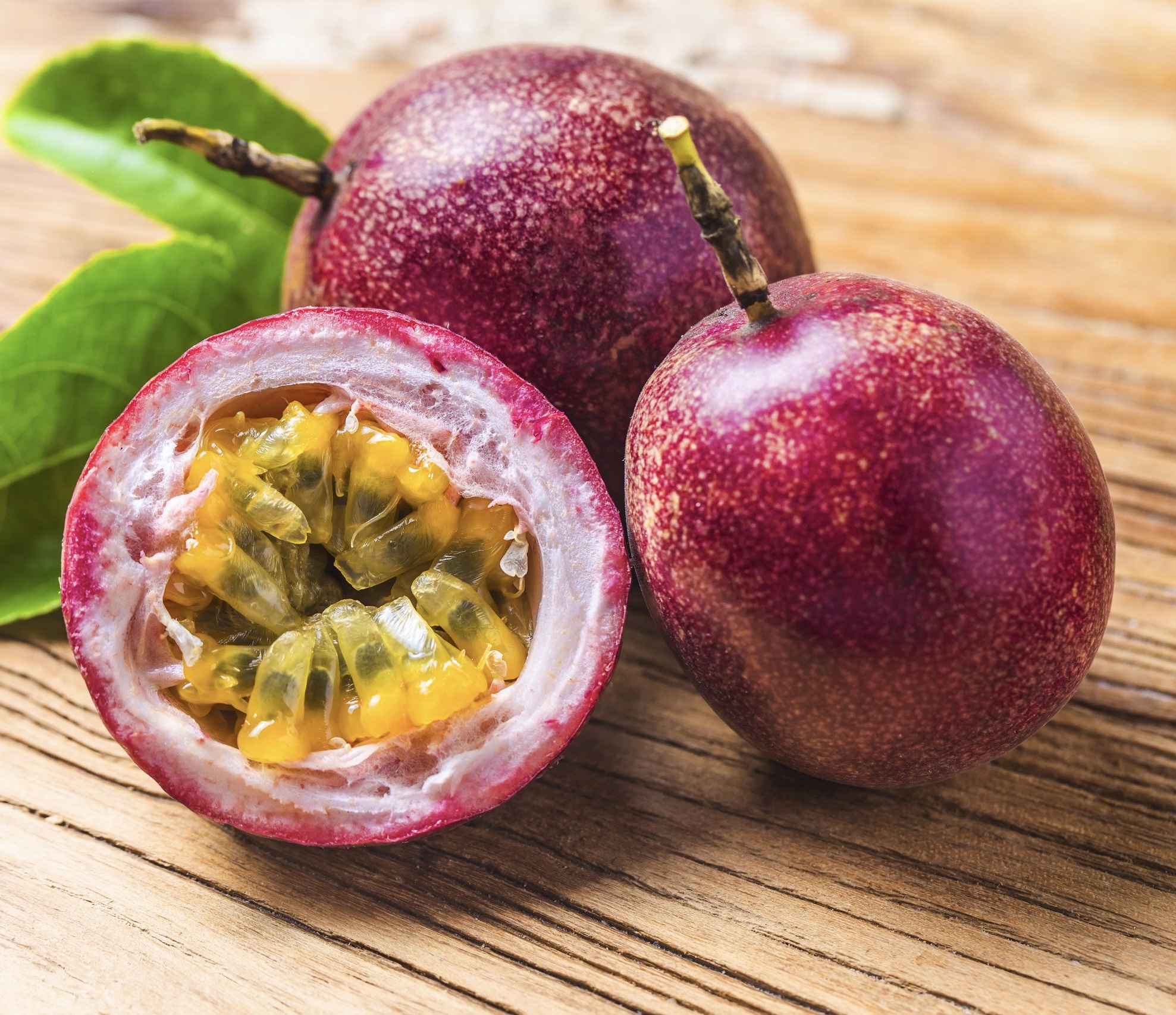
Red / Purple Passion Fruit Seeds – Parcha Morada – Passiflora edulis
Passiflora edulis Sims
From $5.06
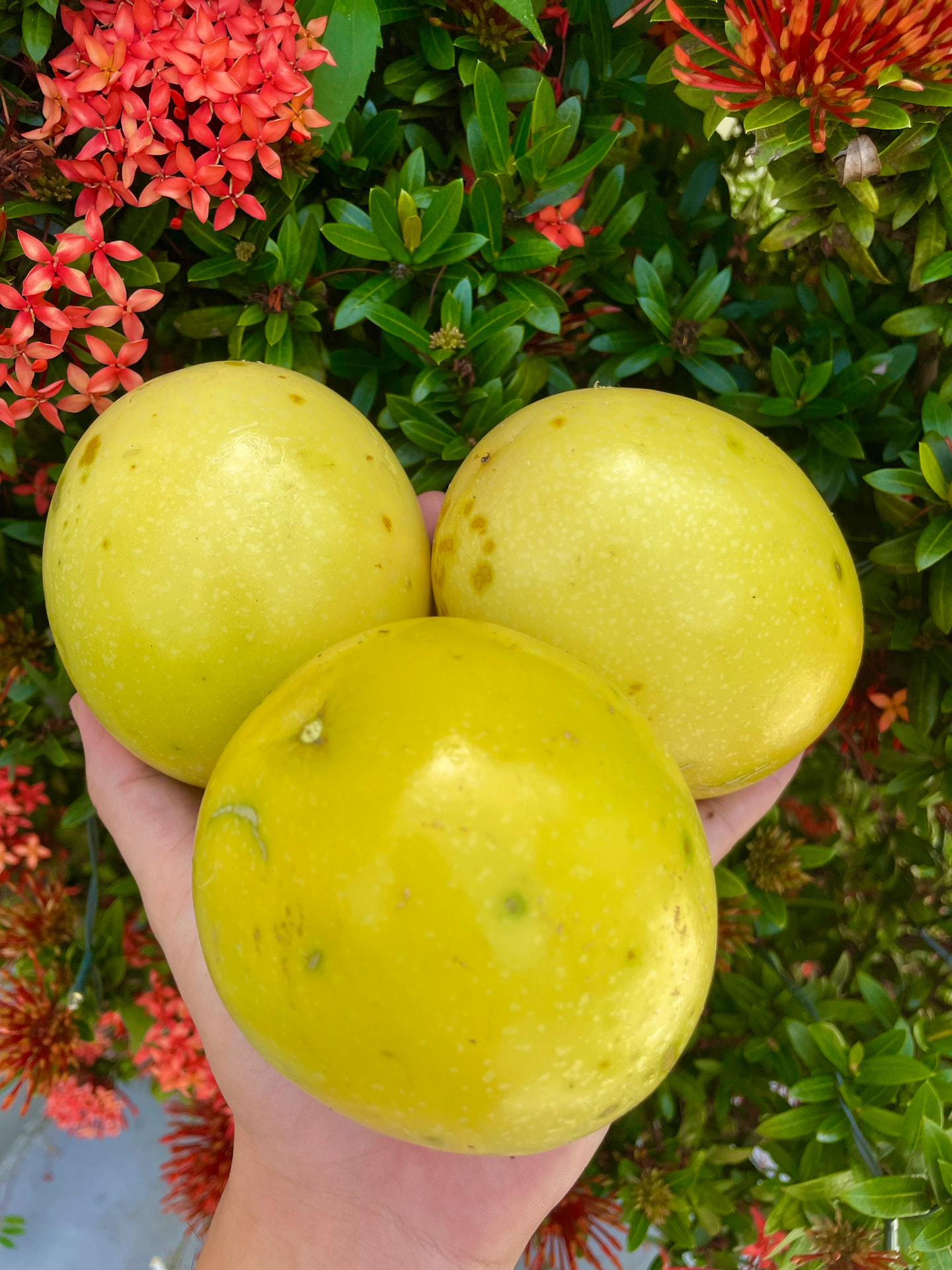
About the speciesAbout the species: mature yellow passion fruit (Passiflora edulis). This listing is for SEEDS — FRUIT NOT INCLUDED.
Passion Fruit & Fruiting Vines
Passiflora edulis Sims
Maracuyá • Parcha • Parchita • Chinola • Lilikoi
SEEDS FOR PLANTING
FREE SHIPPING
In stock — packed and shipped within 1–2 business days
This listing is for Passiflora edulis SEEDS FOR PLANTING — not fruit and not a live vine. The yellow fruit in the photographs illustrates the mature species; FRUIT NOT INCLUDED. Select your pack size above; free shipping applies to every option.
Choose your pack size
Home garden
Bulk
Free shipping applies to every pack size.
Yellow passion fruit (Passiflora edulis) seeds for planting — known as maracuyá, parcha, parchita and chinola. Choose 25, 50, 100 or 1,000 seeds with free shipping.
Yellow Passion Fruit is one of the most recognizable tropical fruiting vines in the world. Passiflora edulis climbs quickly under suitable conditions, covers a trellis or fence with dense growth, and produces the elaborate, instantly recognizable passion flower before setting rounded fruit that ripens toward yellow.
Inside, the fruit holds juicy, highly aromatic pulp wrapped around numerous seeds. Flavor is generally sweet-tart and intensely tropical, which is why the pulp is used so widely for juices, tropical beverages, desserts, sauces and syrups.
The species carries different names depending on where you are: parcha or parcha amarilla in Puerto Rico, maracuyá or maracuyá amarillo across much of Latin America, chinola in the Dominican Republic, parchita in parts of Venezuela and the Caribbean, maracujá in Brazil and lilikoi in Hawaii. All refer to the same familiar passion fruit.
The yellow form has historically been designated Passiflora edulis f. flavicarpa in older literature. Modern taxonomic treatments generally place the yellow form within Passiflora edulis rather than treating it as a separate species. These seeds are sold specifically as the yellow-fruited type; no named cultivar is claimed.
Choose the pack size that fits your project — 25, 50, 100 or 1,000 seeds. Every option ships free.
This listing is for Passiflora edulis SEEDS FOR PLANTING — not fruit and not a live vine. The yellow fruit in the photographs illustrates the mature species; FRUIT NOT INCLUDED. Select your pack size above; free shipping applies to every option.
THIS LISTING IS FOR SEEDS. NO FRUIT. NO LIVE PLANT. The passion fruit shown in the photographs illustrates the mature species so you can identify what you are growing.
The yellow form has historically been referred to as Passiflora edulis f. flavicarpa. Modern taxonomic treatments generally place it within Passiflora edulis, so it is not a separate species and no named cultivar is claimed.
Seed-grown Passiflora plants show natural genetic variation. Fruit size, appearance, sweetness, acidity, aroma, productivity and vigor are not guaranteed to match the fruit shown in the photographs. No germination percentage, fruiting age or yield is guaranteed.
From seed
Remove any dried pulp residue and rinse the seed clean. Pulp left on the seed coat encourages mold in the germination medium.
An optional soak in clean room-temperature water for roughly 12–24 hours before sowing can help hydrate the seed coat. Discard the water afterwards and sow promptly.
Use a fertile, airy, well-draining seed-starting medium — for example a peat or coir base opened up generously with perlite.
Sow at about 1/4 to 1/2 inch deep in trays, cells or small pots with free drainage, then firm lightly.
Maintain steady moisture without prolonged waterlogging. Bottom watering or misting avoids displacing the seed and reduces surface crusting.
Passiflora germinates in warm conditions; consistently warm medium supports germination while cool, wet medium slows it and increases seed rot risk.
Germination in passion fruit is variable and often irregular. Some seed emerges in a few weeks while other seed from the same batch takes considerably longer. Keep trays warm and moist rather than discarding them early.
Once seedlings emerge, give bright light so they grow stocky. Very young seedlings appreciate protection from harsh all-day direct sun.
Move seedlings into larger containers once they have several true leaves and a sound root system, keeping the root ball intact.
Passiflora edulis is a vigorous climber. Give a strong trellis, fence or other durable support as the vine develops; tendrils will do the rest.
CORRECT ✓
Clean seed sown about 1/4 to 1/2 inch deep in a fertile, airy, well-draining medium kept warm and evenly moist.
AVOID ✕
Seed sown too deeply, left in cold conditions, allowed to dry out completely, or sitting in saturated, waterlogged medium.
The mature fruit develops a yellow exterior. Inside, it contains highly aromatic, juicy pulp surrounding numerous seeds — the pulp and seeds are eaten together.
Flavor is generally sweet-tart and intensely tropical, but sweetness, acidity, aroma, size and other characteristics vary between plants and with growing conditions.
Seed-grown plants carry natural genetic variation. Fruit produced by any individual vine is not guaranteed to be identical in size, appearance, flavor, productivity or other traits to the fruit shown in photographs.
Ripe passion-fruit pulp is commonly enjoyed fresh, spooned straight from the halved fruit, and is also strained for juice.
Plants in the genus Passiflora have a long history of traditional use in different cultures, and some traditional preparations have been associated with relaxation. These are cultural and historical practices, not demonstrated medical treatments.
Separately, Passiflora edulis has been investigated scientifically for naturally occurring plant compounds, including antioxidant compounds, phenolic compounds and flavonoids. Scientific investigation of plant compounds is not the same as a proven medical treatment, and findings reported for one Passiflora species do not transfer to another.
Alpha Tropic makes no claim that yellow passion fruit or these seeds cure, treat or prevent any medical condition. These seeds are sold for planting and are not intended to be consumed.
Ethnobotanical and research information is provided for educational purposes only and is not medical advice. This product is sold as seeds for planting.
Passiflora edulis is a vigorous climbing vine, not a shrub. Plan the support before planting: a strong trellis, sturdy fence, arbor or wire system that can carry a heavy, mature vine plus fruit load.
Guide the young vine onto its support and let the tendrils take over. Regular light training keeps growth manageable and keeps fruit accessible.
The species produces the characteristic elaborate passion flower, with a fringed corona above broad petals and sepals — one of the most ornamental flowers among edible fruit crops.
Fruit set depends on effective pollination. Passion fruit flowers are commonly pollinated by large bees such as carpenter bees, and hand pollination is often used where suitable pollinators are scarce. Yellow passion fruit is frequently reported to benefit from cross-pollination between different individual plants, which is one reason many growers raise more than one seedling. Fruit set is not guaranteed.
Time to flowering and fruit production varies according to climate, genetics, plant health, pollination and cultural conditions. No fruiting age or yield is guaranteed.
Passion fruit prefers tropical and subtropical conditions and is sensitive to frost, particularly as a young plant. In marginal climates, grow in a large container so the vine can be moved under protection before cold weather arrives.
Container culture works when the pot is generous, drainage is free, feeding and watering are consistent, and a strong climbing support is provided.
Why grow it
Passiflora edulis Sims — the yellow-fruited passion fruit type
Spectacular, unmistakable Passiflora flowers
Vigorous climbing habit under suitable conditions
Excellent for trellises, fences and arbors
Highly aromatic pulp with a sweet-tart tropical flavor
Extremely versatile in juices, desserts and sauces
Popular with tropical-fruit collectors and home growers
Choose 25 to 1,000 seeds — free shipping on every pack
You may also like
Passiflora edulis Sims
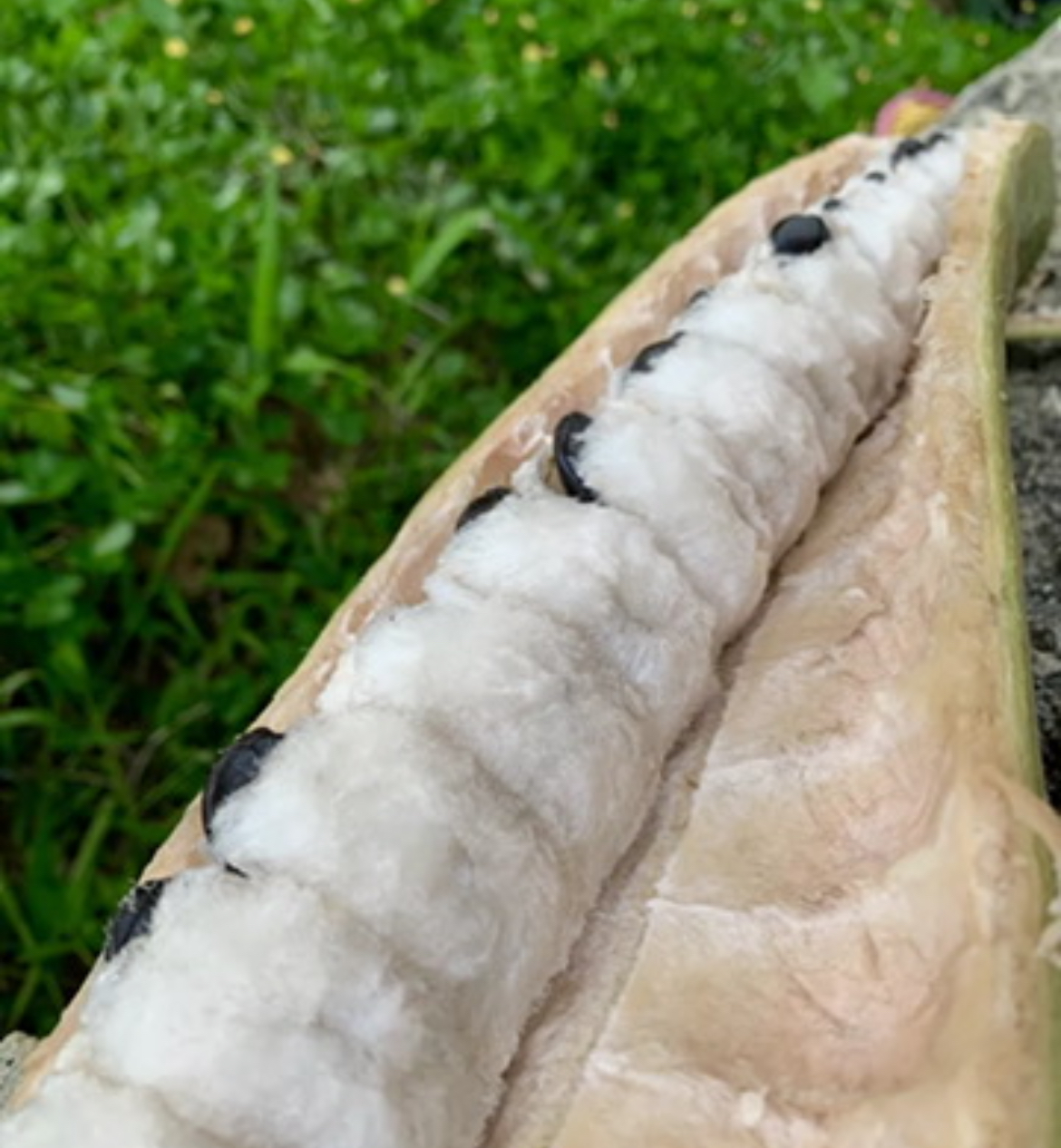
Inga spectabilis (Vahl) Willd.