How Long Does a Quenepa Tree Take to Produce Fruit? Growth, Pollination & Care
Alpha Tropic Seeds · 2026-11-04 · 9 min read
Seed-grown quenepa trees can take the better part of a decade to fruit — and one tree alone may never fruit at all. Here is what the extension research actually says about timing, pollination, and care.
The short answer
According to the University of Florida IFAS Extension, seed-grown quenepa (Melicoccus bijugatus) trees may not begin fruit production for 8 to 10 years. That is a reported horticultural timeframe, not a promise — and because male and female flowers usually occur on separate trees, a single seedling may never fruit on its own no matter how long you wait.
What Is a Quenepa Tree?
Quenepa is Melicoccus bijugatus Jacq., a tropical fruit tree in the Sapindaceae — the soapberry family — making it a relative of lychee, longan, and rambutan rather than of any citrus. The species is native to northern South America and the Island of Margarita and has spread through the lowlands of Central America, the Caribbean, and parts of Florida, Hawaii, and California.
Few fruits carry as many names. In Puerto Rico it is quenepa; across much of the Spanish-speaking Caribbean it is mamoncillo or mamón; in English it is commonly called Spanish lime, genip, or guinep, with kenep and chenette appearing on other islands. Despite the name Spanish lime, the fruit is not a lime and not a citrus of any kind — the name refers only to the small, round, green-skinned fruit.
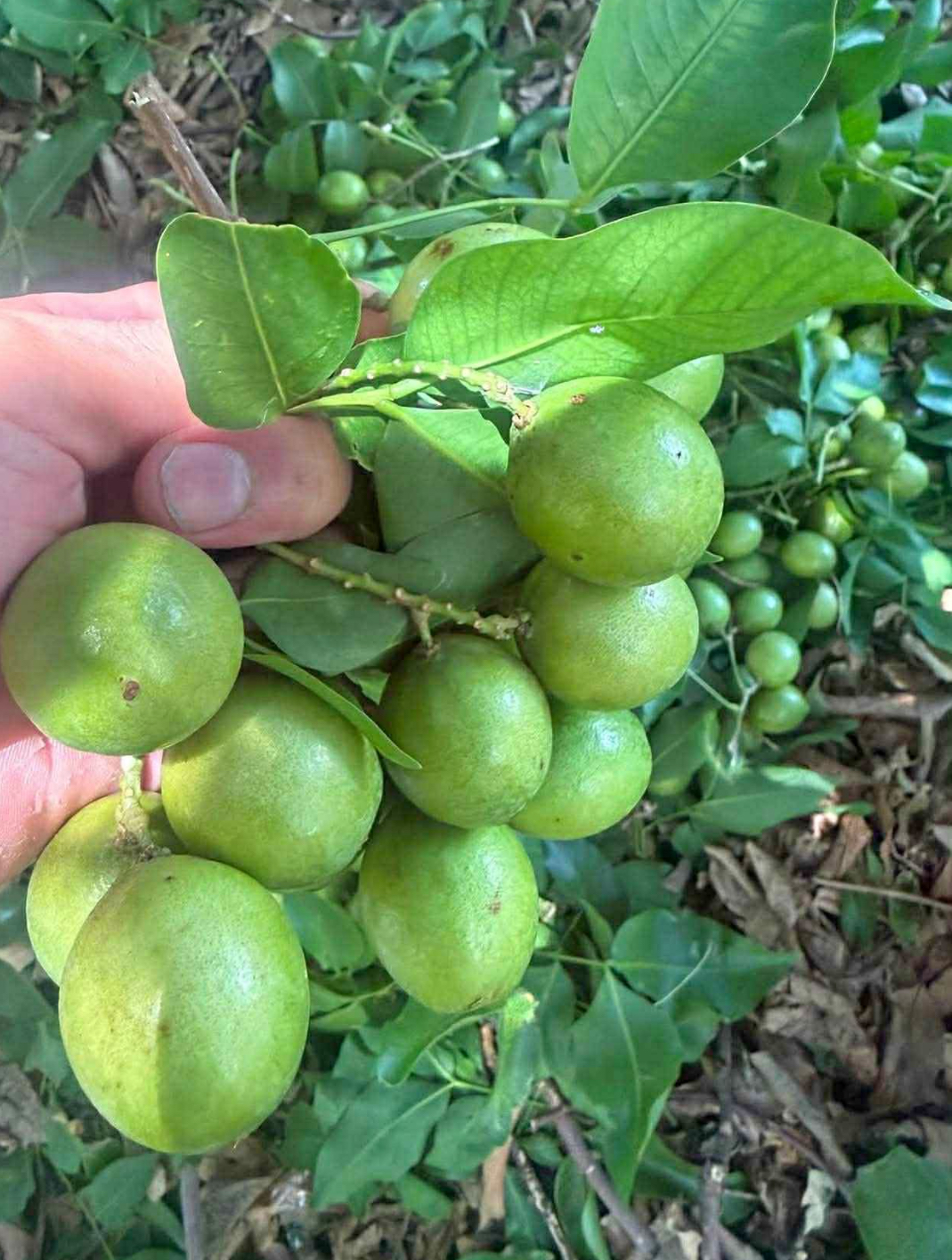
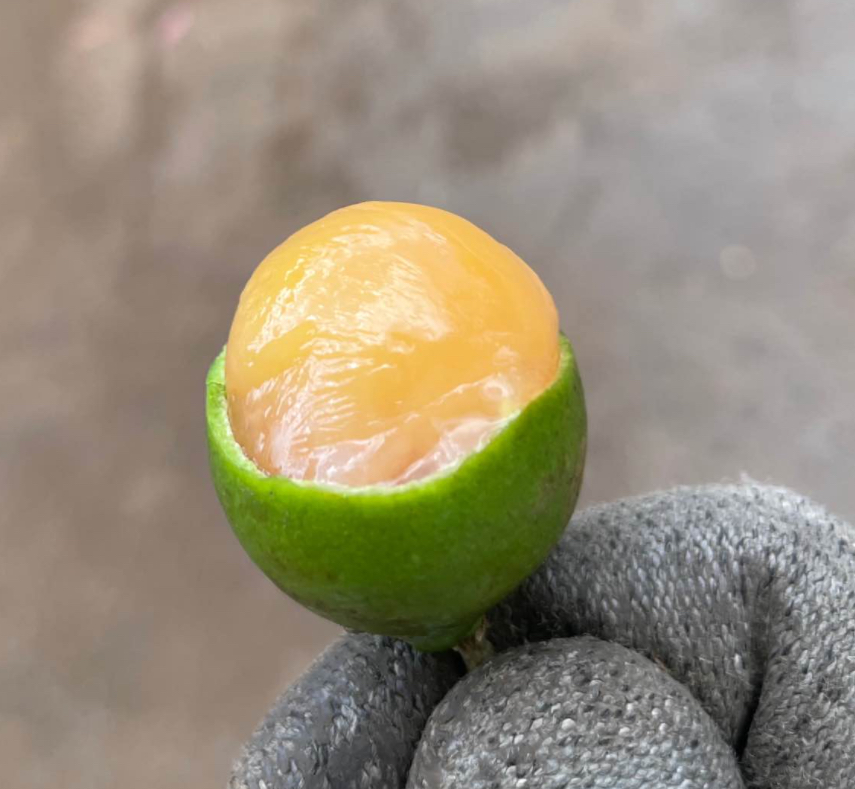
The tree itself is medium to large, reaching up to 85 feet (about 26 m) with a round or oval canopy when it is not pruned, according to the UF/IFAS mamoncillo publication. The fruit is a drupe borne in loose clusters, with a thin, leathery green peel and a succulent, sweet pulp — technically an aril — that clings to a large seed.
How Long Does a Seed-Grown Quenepa Take to Fruit?
The direct answer, from the UF/IFAS Extension fact sheet on mamoncillo: mamoncillo varieties do not come true to seed, and seedling trees may not begin fruit production for 8 to 10 years. Treat that as an honest planning horizon, not a deadline — individual trees vary with genetics, climate, soil, and care, and no seller can promise a specific tree will fruit in a specific year.
Two separate milestones hide inside that estimate. First flowering is when a tree becomes physiologically mature enough to bloom. Successful fruit set is a second hurdle: UF/IFAS notes that quenepa fruit production can be erratic and depends on successful pollination and fertilization of the flowers. A young tree that flowers is making progress, but flowers alone do not guarantee a harvest.
Why so long? A seedling is a juvenile organism. Like most tree seedlings, it must grow through a juvenile phase — building roots, trunk, and canopy — before it can reproduce. Vegetatively propagated plants made from mature wood skip most of that waiting, which is one reason they are prized for fruit production (more on that below).
Why Some Quenepa Trees Never Produce Fruit
The single most important fact about quenepa reproduction is that the species is usually dioecious: male and female flowers are typically borne on separate trees. A tree that is functionally male produces pollen but will never set fruit, no matter how healthy or old it becomes.
That said, not every nonfruiting quenepa is male. UF/IFAS describes fruit production as erratic and dependent on pollination and fertilization, so a functionally female tree without a compatible pollen source nearby, or with poor pollinator activity during bloom, may also produce little or nothing. Age, stress, and unsuitable conditions add further possibilities. The point for buyers is simple: fruitlessness has several possible causes, and tree sex is only one of them.
Male, Female, and Functionally Bisexual Flowers
Quenepa flowers are small and white, with four petals and eight stamens, produced in terminal clusters (racemes) during spring — April to May in Florida, per UF/IFAS. On most trees, an individual tree carries either male or female flowers.
There is an important nuance: UF/IFAS notes that some trees are partly polygamous, meaning they carry both male and female flowers on the same tree. However, the pollen from the male flowers on such trees may not be viable. In practical terms, a tree that shows more than one flower type is not automatically self-fertile — what matters is whether viable pollen reaches receptive female flowers, not whether both flower types are present.
Do You Need Two Quenepa Trees?
For reliable fruit production, generally yes. The UF/IFAS guidance is direct: in general, two trees — one functionally male and one functionally female — are needed to ensure good fruit production. The flowers are pollinated by flying insects, including honey bees, so the two trees need to be within foraging range of the same pollinators.
A caveat worth understanding before you buy seedlings in pairs: two randomly selected seed-grown trees do not guarantee a compatible pair. Each seedling's functional sex is unknown until it flowers, which may be many years away. Growing several seedlings raises the odds of ending up with both sexes, but it is a probability game, not a certainty.
Can You Identify the Sex of a Young Quenepa Tree?
Not reliably. There is no trustworthy way to determine the functional sex of a juvenile quenepa from its leaves, stems, seeds, or growth rate. Be skeptical of any claim that leaf shape, stem color, or seed shape reveals sex in young seedlings — the extension literature offers no such method, and neither do we.
The dependable way to learn a tree's sex is to wait for it to flower and observe what the flowers do: whether they produce viable pollen, whether fruit sets, and how the tree behaves across seasons. This is the honest trade-off of growing quenepa from seed — the tree's reproductive role is revealed only at maturity.
Can Grafting or Air-Layering Help?
Vegetative propagation from a known, mature, fruiting tree offers something a seedling cannot: predictability. A plant propagated from wood of a tree that already fruits carries that tree's genetics, including its functional sex and fruit characteristics.
For quenepa specifically, UF/IFAS reports that the species can be propagated by marcottage — air-layering branches about 2 inches in diameter during the warm part of the year, with roots forming in roughly 5 to 6 weeks. The same publication cautions that grafting or budding onto seedling rootstock may not always be successful for this species. So while vegetative methods exist, they are less standardized for quenepa than for crops like mango.
To be transparent about our own catalog: Alpha Tropic's quenepa plants are seed-grown. They are not grafted, not air-layered, and not sex-selected, and we do not claim otherwise.
Climate, Sunlight, Drainage, and Space
Quenepa is adapted to tropical and warm subtropical areas and is not freeze tolerant. Per UF/IFAS, young trees are damaged or killed at temperatures below 32°F (0°C); leaves and small branches may be killed at 30°F (-1.1°C); and even mature trees may be damaged or killed at 27 to 28°F (-2.8 to -2.2°C). These are Florida-oriented recommendations, but the cold sensitivity applies anywhere frost occurs.
Established trees do best in full sun, and drainage matters: the species tolerates prolonged drought but is intolerant of flooding, so choose a site that does not stay wet after heavy rains. It adapts to a wide range of well-drained soils, including sandy and high-pH calcareous soils.
Finally, respect the mature size. Because unpruned trees can become very large, UF/IFAS recommends planting at least 25 feet (7.6 m) from nearby trees and structures, and keeping the tree away from buildings and power lines. A quenepa is a long-term commitment of space as well as time.
Can You Grow Quenepa in a Container?
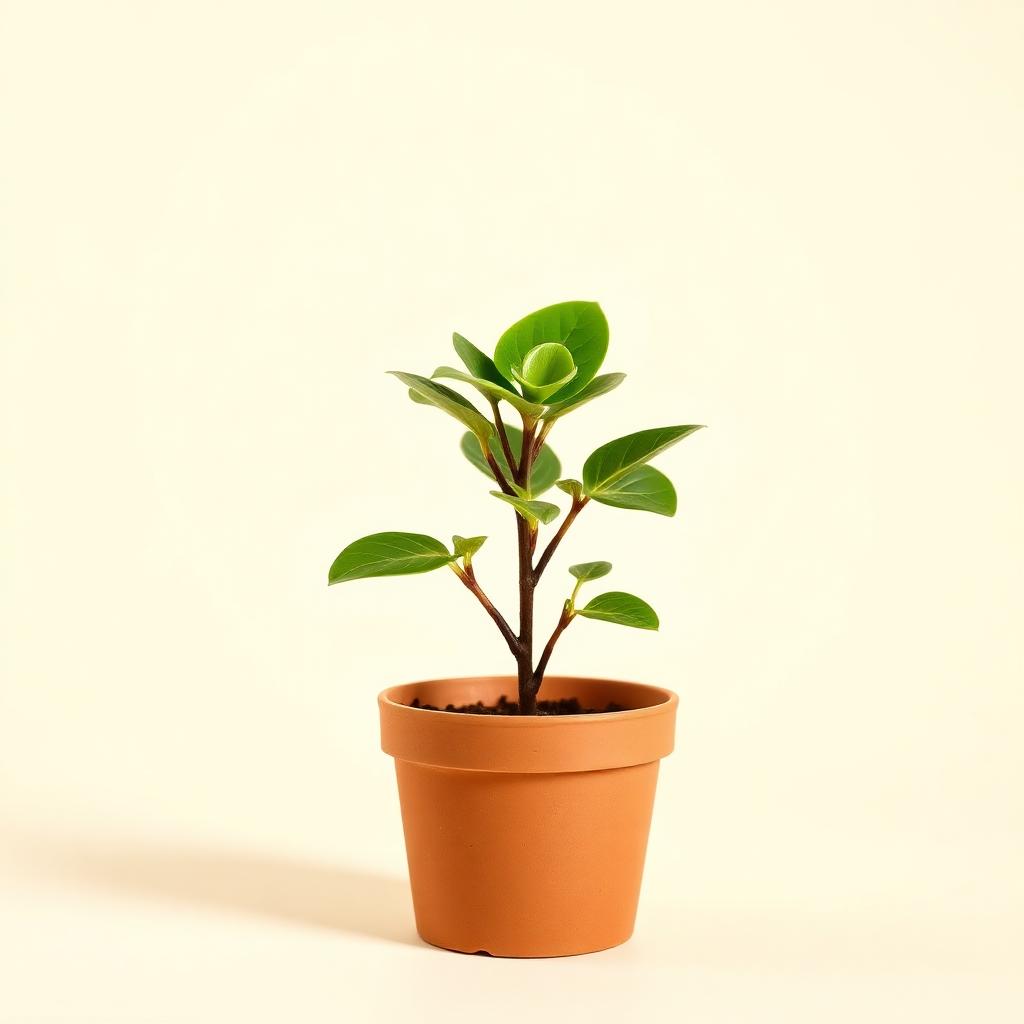
A container is a reasonable starting point, not a permanent home. Young quenepa plants can be grown in pots while they are small — nursery trees in Florida are commonly sold in 3-gallon containers — and container culture lets growers in cold climates move plants to protection when frost threatens.
Two limits apply. First, avoid letting the plant become root bound: UF/IFAS warns that roots circling inside a too-small container may not grow properly once planted out, so repot gradually as the root system fills each pot. Second, be realistic about the endgame. A tree genetically capable of reaching 85 feet will not live its whole life in a small indoor pot, and long-term fruit production in a container is not a reasonable expectation for this species. Think of the pot as a nursery phase and a cold-protection strategy, with planting in the ground as the goal where climate allows.
Quenepa in Puerto Rico
In Puerto Rico, quenepa is one of the most familiar seasonal fruits of the year. When the season arrives, the fruit is sold in clusters along roadsides and at markets across the island, and selected types of Melicoccus bijugatus are cultivated commercially. The species is equally at home as a dooryard tree throughout much of the Caribbean.
The Puerto Rican name quenepa is so strongly associated with the island that many visitors assume it is the fruit's only name — but the same species answers to mamoncillo, mamón, Spanish lime, genip, guinep, kenep, and chenette across the region. One tree, many names, same green clusters.
What You Receive When Buying From Alpha Tropic
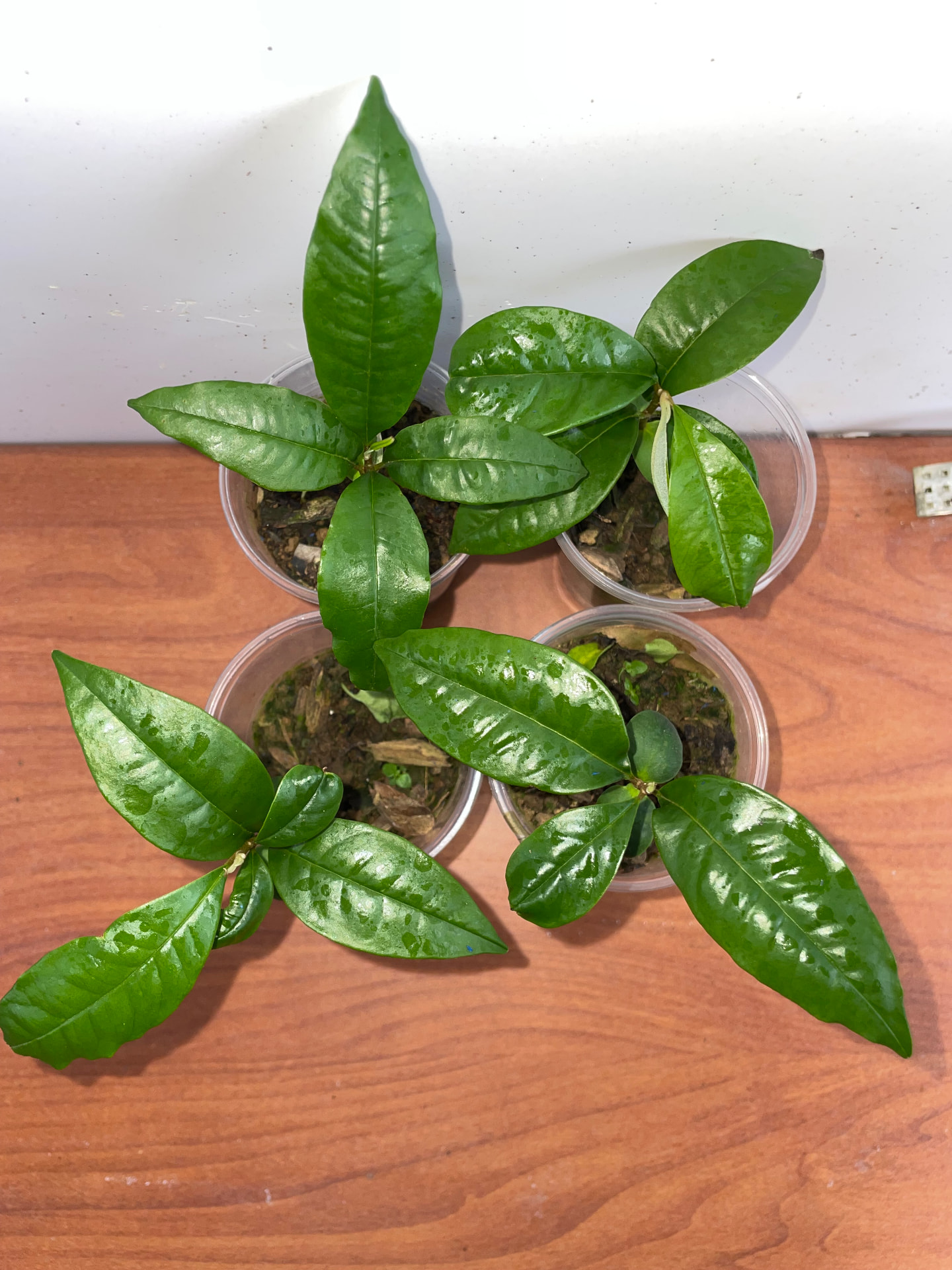
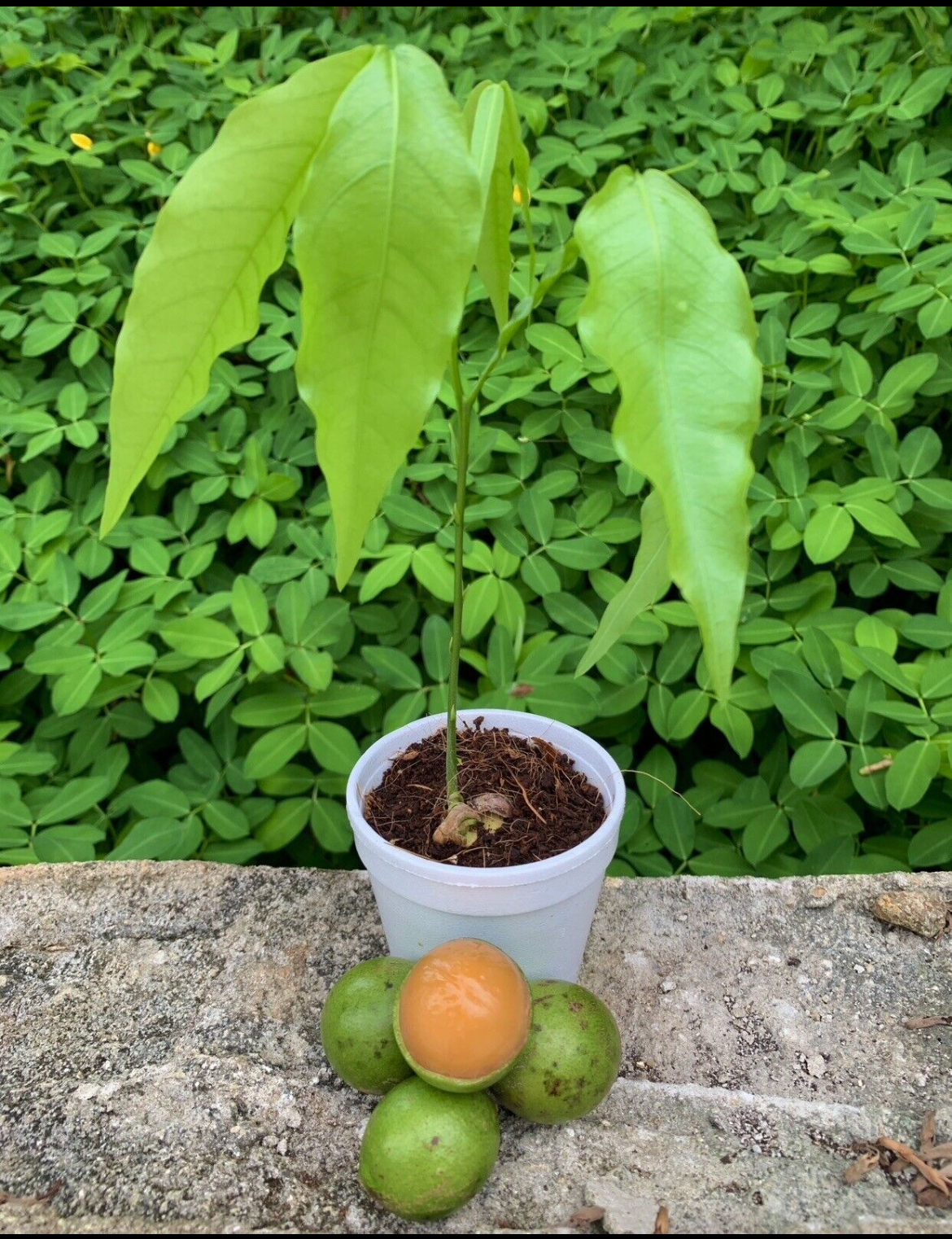
Our quenepa live plant listing is for one seed-grown Melicoccus bijugatus plant, approximately 7–8 inches tall at the time of listing — check the current listing for the exact presentation. The sex of the plant is unknown and cannot be determined at this age. It is not a named cultivar. No fruit is included, and future flowering or fruiting is not guaranteed.
If you prefer to start from the very beginning, we also offer quenepa seeds. Either way, our quenepa growing guide walks through germination, potting, and early care. Availability and pricing change with the season, so the linked listings — not this article — are the source of truth for what is in stock.
Frequently Asked Questions
How long does a quenepa tree take to produce fruit?
UF/IFAS Extension reports that seed-grown quenepa (mamoncillo) trees may not begin fruit production for 8 to 10 years. It is a reported timeframe, not a guarantee — individual trees vary, and a tree's sex and pollination situation ultimately decide whether it fruits at all.
Do you need two quenepa trees to get fruit?
Generally yes. Because male and female flowers usually occur on separate trees, UF/IFAS advises that one functionally male and one functionally female tree are needed for good fruit production. Two random seedlings do not guarantee a compatible pair, since sex is unknown until flowering.
Can I tell whether my young quenepa plant is male or female?
No. There is no reliable way to sex a juvenile quenepa from its appearance. The dependable method is to wait for the tree to flower and observe whether it produces viable pollen, sets fruit, or both.
Are Alpha Tropic's quenepa plants grafted?
No. Our quenepa plants are seed-grown, not grafted, air-layered, or sex-selected. UF/IFAS notes that quenepa can be air-layered but that grafting and budding are not always successful for this species.
Can quenepa grow in a container?
Temporarily, yes — containers are useful while the plant is young and for moving it to frost protection. Repot gradually to avoid root binding, and plan on planting in the ground where the climate allows; a small pot is not a realistic path to long-term fruit production for a tree this large.
Will quenepa survive frost?
No. Quenepa is not freeze tolerant. Young trees can be damaged or killed below 32°F (0°C), and even mature trees can be harmed at 27–28°F. In marginal climates, container growing with winter protection is the safer approach.
Is Spanish lime a real lime?
No. Spanish lime is simply an English name for quenepa (Melicoccus bijugatus), inspired by the small round green fruit. The species belongs to the soapberry family, Sapindaceae, and is related to lychee and longan — not to citrus.
Sources & Further Reading
- Crane, J. H., and Balerdi, C. F. — Mamoncillo (Genip) Growing in the Florida Home Landscape (HS1070/HS310), UF/IFAS Extension
Primary source for the 8–10 year seedling timeframe, flower biology, pollination, propagation, cold sensitivity, spacing, and soil guidance. DOI: 10.32473/edis-hs310-2006.
- Wasielewski, J., and Balerdi, C. — Tropical and Subtropical Fruit Propagation (HS1349), UF/IFAS Extension
Supporting source for propagation methods, including air-layering of Spanish lime (quenepa).
Related growing guides
Available in the catalog
- Quenepa / Mamoncillo Live Plant – Melicoccus bijugatus Tropical Fruit Tree — Melicoccus bijugatus Jacq.
- 15 Fresh Quenepa Seeds – Mamoncillo – Melicoccus bijugatus — Melicoccus bijugatus Jacq.
Ready to start growing?
Browse fresh tropical seeds and nursery-grown live plants, each with its own growing guide.