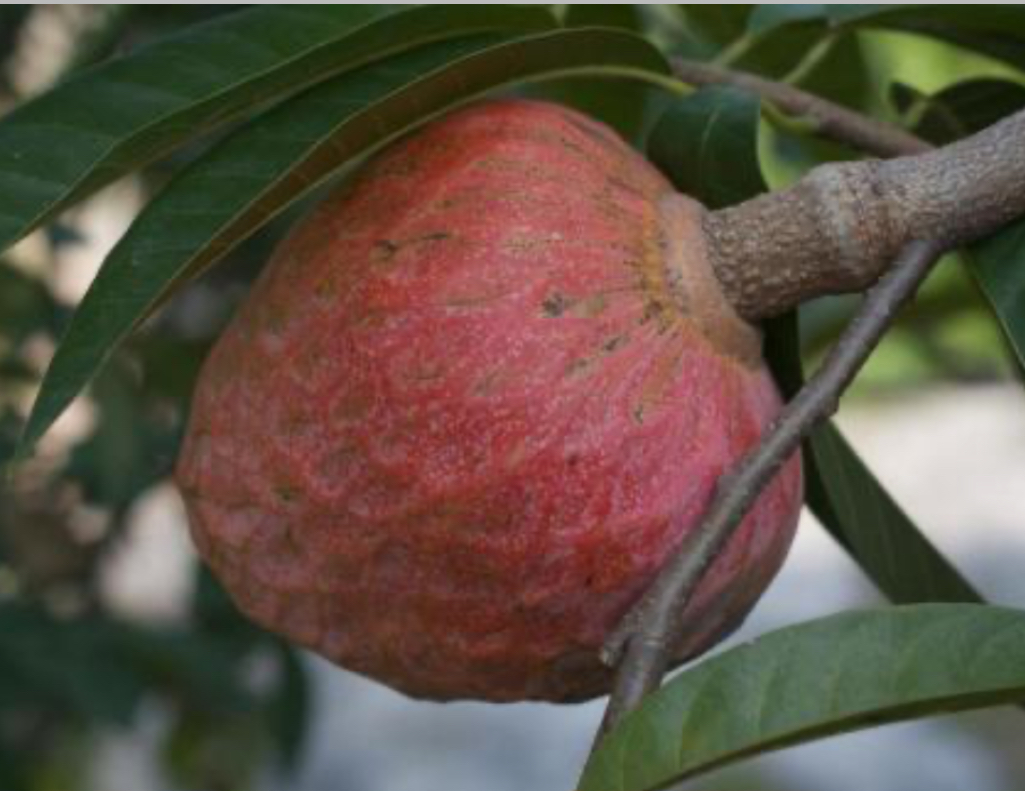
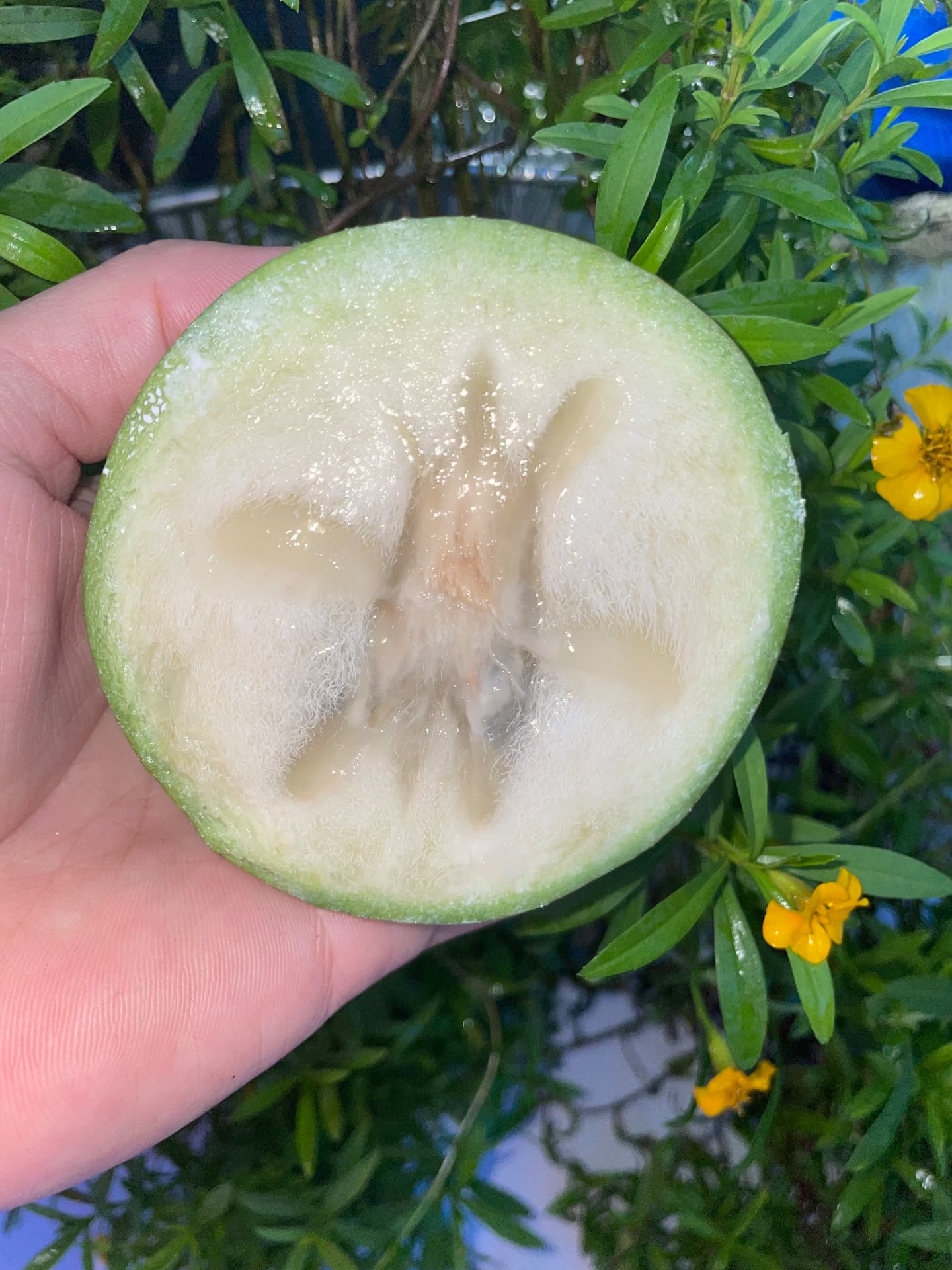
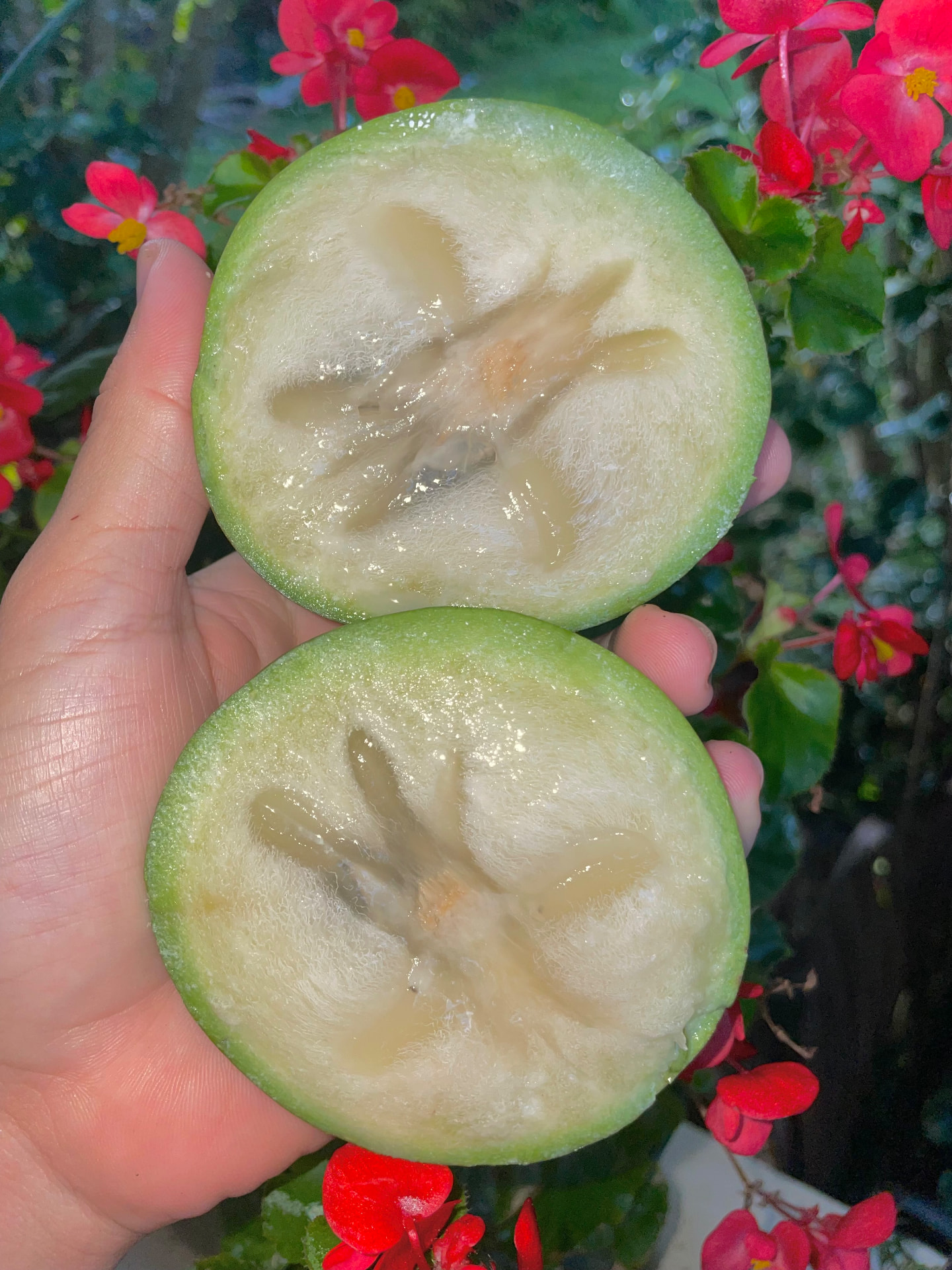
About the speciesAbout the species — caimito fruit cut across, showing the characteristic star-like interior. Fruit shown for species identification and education; fruit is not included.
Tropical Fruit Trees
Chrysophyllum cainito Live Plant
Chrysophyllum cainito L.
Caimito • Star Apple • Estrella
$21.89for 1 live plant, approx. 7 inches tall
FREE SHIPPING
In stock — live plants are carefully prepared and dispatched within 1–2 business days
This listing is for ONE LIVE Chrysophyllum cainito plant approximately 7 inches tall — not seeds and not fruit.
1
One live Chrysophyllum cainito (Caimito / Star Apple) plant, approximately 7 inches tall. A tropical fruit tree valued for its sweet juicy fruit and glossy foliage with golden-brown undersides. Carefully packed in Puerto Rico. Free shipping.
- Free shipping on this listing
- Secure encrypted checkout
- Carefully packed in Puerto Rico
- Detailed growing guide included
- Scientific name
- Chrysophyllum cainito L.
- Family
- Sapotaceae
- Product type
- Live tropical fruit plant
- Plant size
- Approximately 7 inches tall
- Quantity
- 1 live plant
- Common names
- Caimito, Star Apple, Estrella
- Climate
- Tropical / warm subtropical
- Light
- Bright light to full sun once established; acclimate gradually after shipping before prolonged intense sun
- Water
- Keep appropriately moist with good drainage; water thoroughly and avoid waterlogged soil
- Soil
- Fertile, organic and well draining
- Growth habit
- Evergreen tropical fruit tree
- Cold sensitivity
- Protect young plants from frost and prolonged cold
- Difficulty
- Moderate — suited to growers who can provide warmth, light and good drainage
Chrysophyllum cainito L. is a tropical fruit tree in the Sapotaceae family, commonly known as caimito or star apple.
Its foliage is one of its most distinctive features: the upper leaf surfaces are glossy green while the undersides are a golden-brown, bronze tone that shimmers when the leaves move in the wind. This contrast makes the species a striking ornamental tropical tree even outside of fruiting season.
Mature trees produce round tropical fruits that may be purple or greenish depending on the type. When the fruit is cut across, its internal structure may create the star-like appearance responsible for the English name star apple.
The edible pulp is soft, juicy and sweet, and the fruit is commonly eaten fresh.
This listing is for one young live plant approximately 7 inches tall. Fruit photographs illustrate the mature species and do not represent what is included in the shipment. No exact fruit color, size, flavor, fruiting age or future production is guaranteed.
What You Receive
- 1 live Chrysophyllum cainito plant
- Approximately 7 inches tall
- Carefully prepared for shipping
- Free shipping
- Access to the detailed Chrysophyllum cainito growing guide
This listing is for ONE LIVE Chrysophyllum cainito plant approximately 7 inches tall — not seeds and not fruit.
Live Plant Notice
This plant has been grown in warm tropical conditions. Shipping temporarily changes its light, humidity, airflow and temperature, so minor cosmetic shipping stress may occur.
Temporary leaf drooping, slight yellowing, small leaf blemishes or the loss of an older leaf can occur after transit and does not necessarily indicate that the plant is unhealthy.
Unpack the plant promptly after delivery, and do not immediately place a recently shipped plant into intense full sun.
Avoid unnecessary immediate repotting unless the growing medium or container clearly requires it.
Live plants naturally vary slightly in height, leaf count and appearance.
First 7 days
First 7 Days After Arrival
- 1
Unpack promptly
Carefully remove the plant and shipping materials soon after delivery.
- 2
Inspect the plant
Check the leaves, stem, growing medium and moisture level.
- 3
Check soil moisture before watering
Do not water automatically simply because the plant arrived in the mail. If the growing medium is still adequately moist, wait. If it is becoming dry, water thoroughly and allow excess water to drain.
- 4
Begin with bright filtered light
Place the plant in bright indirect or filtered light during its initial recovery.
- 5
Acclimate gradually to stronger sunlight
Over approximately 7–14 days, gradually introduce the plant to stronger sunlight depending on your local climate and growing conditions.
- 6
Avoid heavy fertilizer immediately after shipping
Allow the plant to recover from transit before applying fertilizer.
- 7
Watch for new growth
New growth is one of the best indications that the plant has acclimated successfully.
Light
Established Chrysophyllum cainito trees grow well in bright light to full sun in warm climates, but a newly shipped young plant should not move directly from a shipping box into intense afternoon sun.
Start in bright filtered light and increase exposure gradually over roughly one to two weeks, introducing gentler morning sun first.
Watering
- Water thoroughly rather than applying small amounts frequently.
- Allow excess water to escape through drainage holes.
- Keep the root zone appropriately moist without letting it stay waterlogged.
- Check the growing medium instead of watering strictly by calendar.
- Young container plants may need more frequent monitoring in hot weather.
Soil & Drainage
- Fertile soil with plenty of organic matter.
- Good drainage at every stage of growth.
- A quality tropical-fruit potting mix for container culture.
- Add perlite or a similar amendment if the mix holds too much water.
Repotting
Do not automatically transplant the plant immediately after shipping — allow it to acclimate first whenever possible.
When repotting becomes necessary, step up gradually to a somewhat larger container rather than placing a very small root system into an excessively large pot. The container must have drainage holes.
Temperature & Cold Protection
Chrysophyllum cainito is a tropical to warm-subtropical species and is not frost hardy.
Protect young plants from frost, cold winds and prolonged cold. Growers in cooler climates should keep the plant in a container so it can be moved into a greenhouse, indoors or another protected environment when temperatures drop.
Humidity & Airflow
Moderate to high humidity suits this tropical species, particularly while the plant is young and re-establishing after shipping.
Gentle air movement helps keep foliage healthy; avoid harsh drying wind, especially during the acclimation period.
Fertilization
Wait until the plant has recovered from shipping and is actively growing before beginning fertilizer.
Once settled, use an appropriate balanced fertilizer for tropical fruit plants according to the manufacturer's directions. Avoid excessive fertilizer on very young or recently shipped plants.
Pruning
Remove damaged growth and shape the plant gradually as it develops rather than pruning heavily at once.
Tropical fruit-tree pruning can be used later to keep the canopy at a more manageable size.
Container Growing & Long-Term Care
- Container growing works well while the plant is young.
- Use pots with drainage holes and step up size gradually as roots fill the current container.
- Provide warmth and abundant light after acclimation.
- Containers dry faster than ground plantings — monitor moisture more often in warm weather.
- Chrysophyllum cainito eventually becomes an evergreen tropical fruit tree; allow substantially more space than the shipped plant requires, or manage size with pruning.
About the Fruit
Mature Chrysophyllum cainito produces round tropical fruits; purple and greenish forms exist depending on the type.
When cut across, the interior may show the characteristic star-like pattern that gives the species its English name, star apple. The pulp is soft, sweet and juicy, and is commonly eaten fresh.
Fruit images are for species identification and educational purposes. Fruit is not included.
Nutrition
Caimito is an edible tropical fruit traditionally enjoyed fresh. Like many fruits, it contains naturally occurring nutrients and plant compounds and can be enjoyed as part of a varied diet.
No medicinal or health claims are made about this species or this plant.
Why grow it
Why grow Caimito?
Sweet tropical fruit
Characteristic star-shaped interior when cut across
Beautiful glossy foliage
Distinctive golden-brown leaf undersides
Attractive ornamental tropical tree
Interesting tropical fruit collection species
Suitable for container growing while young
You may also like
Related products