
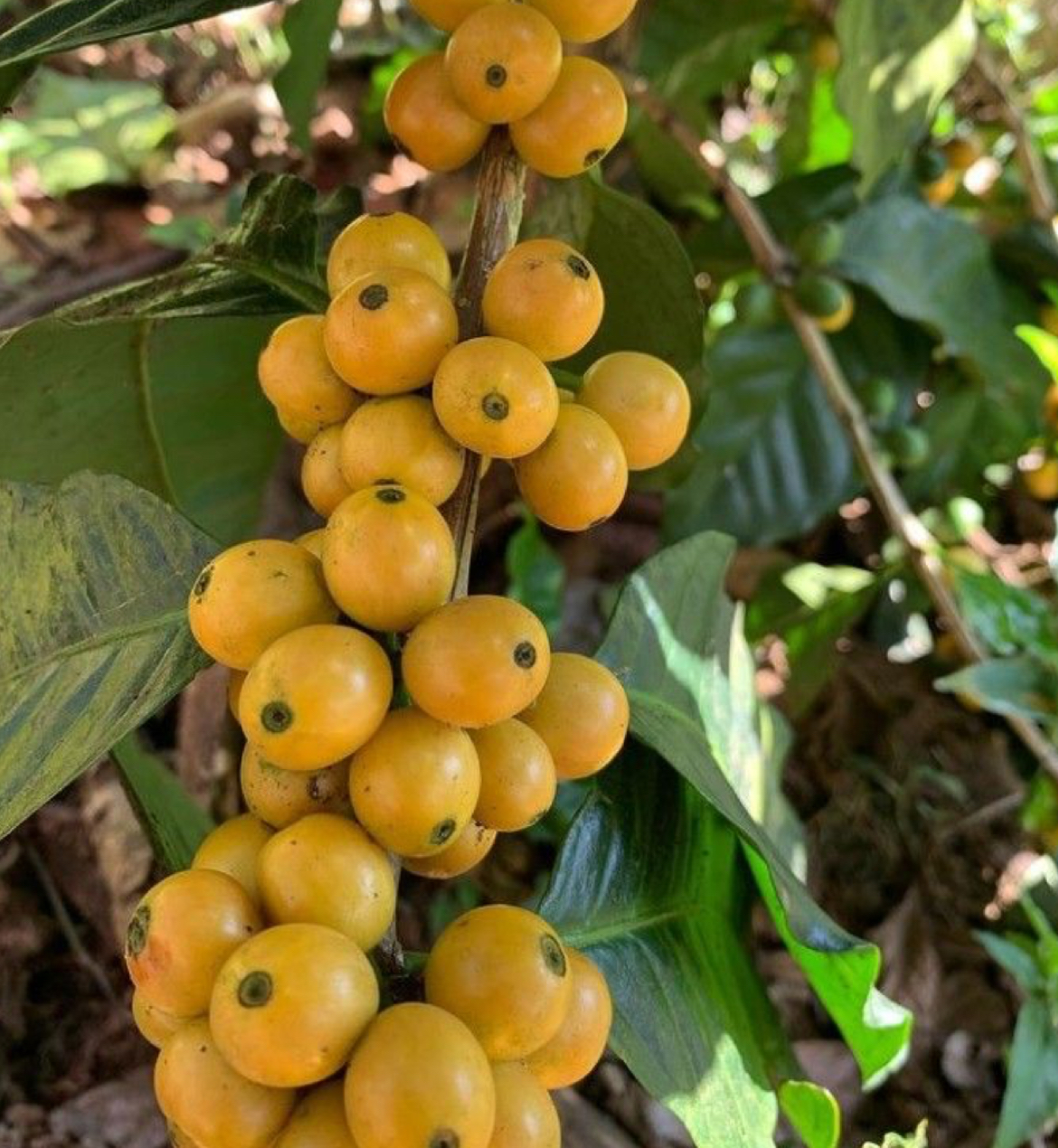
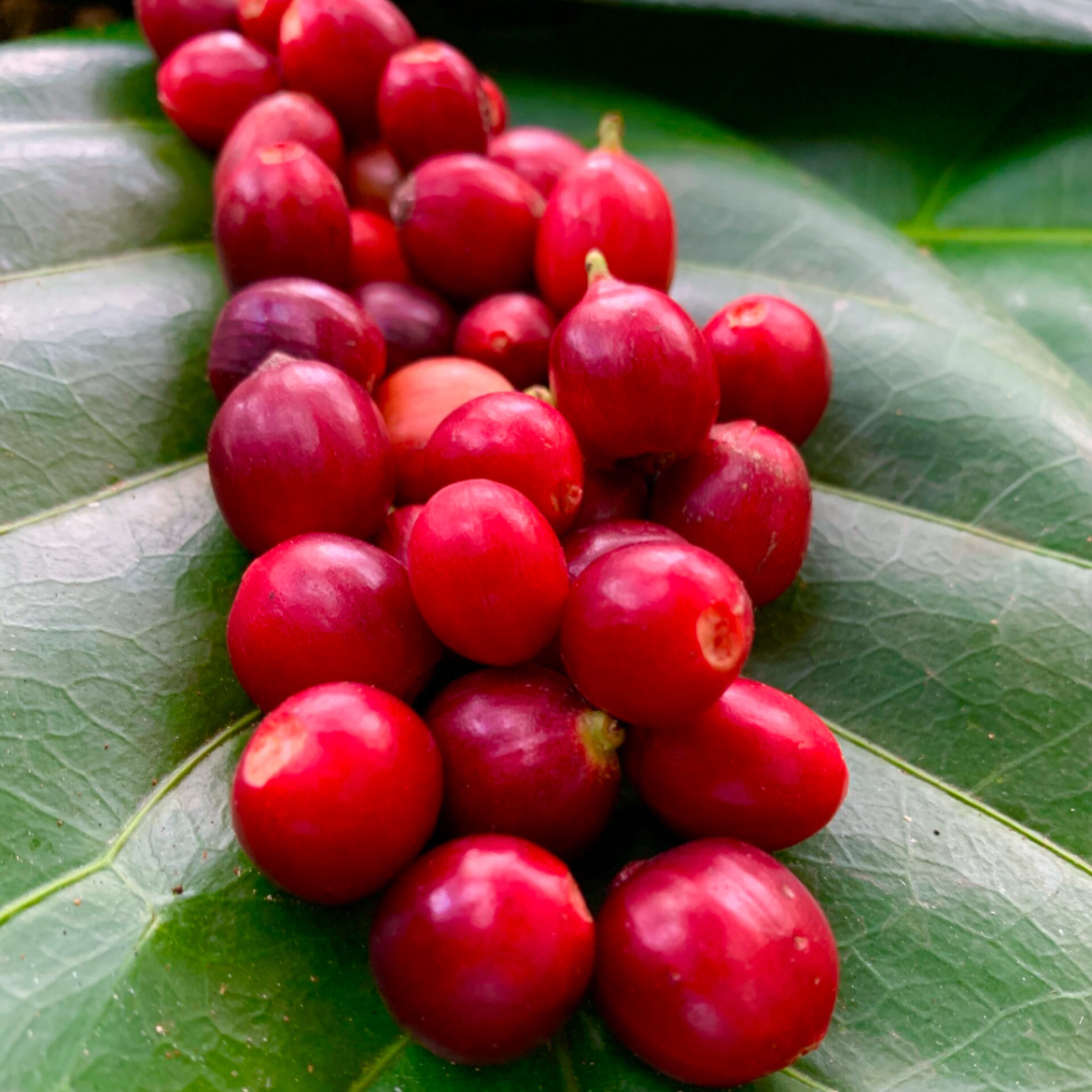
About the speciesAbout the species: ripe red Coffea arabica coffee cherries from Puerto Rico. Each cherry contains the coffee seeds — you are purchasing 15 germinated seeds, not cherries or fruit.
Rare Tropical Fruit
15 Germinated Coffea arabica Seeds
Coffea arabica L.
Arabica Coffee • Coffee Plant • Café Arábica • Café
$19.89for 15 germinated seeds
GERMINATED SEEDS
FREE SHIPPING
In stock — germinated seeds, packed and shipped within 1–2 business days
This listing is for 15 GERMINATED Coffea arabica coffee seeds from Puerto Rico — not dry dormant seeds, not a live potted plant, and not coffee for consumption.
1
15 germinated Coffea arabica coffee seeds from Puerto Rico. Living, already-sprouting seeds — plant promptly on arrival. Free shipping and a full grow-coffee-from-seed guide.
- Free shipping on this listing
- Secure encrypted checkout
- Carefully packed in Puerto Rico
- Detailed growing guide included
- Scientific name
- Coffea arabica L.
- Family
- Rubiaceae
- Plant type
- Tropical evergreen shrub / small tree
- Quantity
- 15 germinated seeds
- Origin
- Puerto Rico
- Cherry color
- Red when ripe
- Climate
- Tropical / warm subtropical; frost-sensitive
- Light
- Shade to bright filtered light when young; partial shade long term
- Water
- Evenly moist, never waterlogged
- Soil
- Rich, organic, slightly acidic and free-draining
- Germination
- Already germinated — sprouting continues within days of planting
- Difficulty
- Easy to Moderate
- Important
- Living germinated seed — plant promptly and keep the radicle moist
Coffea arabica L. is the principal coffee species cultivated in Puerto Rico's mountain coffee-growing regions, where coffee has a long agricultural history. It is also the species behind most of the world's specialty coffee.
These 15 seeds come from red-ripe coffee cherries grown in Puerto Rico and have already begun the germination process. They are living material, not dry dormant seed.
Grown well, an Arabica coffee plant becomes a compact, glossy-leaved tropical shrub or small tree that eventually flowers with fragrant white blossoms and sets green cherries that ripen bright red.
No cultivar is claimed for these seeds. They are identified only as Coffea arabica with red-ripe cherries, since no specific cultivar has been confirmed.
This listing is for 15 GERMINATED seeds — not dry dormant seeds, not a live potted plant, and not coffee for consumption.
What You Receive
- 15 germinated Coffea arabica coffee seeds grown in Puerto Rico
- Seeds packed moist to protect the emerging root (radicle) during shipping
- Access to our detailed Coffea arabica growing guide
- Free shipping
This listing is for 15 GERMINATED Coffea arabica coffee seeds from Puerto Rico — not dry dormant seeds, not a live potted plant, and not coffee for consumption.
Germinated Seed Notice
These are viable coffee seeds that have already begun the germination process. Some will show a small white root (radicle) emerging; others will be swollen and just about to break.
Because germinated coffee seeds are living material, plant them promptly after arrival. Do not store them dry, refrigerate them, or leave them sealed in the package.
The emerging root is fragile. Never let it dry out, and avoid pinching, bending or scraping it while handling or planting.
No cultivar is claimed. These seeds are identified only as Coffea arabica producing red-ripe coffee cherries.
Germination
Planting germinated coffee seeds
- 1
Open the package immediately
Unpack on arrival and check the seeds. Keep them in their moist packing material, out of direct sun, until you are ready to plant — ideally the same day.
- 2
Prepare containers first
Fill small pots or deep seedling cells (one seed per cell) with a free-draining mix before you touch the seeds, so the roots spend as little time exposed as possible.
- 3
Use the right substrate
A light, rich, slightly acidic mix works best: quality potting soil or coco coir with perlite for drainage, plus some compost. Coffee dislikes both compaction and standing water.
- 4
Handle gently
Hold each seed by its body, never by the root. If seeds are stuck together in the packing material, tease them apart slowly rather than pulling.
- 5
Root orientation — the key step
Position the seed with the emerging root (radicle) pointing DOWNWARD into the medium. If a seed has no visible root yet, lay it flat with the flat, grooved side facing down.
- 6
Planting depth
Plant shallowly: the seed sits about 0.5–1 cm (¼–½ inch) below the surface, just covered with loose medium. Deep burial is one of the most common causes of failure.
- 7
Water and drain
Water thoroughly, then let all excess drain away. Afterward keep the medium consistently moist — like a wrung-out sponge — but never saturated.
- 8
Warmth and shade
Keep pots warm, roughly 70–85°F (21–29°C), in shade or bright indirect light. Direct midday sun will cook a newly planted coffee seed or scorch a young seedling.
- 9
Watch for emergence
The seedling typically pushes up still wearing the seed coat (the classic "soldier" stage) and then unfolds its first pair of leaves. Do not pull the seed coat off — let it drop naturally.
CORRECT ✓
Seed just covered by 0.5–1 cm of moist, free-draining medium, with the emerging root pointing straight down.
AVOID ✕
Seed buried deeply, planted root-up, allowed to dry out, or left sitting in soggy, waterlogged soil.
About Coffea arabica
Coffea arabica is a tropical evergreen of the Rubiaceae family, naturally a shrub or small tree with glossy dark-green leaves and fragrant white flowers.
It is important to distinguish three things: the coffee cherry is the red ripe fruit; the coffee seeds (often called beans) are found inside each cherry — that is what you are buying, already germinated; and the coffee plant is the tree that grows from those seeds and, years later under suitable conditions, produces cherries of its own.
These seeds are sold for growing. They are not roasted, not processed, and not intended for consumption.
Puerto Rico provenance
Coffee has a long agricultural history in Puerto Rico, and Coffea arabica is the principal coffee species cultivated in the island's mountain coffee-growing regions.
These seeds were produced from red-ripe cherries grown in Puerto Rico and germinated here before shipping — island-grown coffee genetics, handled fresh rather than sourced from dry commercial seed stock.
No specific cultivar is claimed. The seeds are identified only as Coffea arabica with red-ripe coffee cherries.
How to handle immediately upon arrival
- Open the package the day it arrives.
- Keep the seeds moist and shaded until planting — never dry, never sealed in the sun.
- Plant the same day whenever possible; within 1–2 days at the latest.
- If you must wait briefly, keep the seeds in their moist medium at room temperature — do not refrigerate.
- Protect the emerging root from drying, pinching or bending.
Light and shade for young seedlings
Coffee evolved as an understory plant. Young seedlings want shade or bright filtered light — roughly 40–60% shade outdoors, or a bright window without direct midday sun indoors.
Increase light gradually as plants mature. Sudden full sun on a young coffee plant causes bleached, scorched leaves.
Temperature, humidity and watering
- Temperature: best around 65–85°F (18–29°C). Coffee is frost-sensitive; protect below about 50°F (10°C).
- Humidity: enjoys moderate to high humidity; group pots or mist in dry indoor air.
- Watering: keep evenly moist. Let only the top of the mix begin to dry, then water thoroughly and drain.
- Never let a coffee plant sit in a saucer of standing water, and never let it dry to wilting.
Transplanting and container growing
- Move seedlings up when roots fill the cell and 2–4 true leaves have formed.
- Pot up one size at a time, keeping the root ball intact — coffee resents root disturbance.
- Deep pots suit coffee's taproot-style rooting better than wide shallow ones.
- Always use containers with generous drainage holes.
- Container-grown coffee stays a manageable shrub and can be pruned to height.
Fertilization after establishment
Wait until the seedling is actively growing with several true leaves before feeding. Germinated seeds and very young seedlings do not need fertilizer.
Then feed lightly during active growth with a balanced fertilizer, following label rates. Coffee prefers slightly acidic conditions and responds to steady, moderate feeding rather than heavy doses.
Outdoor and tropical cultivation
- In tropical and frost-free subtropical climates, coffee can be planted outdoors in partial shade.
- Rich, organic, slightly acidic, free-draining soil is ideal; mulch to keep roots cool and moist.
- Shade from taller trees mimics its natural understory habitat.
- In cooler climates, grow in containers and bring plants indoors before cold weather.
Long-term care, flowering and red cherries
With good care, coffee grows into a dense evergreen shrub. Light pruning keeps it compact and encourages branching, since fruit forms on lateral branches.
Mature plants produce clusters of fragrant white flowers, followed by green fruit that slowly ripens to bright red cherries. Each cherry usually holds two seeds.
Time to flowering and fruiting varies with climate, light and care, and no fruiting timeline or yield is promised with these seeds.
Common growing mistakes
- Letting germinated seeds dry out before planting.
- Planting the seed upside down, with the root pointing up.
- Burying the seed too deeply.
- Overwatering into soggy, poorly drained soil.
- Placing young seedlings in harsh direct sun.
- Fertilizing too early or too strongly.
- Pulling the seed coat off the emerging seedling.
- Exposing plants to cold or frost.
Why grow it
Why grow Coffea arabica?
Germinated, living Coffea arabica seeds — not dry dormant seed
Grown from red-ripe coffee cherries in Puerto Rico
The principal coffee species of Puerto Rico's coffee regions
Glossy evergreen foliage and fragrant white flowers
Excellent container plant in cooler climates
Grow your own coffee plant from seed
Free shipping
You may also like
Related products
15 Fresh Inga spectabilis Seeds – Guamá / Guaba Machete / Ice Cream Bean
Inga spectabilis (Vahl) Willd.
$22.89