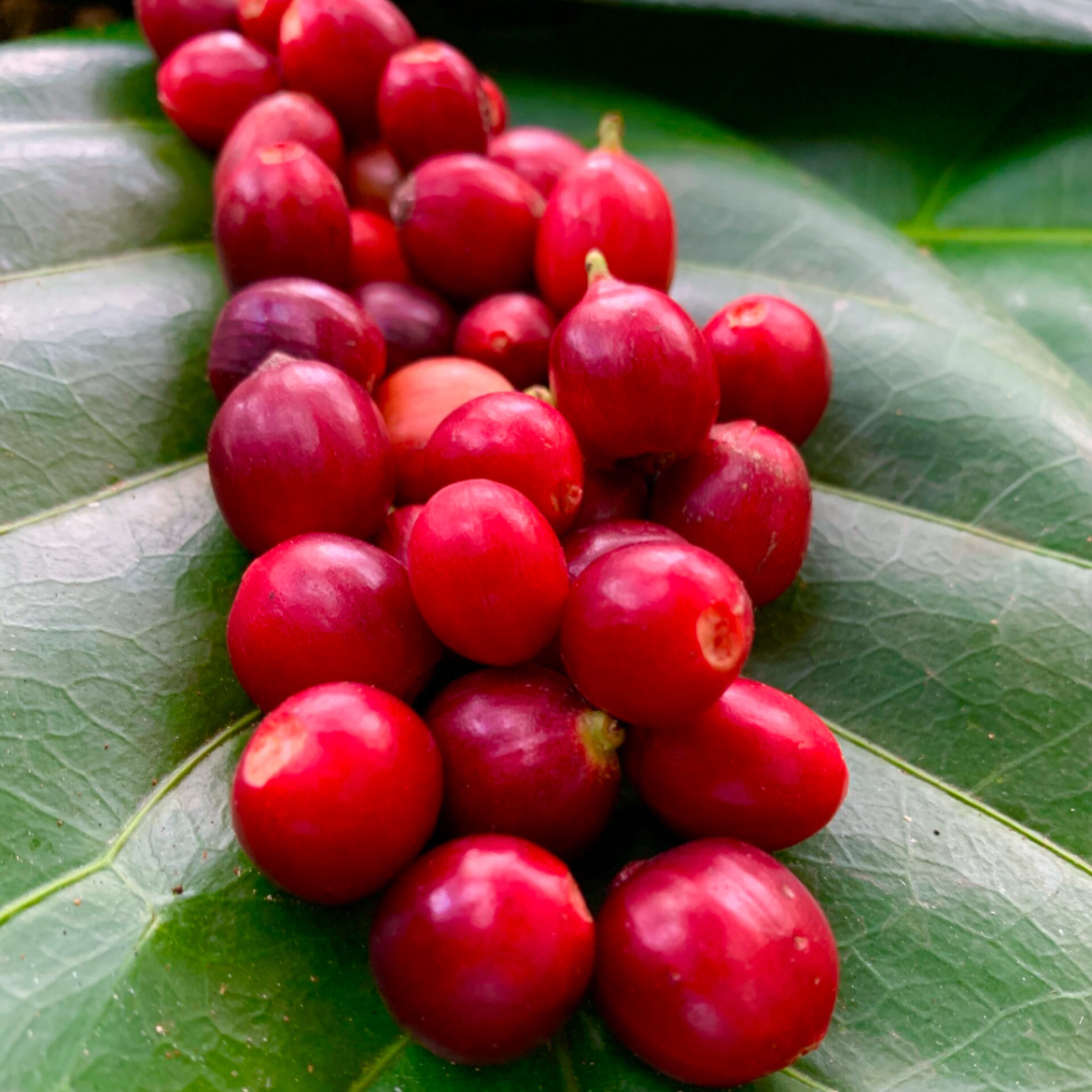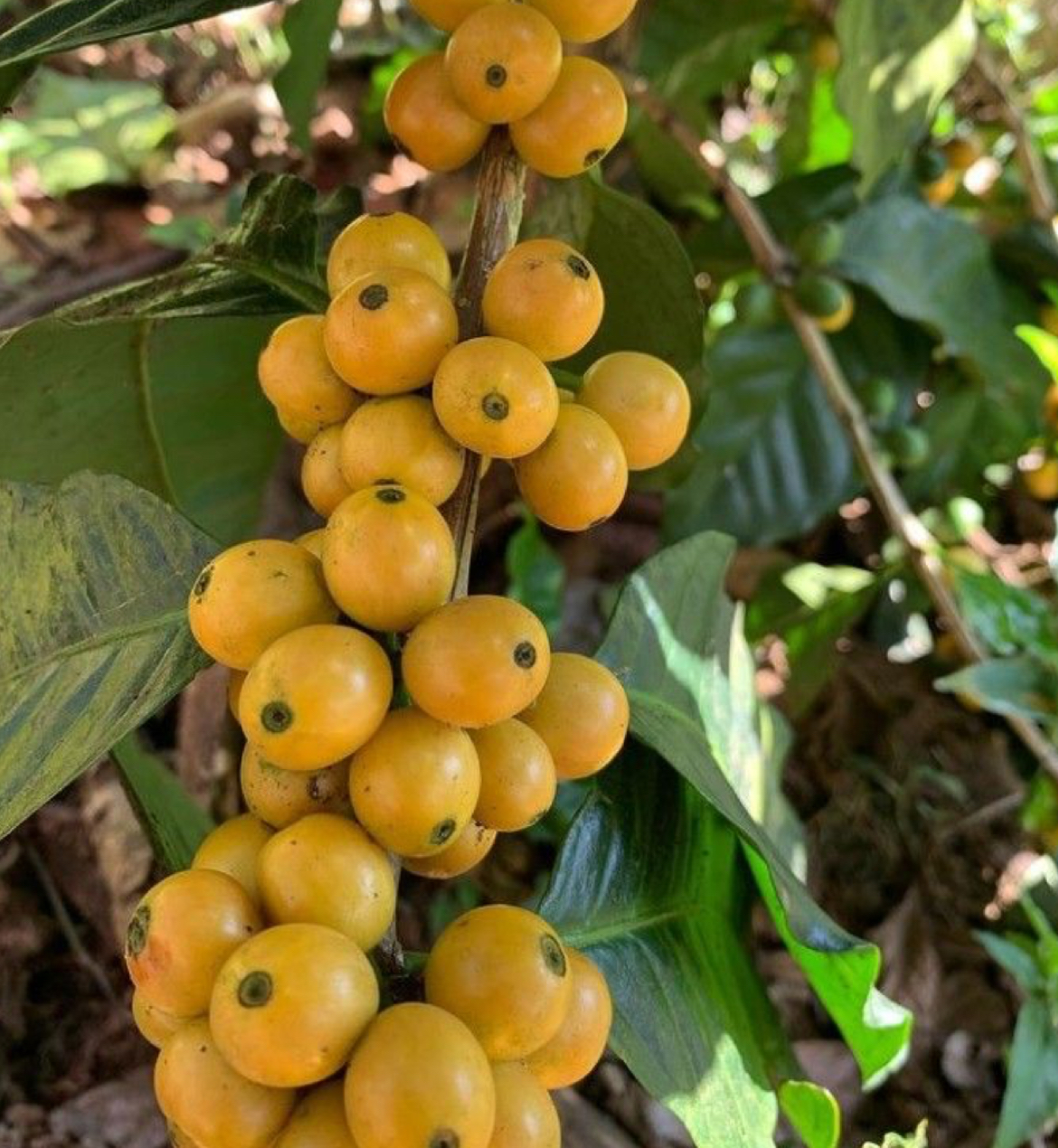
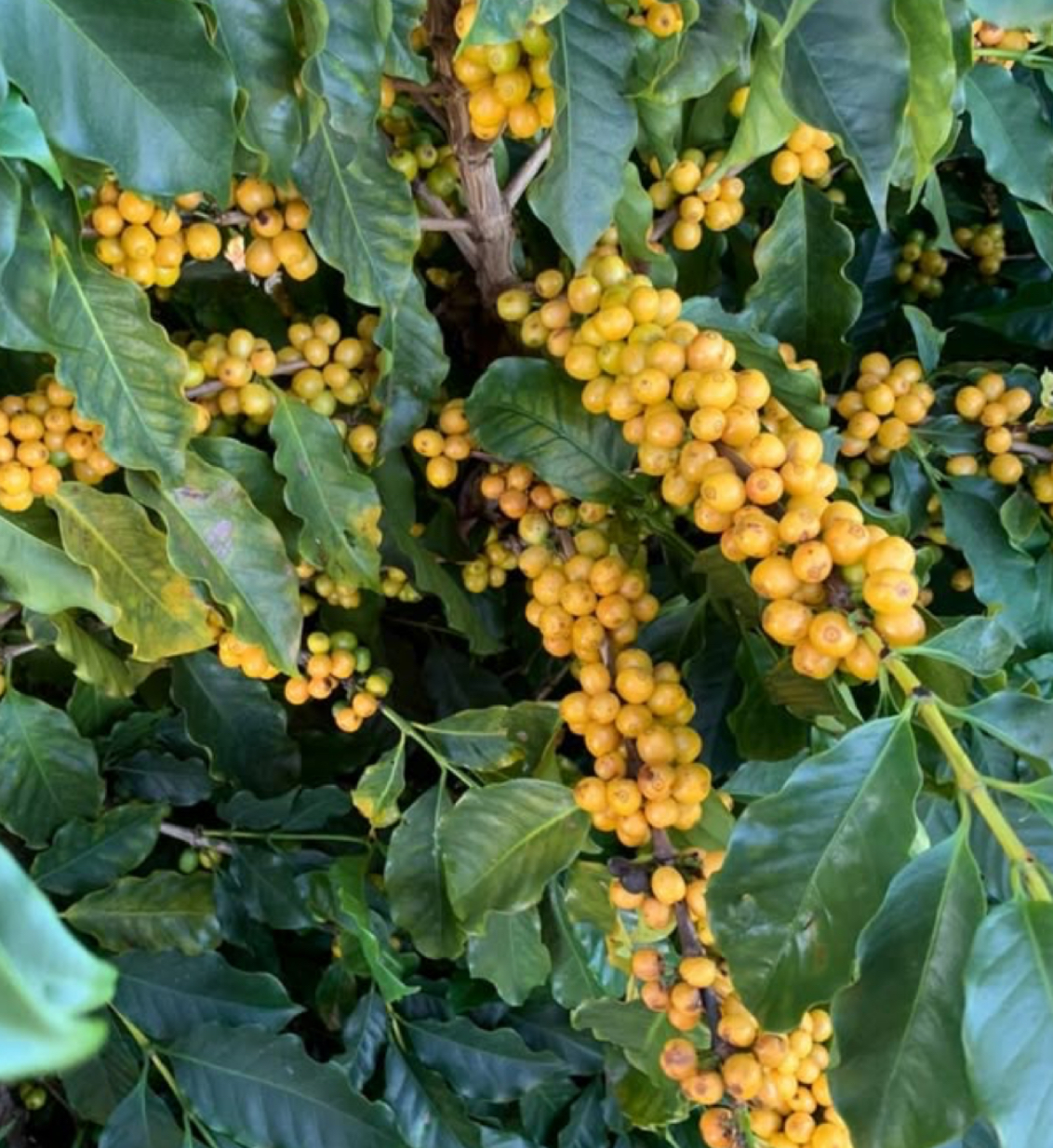
About the speciesABOUT THE SPECIES — Yellow-ripe Coffea arabica cherries on a mature plant. Cherries are not included.
Tropical Fruit Plants
Yellow-Fruited Arabica Coffee Live Plant
Coffea arabica L.
Puerto Rico • Coffea arabica • Café Arábica Amarillo
$18.89for 1 live plant, approx. 6–10 inches tall
LIVE COFFEE PLANT
FREE SHIPPING
In stock — live plants are carefully prepared and dispatched within 1–2 business days
WHAT YOU RECEIVE — One young Coffea arabica live plant approximately 6–10 inches tall. FREE SHIPPING. Seeds and coffee cherries are not included.
1
One young Coffea arabica live plant, approximately 6–10 inches tall, from Puerto Rico stock associated with yellow mature cherries. Free shipping.
- Free shipping on this listing
- Secure encrypted checkout
- Carefully packed in Puerto Rico
- Detailed growing guide included
- Scientific name
- Coffea arabica L.
- Family
- Rubiaceae
- Product type
- One live coffee plant
- Plant size
- Approximately 6–10 inches tall
- Source
- Puerto Rico stock associated with yellow mature coffee cherries
- Cultivar
- Unknown; no named cultivar is claimed
- Habit
- Glossy evergreen shrub or small tree
- Light
- Bright filtered light while young; stronger light introduced gradually
- Water
- Even moisture with excellent drainage
- Climate
- Tropical to warm subtropical; frost-sensitive
Coffea arabica is a glossy evergreen shrub or small tree whose upright stem develops lateral branches as it matures. Those laterals can eventually carry fragrant white flowers followed by green coffee cherries.
The source plants are associated with cherries that mature yellow rather than the more familiar red. Both color forms remain Coffea arabica, and fruit color alone cannot verify a cultivar identity.
Puerto Rico has a long coffee-growing history, particularly in its mountainous interior. This provenance identifies the source context without claiming a farm, municipality, certification or named genetic line.
Starting with a rooted plant bypasses germination, but careful arrival acclimation still matters. Individual plants naturally vary in height, leaf count, branching and appearance.
What You Receive
- 1 live Coffea arabica plant
- Approximately 6–10 inches tall
- Puerto Rico yellow-cherry source
- Natural variation in height, leaf count and appearance
- Free shipping
- Access to the shared Coffea arabica growing guide
WHAT YOU RECEIVE — One young Coffea arabica live plant approximately 6–10 inches tall. FREE SHIPPING. Seeds and coffee cherries are not included.
Live Coffee Plant Notice
The supplied nursery photograph shows the product form. Living plants vary naturally and the plant shipped will not be visually identical in every leaf or measurement.
Shipping temporarily changes light, airflow and humidity. Mild drooping, slight yellowing or loss of an older leaf can occur while the plant readjusts.
No fruiting date, yield, named cultivar or exact future cherry characteristic is guaranteed.
Arrival pathway
Receiving a Young Coffee Plant
- 1
Unpack promptly
Remove packing carefully and inspect the foliage, stem, container and actual moisture level.
- 2
Water by condition
If the medium remains moist, wait. If it is becoming dry, water thoroughly and let all excess drain.
- 3
Start in filtered light
Give bright filtered light, shelter from drying wind and no abrupt midday sun while the plant recovers.
- 4
Increase light gradually
Introduce gentle morning sun in stages over one to two weeks, watching for bleaching or crisp scorch.
- 5
Delay major changes
Avoid immediate repotting, hard pruning or fertilizer unless an actual drainage problem requires intervention.
- 6
Pot up carefully
Once settled and actively growing, move up one container size with the root ball intact and use an airy, slightly acidic mix.
A Coffee Plant Before the Cup
The familiar coffee bean is the seed inside a coffee cherry. This rooted plant begins farther along the cycle, with established glossy foliage and roots ready to continue growing under suitable care.
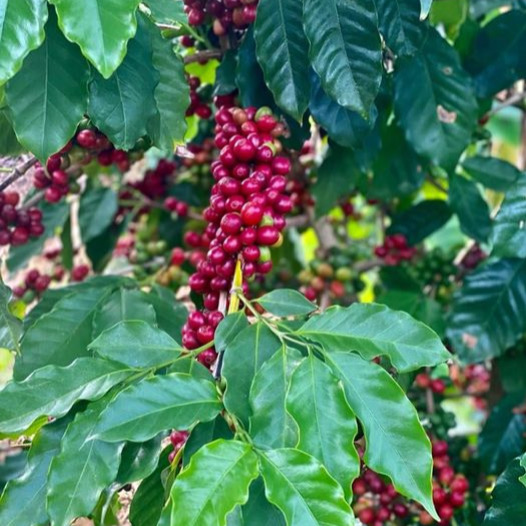
As coffee matures, an upright framework supports lateral branches. Fragrant white flowers can form along those branches and may be followed by green cherries that color at maturity.
Fresh fruit FAQ
Questions about fresh cacao pods
- What exactly will I receive?
- One young live Coffea arabica plant approximately 6–10 inches tall. Coffee seeds and cherries are not included.
- Is this Yellow Bourbon or another named cultivar?
- No. The source plants are associated with yellow mature cherries, but cultivar identity is unknown and no named cultivar is claimed.
- Should I repot it immediately?
- Usually not. Let the plant settle after shipping unless the container or drainage presents a clear problem, then move up only one pot size.
- Will it produce yellow cherries?
- The source is associated with yellow mature cherries, but flowering, fruiting, yield, timing and future fruit characteristics are not guaranteed.
What Yellow Cherries Mean
Some genetic lines of Coffea arabica develop yellow skin at cherry maturity instead of red. This is variation within the species, not evidence by itself of a particular cultivar.
Accordingly, Alpha Tropic identifies the observable source characteristic while making no Yellow Bourbon, Yellow Caturra, Yellow Catuaí or quality claim.
Fresh fruit FAQ
Questions about fresh cacao pods
- What exactly will I receive?
- One young live Coffea arabica plant approximately 6–10 inches tall. Coffee seeds and cherries are not included.
- Is this Yellow Bourbon or another named cultivar?
- No. The source plants are associated with yellow mature cherries, but cultivar identity is unknown and no named cultivar is claimed.
- Should I repot it immediately?
- Usually not. Let the plant settle after shipping unless the container or drainage presents a clear problem, then move up only one pot size.
- Will it produce yellow cherries?
- The source is associated with yellow mature cherries, but flowering, fruiting, yield, timing and future fruit characteristics are not guaranteed.
Root-Zone Balance
Coffee favors a rich, airy, slightly acidic medium that holds useful moisture while still exchanging air. Water deeply when needed and empty saucers; repeated saturation damages roots just as surely as a severe dry-out.
Moderate humidity supports clean foliage, but humidity does not replace root watering and stagnant wet conditions are not beneficial.
Fresh fruit FAQ
Questions about fresh cacao pods
- What exactly will I receive?
- One young live Coffea arabica plant approximately 6–10 inches tall. Coffee seeds and cherries are not included.
- Is this Yellow Bourbon or another named cultivar?
- No. The source plants are associated with yellow mature cherries, but cultivar identity is unknown and no named cultivar is claimed.
- Should I repot it immediately?
- Usually not. Let the plant settle after shipping unless the container or drainage presents a clear problem, then move up only one pot size.
- Will it produce yellow cherries?
- The source is associated with yellow mature cherries, but flowering, fruiting, yield, timing and future fruit characteristics are not guaranteed.
Containers, Feeding and Long-Term Form
Choose a deeper container with open drainage and increase size gradually. Once fresh growth confirms establishment, feed lightly at label rates during active growth rather than applying a strong dose to a stressed arrival.
Established coffee responds to selective pruning for height and branch structure. Container culture is practical, especially where frost protection is needed, but the plant still needs bright light, root space and seasonal care.
Fresh fruit FAQ
Questions about fresh cacao pods
- What exactly will I receive?
- One young live Coffea arabica plant approximately 6–10 inches tall. Coffee seeds and cherries are not included.
- Is this Yellow Bourbon or another named cultivar?
- No. The source plants are associated with yellow mature cherries, but cultivar identity is unknown and no named cultivar is claimed.
- Should I repot it immediately?
- Usually not. Let the plant settle after shipping unless the container or drainage presents a clear problem, then move up only one pot size.
- Will it produce yellow cherries?
- The source is associated with yellow mature cherries, but flowering, fruiting, yield, timing and future fruit characteristics are not guaranteed.
Common Early Mistakes
- Moving shipped foliage directly into intense all-day sun
- Watering by calendar instead of checking the medium
- Leaving the pot standing in runoff
- Repotting and fertilizing before the plant has stabilized
- Using a very large pot whose unused soil stays wet
- Expecting immediate flowers or guaranteed fruit
Fresh fruit FAQ
Questions about fresh cacao pods
- What exactly will I receive?
- One young live Coffea arabica plant approximately 6–10 inches tall. Coffee seeds and cherries are not included.
- Is this Yellow Bourbon or another named cultivar?
- No. The source plants are associated with yellow mature cherries, but cultivar identity is unknown and no named cultivar is claimed.
- Should I repot it immediately?
- Usually not. Let the plant settle after shipping unless the container or drainage presents a clear problem, then move up only one pot size.
- Will it produce yellow cherries?
- The source is associated with yellow mature cherries, but flowering, fruiting, yield, timing and future fruit characteristics are not guaranteed.
Why grow it
Why grow yellow-source Arabica coffee?
Rooted young plant rather than germinated seed
Glossy evergreen foliage
Fragrant white flowers on mature plants
Puerto Rico yellow-cherry source
No unsupported cultivar claim
Well suited to managed container culture
Free shipping
You may also like
Related products