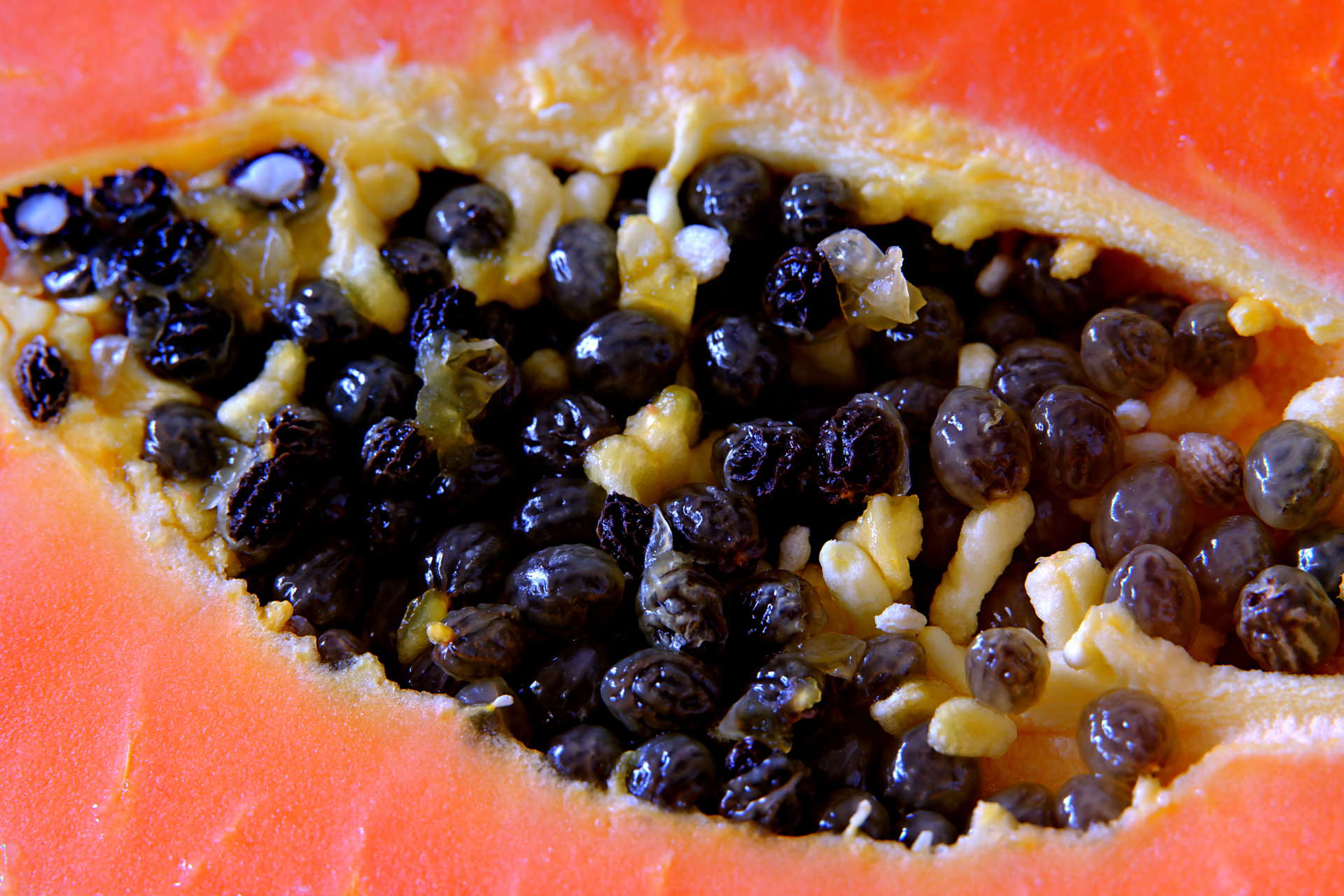
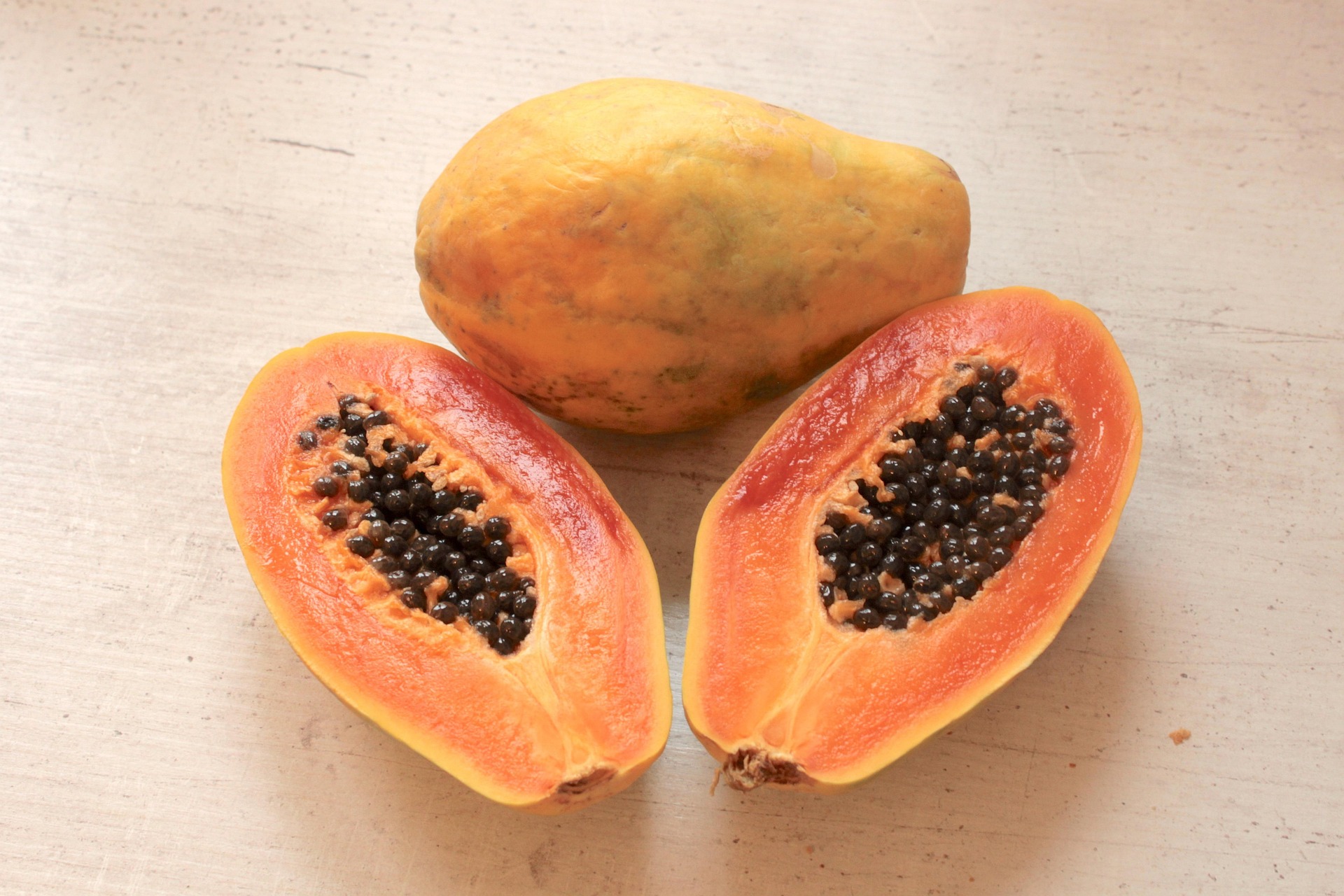
About the speciesABOUT THE SPECIES — Ripe Carica papaya fruit showing the orange flesh and central seed cavity. Fruit is not included; this listing is a live plant.
Tropical Fruit Plants
Papaya Live Plant – 8–10"
Carica papaya
Carica papaya • Papaya • Lechosa
$18.98for live plant
LIVE PLANT
FREE SHIPPING
In stock — live plants are carefully prepared and dispatched within 1–2 business days
You are purchasing ONE live Carica papaya plant approximately 8–10 inches tall. Fruit is not included. FREE SHIPPING.
1
One live Carica papaya plant approximately 8–10 inches tall. No cultivar claimed; fruit not included. Free shipping.
- Free shipping on this listing
- Secure encrypted checkout
- Carefully packed in Puerto Rico
- Detailed growing guide included
- Scientific name
- Carica papaya L.
- Family
- Caricaceae
- Product type
- Live plant
- Size
- Approximately 8–10 inches tall
- Habit
- Fast, soft-stemmed, usually single-trunked
- Light
- Full sun once acclimated
- Drainage
- Essential — roots rot in waterlogged soil
- Cold
- Frost sensitive; thrives in steady warmth
Papaya is one of the strangest and fastest plants in a tropical garden. Botanically it is a giant herb rather than a true tree: a single, usually unbranched, soft-wooded trunk crowned by large, deeply lobed leaves on long hollow petioles. Old leaves drop and leave distinctive scars, so the trunk records its own growth.
In warm conditions a young papaya can grow remarkably quickly, and flowers and fruit appear directly on the trunk in the leaf axils. The fruit is a fleshy berry with a hollow central cavity lined with dark, gelatinous-coated seeds. Ripe fruit is eaten fresh; green papaya is widely used cooked or shredded in many cuisines.
Papaya plants express different flower forms—female, male or hermaphrodite—depending on their genetics. The sex of a young plant cannot be seen at this size, so we do not claim this plant is female, male, hermaphrodite or self-fertile, and we do not promise fruit from a single plant.
The pawpaw name is sometimes used for papaya in parts of the world; this is not the North American pawpaw, Asimina triloba.
What You Receive
- One live Carica papaya plant
- Approximately 8–10 inches tall
- Natural variation in height, leaf count and shape
- Cultivar and plant sex not documented
- Fruit is not included
- Free shipping
You are purchasing ONE live Carica papaya plant approximately 8–10 inches tall. Fruit is not included. FREE SHIPPING.
Live Plant — Fruit Is Not Included
Fruit photographs show the species for reference only. You receive one young papaya plant.
Papaya flower sex is determined genetically and cannot be seen at this size. Plant sex, self-fertility and fruit production are not guaranteed.
A leaf or two may yellow or drop after shipping while the plant adjusts. This is normal.
First weeks at home
Establishing Your Young Papaya
- 1
Unpack upright
Open the box promptly and stand the plant up. Papaya stems and petioles are soft and hollow—handle by the pot, not the leaves.
- 2
Water sparingly
Water only if the mix is dry, and let every drop drain away. Wet, cool roots are the main cause of loss in young papayas.
- 3
Recover in bright shade
Give bright, indirect light for several days before any strong sun.
- 4
Move into full sun
Increase direct sun over one to two weeks. Once acclimated, papaya wants all the sun and warmth you can give it.
- 5
Transplant with the root ball intact
Papaya roots resent disturbance. Move the whole root ball in one piece into a deep container or a raised, well-drained spot, at the same soil level.
- 6
Feed once growing
When new leaves are unfolding steadily, begin regular light feeding; fast growth uses nutrients quickly.
CORRECT ✓
A raised or mounded, free-draining site in full sun, sheltered from strong wind, with the original soil line kept.
AVOID ✕
Low spots where water collects, heavy clay, burying the stem, breaking up the root ball, or cold, wet nights.
An Unusual Plant Architecture
Papaya grows from a single tip. Leaves emerge in a spiral, each palmately lobed blade held out on a long hollow stalk. As the plant climbs, older leaves fall and leave a scarred, soft-wooded trunk.
Because all growth comes from that crown, protect the growing tip: damage to it can stop upward growth or force irregular side shoots.
Fresh fruit FAQ
Questions about fresh cacao pods
- Which papaya variety is this?
- No cultivar has been documented, so we sell it simply as Carica papaya. It is not claimed to be Red Lady, Solo, Maradol or any other named variety.
- Will this plant produce fruit on its own?
- It depends on the plant's flower sex, which cannot be known at this size. Hermaphrodite plants can self-pollinate, female plants need pollen from a male or hermaphrodite, and male plants rarely set useful fruit. Fruit is not guaranteed.
- Can papaya grow in a pot?
- Yes while young, in a deep container with very free-draining mix. Papayas become large, so most growers eventually plant them in the ground in warm climates.
- Why are the lower leaves yellowing?
- Papayas naturally shed older leaves as they grow. Rapid yellowing of many leaves, especially with soft stems, more often points to wet roots or cold.
Warmth, Sun and Wind
Papaya is a plant of the lowland tropics. It thrives in steady warmth and full sun, slows sharply in cool weather and is damaged by frost.
Its soft trunk and large leaves catch wind. A sheltered site, or a temporary stake while young, helps prevent snapping and leaning.
Fresh fruit FAQ
Questions about fresh cacao pods
- Which papaya variety is this?
- No cultivar has been documented, so we sell it simply as Carica papaya. It is not claimed to be Red Lady, Solo, Maradol or any other named variety.
- Will this plant produce fruit on its own?
- It depends on the plant's flower sex, which cannot be known at this size. Hermaphrodite plants can self-pollinate, female plants need pollen from a male or hermaphrodite, and male plants rarely set useful fruit. Fruit is not guaranteed.
- Can papaya grow in a pot?
- Yes while young, in a deep container with very free-draining mix. Papayas become large, so most growers eventually plant them in the ground in warm climates.
- Why are the lower leaves yellowing?
- Papayas naturally shed older leaves as they grow. Rapid yellowing of many leaves, especially with soft stems, more often points to wet roots or cold.
Drainage Above Everything
Papaya roots are fleshy and very sensitive to standing water. Even a short period of waterlogging can cause collapse. Plant on a slight mound in the ground, or use a deep pot with a gritty, fast-draining mix.
Fresh fruit FAQ
Questions about fresh cacao pods
- Which papaya variety is this?
- No cultivar has been documented, so we sell it simply as Carica papaya. It is not claimed to be Red Lady, Solo, Maradol or any other named variety.
- Will this plant produce fruit on its own?
- It depends on the plant's flower sex, which cannot be known at this size. Hermaphrodite plants can self-pollinate, female plants need pollen from a male or hermaphrodite, and male plants rarely set useful fruit. Fruit is not guaranteed.
- Can papaya grow in a pot?
- Yes while young, in a deep container with very free-draining mix. Papayas become large, so most growers eventually plant them in the ground in warm climates.
- Why are the lower leaves yellowing?
- Papayas naturally shed older leaves as they grow. Rapid yellowing of many leaves, especially with soft stems, more often points to wet roots or cold.
Flowers, Sex and Fruit
Flowers appear in the leaf axils once the plant is established. Female flowers are larger with a visible ovary; male plants carry long, hanging clusters of small flowers; hermaphrodite flowers combine both.
Since the sex of this plant is unknown, growers who want fruit often grow more than one papaya to improve the chance of successful pollination.
Fresh fruit FAQ
Questions about fresh cacao pods
- Which papaya variety is this?
- No cultivar has been documented, so we sell it simply as Carica papaya. It is not claimed to be Red Lady, Solo, Maradol or any other named variety.
- Will this plant produce fruit on its own?
- It depends on the plant's flower sex, which cannot be known at this size. Hermaphrodite plants can self-pollinate, female plants need pollen from a male or hermaphrodite, and male plants rarely set useful fruit. Fruit is not guaranteed.
- Can papaya grow in a pot?
- Yes while young, in a deep container with very free-draining mix. Papayas become large, so most growers eventually plant them in the ground in warm climates.
- Why are the lower leaves yellowing?
- Papayas naturally shed older leaves as they grow. Rapid yellowing of many leaves, especially with soft stems, more often points to wet roots or cold.
Common Mistakes with Young Papayas
- Overwatering, especially in cool weather
- Planting in low, poorly drained ground
- Disturbing the root ball when transplanting
- Moving straight into harsh sun after shipping
- Leaving a tall young plant exposed to strong wind
Fresh fruit FAQ
Questions about fresh cacao pods
- Which papaya variety is this?
- No cultivar has been documented, so we sell it simply as Carica papaya. It is not claimed to be Red Lady, Solo, Maradol or any other named variety.
- Will this plant produce fruit on its own?
- It depends on the plant's flower sex, which cannot be known at this size. Hermaphrodite plants can self-pollinate, female plants need pollen from a male or hermaphrodite, and male plants rarely set useful fruit. Fruit is not guaranteed.
- Can papaya grow in a pot?
- Yes while young, in a deep container with very free-draining mix. Papayas become large, so most growers eventually plant them in the ground in warm climates.
- Why are the lower leaves yellowing?
- Papayas naturally shed older leaves as they grow. Rapid yellowing of many leaves, especially with soft stems, more often points to wet roots or cold.
Why grow it
Why grow this Papaya?
Remarkably fast tropical growth
Bold, sculptural lobed foliage
Fruit borne directly on the trunk
Honest identification — no cultivar or sex claims
Free shipping
You may also like
Related products