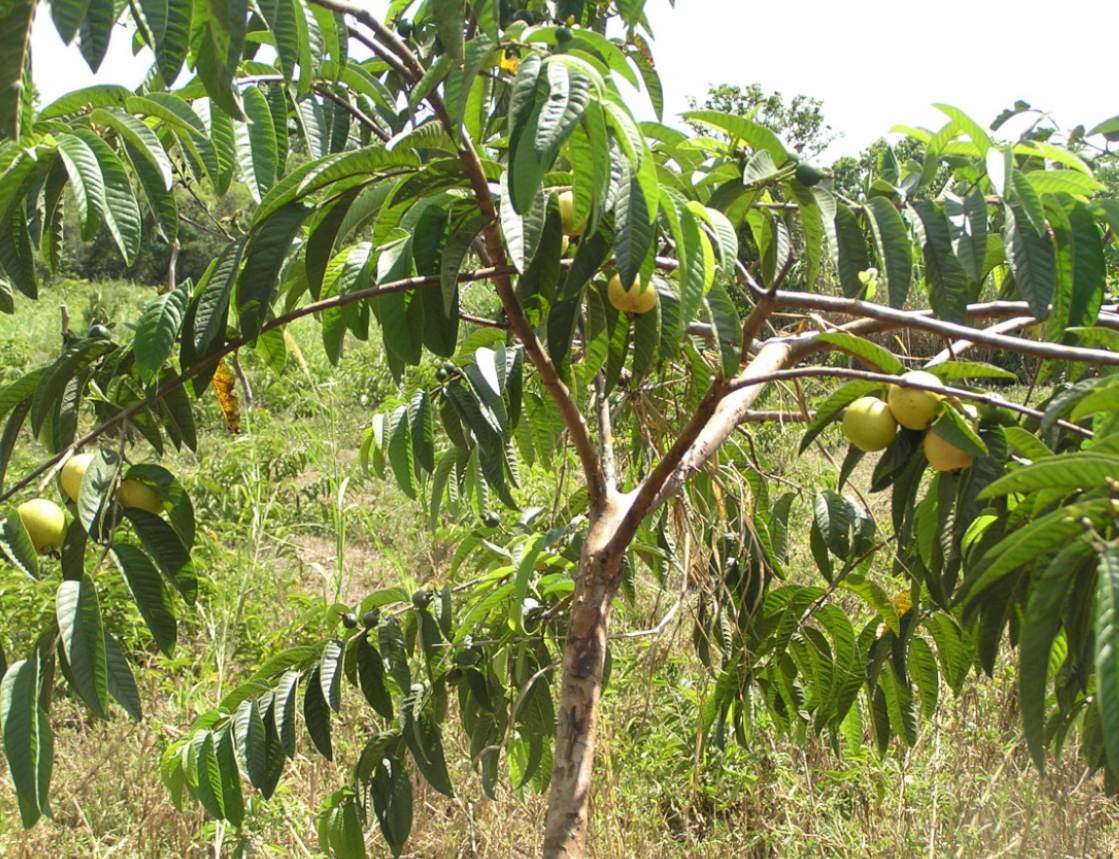
About the speciesABOUT THE SPECIES — Pink Guava develops as a tropical fruit tree. Fruit is not included.
Tropical Fruit Plants
Pink Guava Live Plant – 6–8"
Psidium guajava L.
Guayaba Rosada • Yellow Skin / Pink Flesh Source
$21.49for 1 live plant, approx. 6–8 inches tall
1 LIVE PLANT
FREE SHIPPING
In stock — live plants are carefully prepared and dispatched within 1–2 business days
WHAT YOU RECEIVE — One young Psidium guajava live plant approximately 6–8 inches tall. FREE SHIPPING. Fruit and seeds are not included.
1
One young Pink Guava live plant (Psidium guajava), approximately 6–8 inches tall, from the yellow-skinned, pink-fleshed source represented by our seed listing.
- Free shipping on this listing
- Secure encrypted checkout
- Carefully packed in Puerto Rico
- Detailed growing guide included
- Scientific name
- Psidium guajava L.
- Family
- Myrtaceae
- Product type
- One live Pink Guava plant
- Plant size
- Approximately 6–8 inches tall
- Source fruit
- Yellow exterior with pink/rosy flesh
- Cultivar
- No named cultivar; seed-grown variation applies
- Habit
- Tropical/subtropical fruit tree or large shrub
- Light
- Bright filtered light after shipping; full sun once acclimated and established
- Water
- Consistent moisture while establishing, with free drainage
- Identity
- Common guava; not strawberry guava (Psidium cattleianum)
Psidium guajava is a fast-growing tropical and subtropical fruit tree or large shrub with opposite, prominently veined leaves and smooth bark that becomes attractively mottled with age.
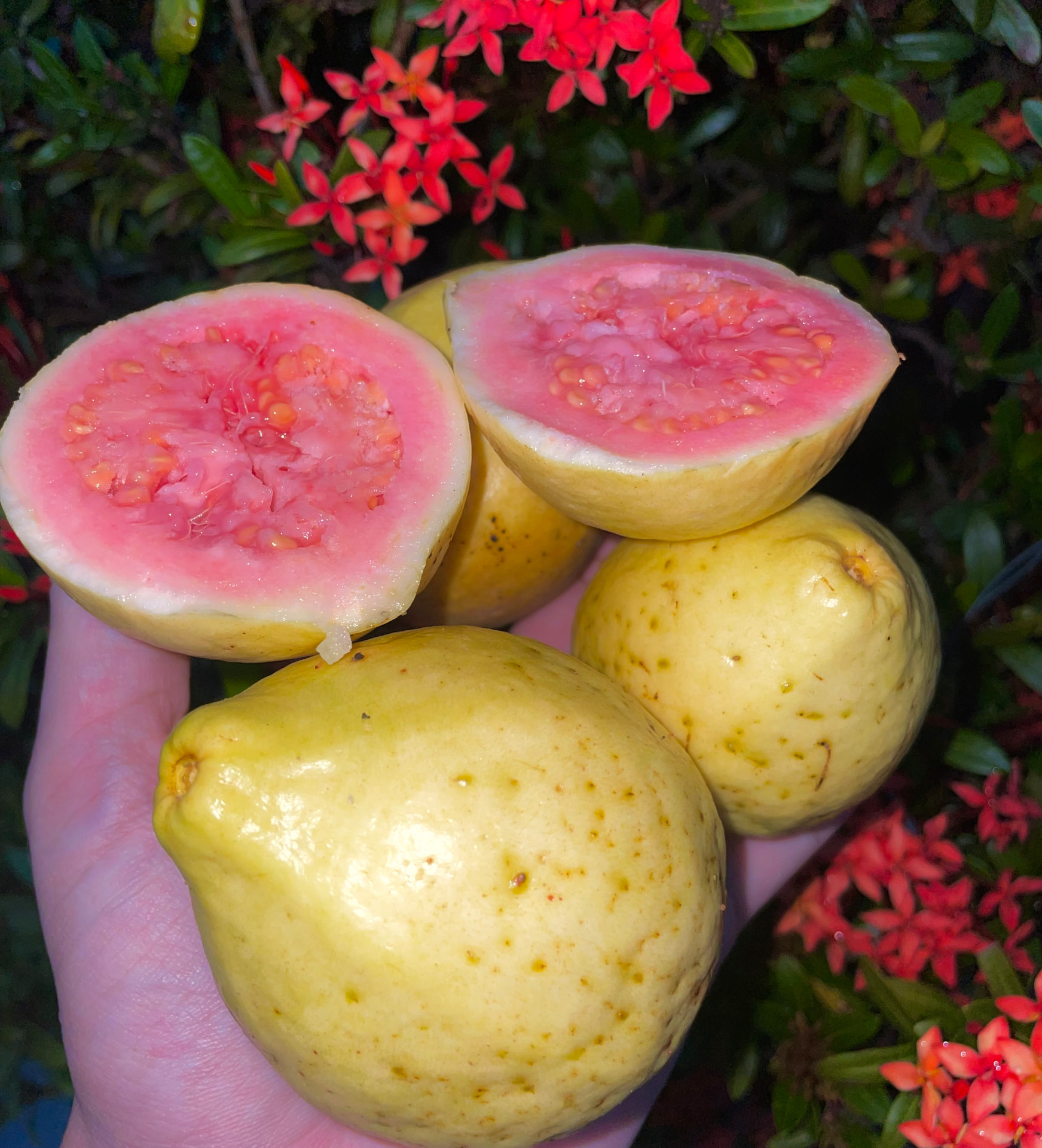
The source fruit turns yellow outside and contains aromatic pink to rosy pulp around numerous firm seeds. Guava's distinctive perfume develops as the fruit ripens, while flavor can range from sweet to pleasantly sweet-tart.
Young foliage and a compact nursery stem are only the first stage. With light, root space and thoughtful pruning, the plant develops woody branching and the open canopy associated with mature common guava.
This is not Psidium cattleianum, the smaller-fruited strawberry guava. The listing is for one living P. guajava plant; fruit and seeds are not included.
What You Receive
- 1 live Pink Guava plant
- Approximately 6–8 inches tall
- The yellow-skin, pink/rosy-flesh Psidium guajava source
- Natural variation in height, foliage and form
- Free shipping
- Access to the shared Pink Guava growing guide
WHAT YOU RECEIVE — One young Psidium guajava live plant approximately 6–8 inches tall. FREE SHIPPING. Fruit and seeds are not included.
A Seed-Grown Living Plant
The supplied photograph shows the nursery plant form. Individual live plants naturally differ in height, leaf count, branching and cosmetic condition.
This plant comes from the same Pink Guava source as the seed listing, but sexual propagation does not create a clone. Eventual fruit characteristics can vary.
No named cultivar, fruiting date, yield, survival or exact fruit color and flavor is guaranteed.
From the box to active growth
Receiving a Young Guava Plant
- 1
Unpack and inspect
Remove shipping materials promptly and check the stem, leaves, container and root-zone moisture.
- 2
Water only if needed
If the mix remains moist, wait. If it is becoming dry, water thoroughly and let all runoff escape.
- 3
Begin in bright shelter
Use bright filtered light with protection from harsh midday sun and drying wind during initial recovery.
- 4
Progress toward sun
Add gentle direct sun gradually. Established guava favors abundant light, but shipped foliage can scorch after a sudden move.
- 5
Keep the root ball stable
Do not repot automatically on arrival. Once settled, step up one container size and preserve the root ball.
- 6
Feed after growth resumes
Wait for stable active growth, then use a balanced fertilizer lightly and according to its label.
Common Guava, Clearly Identified
This is Psidium guajava, the common tropical guava. Its opposite leaves show strong lateral veins, and the mature tree develops smooth, peeling, mottled bark.
Strawberry guava, Psidium cattleianum, is a different species with smaller fruit and different foliage. The similar common name does not make the two plants interchangeable.
Fresh fruit FAQ
Questions about fresh cacao pods
- What exactly will I receive?
- One young live Psidium guajava plant approximately 6–8 inches tall. Fruit and seeds are not included.
- Is this strawberry guava?
- No. This is common guava, Psidium guajava, not strawberry guava, Psidium cattleianum.
- Will its fruit look exactly like the source fruit?
- Not necessarily. The source has yellow skin and pink/rosy flesh, but seed-grown plants can vary and no exact fruit characteristic is guaranteed.
- Can Pink Guava grow in a container?
- Yes. Increase container size gradually, maintain free drainage, provide strong light after acclimation and prune thoughtfully to manage the canopy.
The Pink Guava Source
The source fruit ripens to yellow outside and opens to pink or rosy pulp filled with numerous small seeds. Its strong aroma is a defining feature, and the pulp can range from sweet to pleasantly tart according to genetics and ripeness.
A seed-grown plant recombines genetics rather than copying the source tree. Future skin color, flesh tone, fruit size, flavor, aroma and productivity may differ.
Fresh fruit FAQ
Questions about fresh cacao pods
- What exactly will I receive?
- One young live Psidium guajava plant approximately 6–8 inches tall. Fruit and seeds are not included.
- Is this strawberry guava?
- No. This is common guava, Psidium guajava, not strawberry guava, Psidium cattleianum.
- Will its fruit look exactly like the source fruit?
- Not necessarily. The source has yellow skin and pink/rosy flesh, but seed-grown plants can vary and no exact fruit characteristic is guaranteed.
- Can Pink Guava grow in a container?
- Yes. Increase container size gradually, maintain free drainage, provide strong light after acclimation and prune thoughtfully to manage the canopy.
Water, Soil and Transplanting
Young guava appreciates steady moisture while establishing, but roots still require oxygen. Use fertile, airy soil and a container with open drainage rather than allowing the pot to remain saturated.
Once roots occupy the current container, move up gradually. Oversized pots hold unused wet soil around a small root system; in-ground planting is best delayed until the plant is acclimated and local conditions are reliably warm.
Fresh fruit FAQ
Questions about fresh cacao pods
- What exactly will I receive?
- One young live Psidium guajava plant approximately 6–8 inches tall. Fruit and seeds are not included.
- Is this strawberry guava?
- No. This is common guava, Psidium guajava, not strawberry guava, Psidium cattleianum.
- Will its fruit look exactly like the source fruit?
- Not necessarily. The source has yellow skin and pink/rosy flesh, but seed-grown plants can vary and no exact fruit characteristic is guaranteed.
- Can Pink Guava grow in a container?
- Yes. Increase container size gradually, maintain free drainage, provide strong light after acclimation and prune thoughtfully to manage the canopy.
Containers, Branching and Mature Growth
Guava can remain container-grown with adequate root volume, feeding, water management and regular pruning. In a suitable frost-free site it can develop into a small tree or large shrub.
Let the young plant establish foliage first. Later, selective tip and structural pruning can encourage useful branching, keep the canopy open and maintain a practical size.
Fresh fruit FAQ
Questions about fresh cacao pods
- What exactly will I receive?
- One young live Psidium guajava plant approximately 6–8 inches tall. Fruit and seeds are not included.
- Is this strawberry guava?
- No. This is common guava, Psidium guajava, not strawberry guava, Psidium cattleianum.
- Will its fruit look exactly like the source fruit?
- Not necessarily. The source has yellow skin and pink/rosy flesh, but seed-grown plants can vary and no exact fruit characteristic is guaranteed.
- Can Pink Guava grow in a container?
- Yes. Increase container size gradually, maintain free drainage, provide strong light after acclimation and prune thoughtfully to manage the canopy.
Flowers, Fruit and Avoidable Errors
White flowers with a brush of stamens appear on new growth when the plant is mature enough. Bees and other insects visit the flowers; self- and cross-pollination occur in the species, but fruit set and timing depend on the individual plant and conditions.
- Do not move a shipped plant directly into all-day sun
- Do not keep roots continuously wet
- Do not disturb the root ball unnecessarily on arrival
- Do not feed heavily before recovery
- Do not expect a seed-grown plant to be an exact copy of its source fruit
- Protect young plants from frost and prolonged cold
Fresh fruit FAQ
Questions about fresh cacao pods
- What exactly will I receive?
- One young live Psidium guajava plant approximately 6–8 inches tall. Fruit and seeds are not included.
- Is this strawberry guava?
- No. This is common guava, Psidium guajava, not strawberry guava, Psidium cattleianum.
- Will its fruit look exactly like the source fruit?
- Not necessarily. The source has yellow skin and pink/rosy flesh, but seed-grown plants can vary and no exact fruit characteristic is guaranteed.
- Can Pink Guava grow in a container?
- Yes. Increase container size gradually, maintain free drainage, provide strong light after acclimation and prune thoughtfully to manage the canopy.
Why grow it
Why grow Pink Guava?
Psidium guajava—the common tropical guava
Yellow-skin, pink/rosy-flesh source
Aromatic tropical fruit species
Responsive to thoughtful pruning
Suitable for containers while young
Distinct from strawberry guava
Free shipping
You may also like
Related products