About the speciesAbout the species: yellow-skinned, pink-fleshed guava (Psidium guajava). This listing is for SEEDS — FRUIT NOT INCLUDED.
Tropical Fruit
Pink Guava Seeds
Psidium guajava L.
Guayaba Rosada • Guayaba • Guava • Goiaba
$4.98for 25 Seeds
SEEDS FOR PLANTING
FREE SHIPPING
In stock — packed and shipped within 1–2 business days
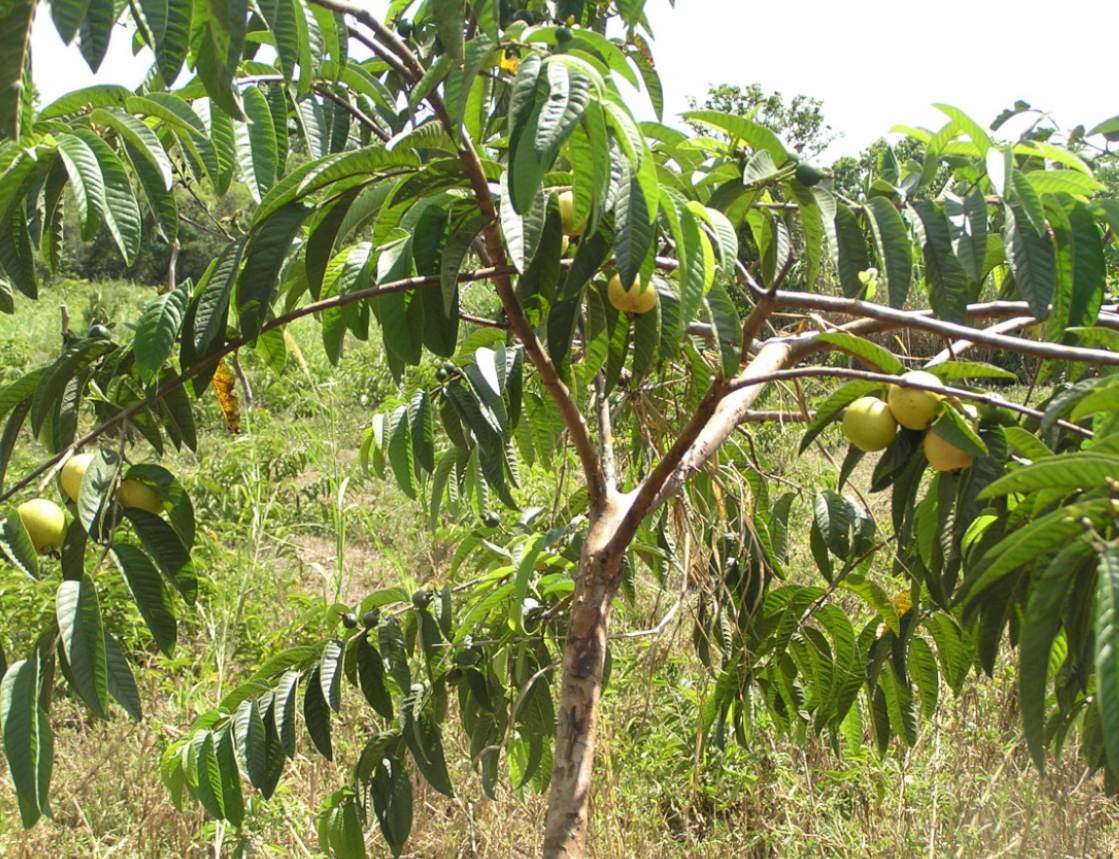
This listing is for Psidium guajava SEEDS FOR PLANTING — not fruit and not a live plant. The guavas in the photographs illustrate the source fruit and the mature species; FRUIT NOT INCLUDED. Select your quantity above; free shipping applies to every option.
Choose your pack size
Home garden
Bulk
Free shipping applies to every pack size.
1
Pink guava (Psidium guajava) seeds for planting — sourced from aromatic yellow-skinned, pink-fleshed guava. Choose 25, 50, 100 or 1,000 seeds with free shipping.
- Free shipping on this listing
- Secure encrypted checkout
- Carefully packed in Puerto Rico
- Detailed growing guide included
- Scientific name
- Psidium guajava L.
- Family
- Myrtaceae
- Source fruit
- Yellow mature skin, pink/rosy interior flesh
- Product type
- Seeds for planting
- Habit
- Small tropical/subtropical fruit tree or large shrub
- Climate
- Tropical / subtropical; young plants are cold sensitive
- Light
- Full sun once established
- Germination
- Variable with seed condition, warmth and moisture
- Sowing depth
- Shallow — roughly 1/4 inch
- Soil
- Adaptable, but best in well-draining soil
- Water
- Consistent moisture while establishing, never waterlogged
Psidium guajava is the common guava — the familiar, highly aromatic tropical fruit grown in gardens, dooryards and orchards across the warm regions of the world. It is known as guayaba or guayabo in Spanish-speaking countries, goiaba in Brazil, goyave in French, bayabas in the Philippines and jambu biji in parts of Southeast Asia.
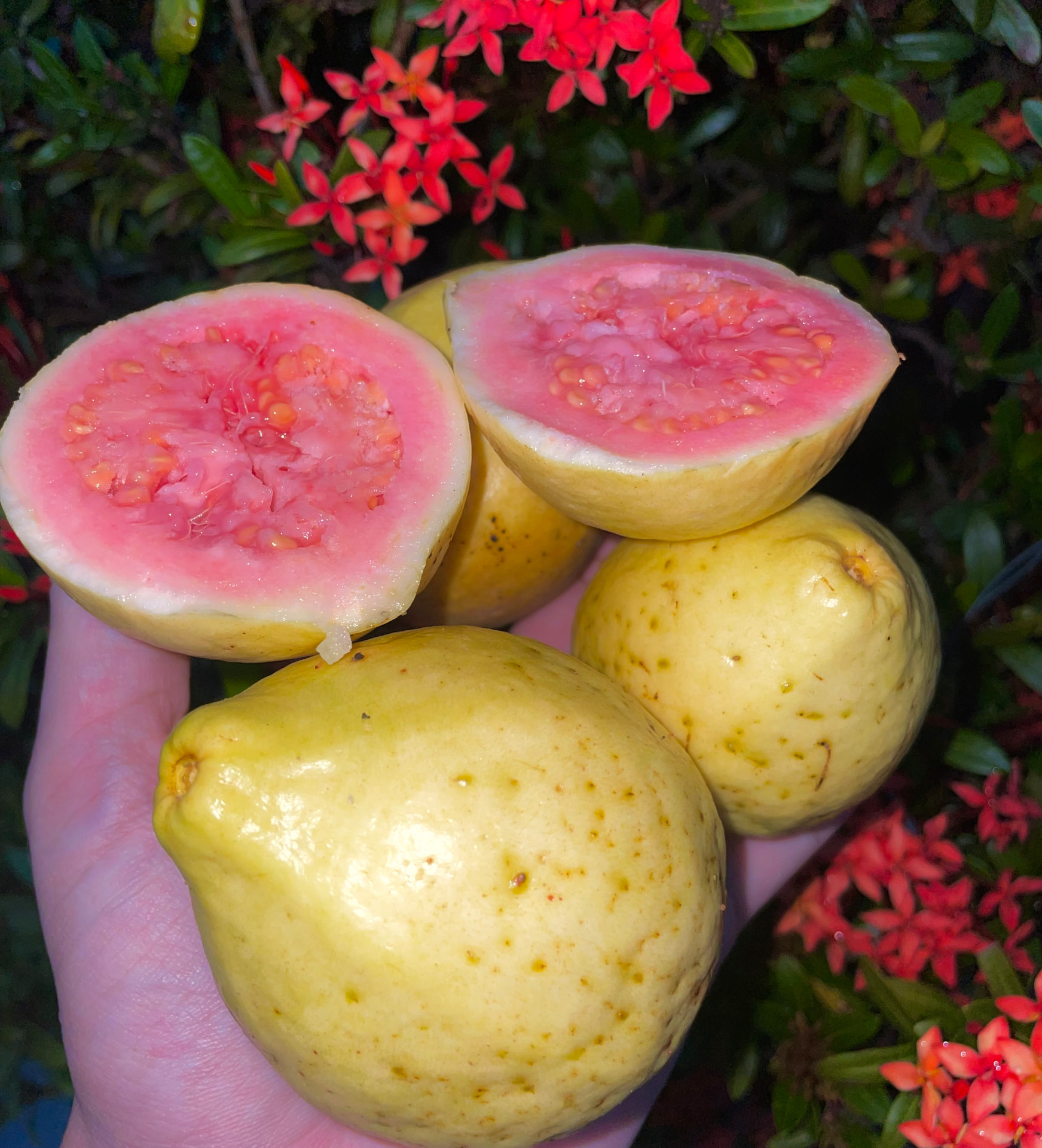
The source fruit behind this listing is the yellow-skin, pink-flesh type: the exterior turns yellow as it matures while the interior pulp is a rosy pink, packed with numerous small seeds. The perfume of a ripening guava is unmistakable, and the flavour runs from sweet to pleasantly sweet-tart depending on genetics and maturity.
This is the common guava species, not Strawberry Guava (Psidium cattleianum) and not another Psidium species. No named cultivar is claimed.
These are seeds, so natural genetic variation applies. Seed-grown guava can differ from the source fruit in size, shape, skin colour, flesh colour and intensity, flavour, sweetness, aroma, seed content and productivity. We sell them commercially as pink guava seeds because of the fruit they came from, not as a guarantee of the fruit they will produce.
Choose the quantity that fits your project — 25, 50, 100 or 1,000 seeds. Every option ships free.
What You Receive
- 25 Pink Guava seeds
- Psidium guajava seeds for planting
- Seeds sourced from yellow-skinned, pink-fleshed guava fruit
- Customer-selected quantity
- Seeds only — no fruit and no live plant
- FREE SHIPPING
- Species-specific Alpha Tropic Growing Guide
This listing is for Psidium guajava SEEDS FOR PLANTING — not fruit and not a live plant. The guavas in the photographs illustrate the source fruit and the mature species; FRUIT NOT INCLUDED. Select your quantity above; free shipping applies to every option.
Seeds only — fruit is not included
THIS LISTING IS FOR SEEDS. NO FRUIT. NO LIVE PLANT. The guava fruit shown in the photographs illustrates the source fruit and the mature species so you can identify what you are growing.
This is the common guava, Psidium guajava L. It is not Strawberry Guava (Psidium cattleianum) and not another Psidium species. No named cultivar is claimed, and these seeds are not grafted, cloned or genetically identical to the parent tree.
Guava grown from seed shows natural genetic variation. Fruit size, shape, skin colour, flesh colour and intensity, flavour, sweetness, aroma, seed content and productivity may differ from the source fruit shown. No germination percentage, fruit colour, fruiting age or yield is guaranteed.
From seed
How to grow pink guava from seed
- 1
Prepare the seed
Rinse away any remaining pulp residue and let the seed surface dry briefly. Pulp left on guava seed encourages mold in the germination tray.
- 2
Soak (optional)
Guava has a firm seed coat, so many growers soak the seed in clean room-temperature water for roughly 12–24 hours before sowing. Discard the water and sow promptly.
- 3
Mix a light medium
Use a fine, airy, free-draining seed-starting medium — a coir or peat base opened up generously with perlite works well.
- 4
Sow shallowly
Guava seed is small. Sow about 1/4 inch deep, or press onto the surface and cover lightly, then firm gently.
- 5
Keep evenly moist
Maintain steady moisture without saturation. Bottom watering or misting avoids displacing the small seed and reduces surface crusting.
- 6
Provide warmth
Warm, tropical-style conditions favour germination. Cool, wet medium slows emergence and increases the risk of seed rot.
- 7
Be patient
Germination time varies with seed condition, temperature, moisture and environment, and emergence is often uneven. Keep trays warm and moist rather than discarding them early. No germination percentage is guaranteed.
- 8
Light the seedlings
Once seedlings emerge, give bright light so they grow stocky. Very young seedlings appreciate protection from harsh all-day direct sun.
- 9
Pot on
Move seedlings into larger containers once they have several true leaves and a sound root system, keeping the root ball intact.
- 10
Grow on in sun
Established young trees perform best with abundant sun, free-draining soil and consistent — not waterlogged — moisture.
CORRECT ✓
Clean seed sown about 1/4 inch deep in a fine, airy, well-draining medium kept warm and evenly moist in bright light.
AVOID ✕
Seed buried too deeply, left in cold conditions, dried out completely, or sitting in saturated, waterlogged medium.
What you receive
- Pink guava seeds for planting in the quantity you select — 25, 50, 100 or 1,000 seeds.
- Psidium guajava L. seeds sourced from yellow-skinned, pink-fleshed guava fruit.
- Seeds only — no fruit and no live plant.
- Free shipping on every quantity.
- Access to the species-specific Alpha Tropic growing guide.
Yellow outside — pink inside
The source guava develops a yellow exterior as it matures, and opens to attractive pink/rosy interior flesh surrounding numerous small seeds.
Guava is highly aromatic — the perfume of ripening fruit carries well beyond the tree. Flavour ranges from sweet to pleasantly sweet-tart depending on genetics and maturity, and the fragrant pulp is excellent for fresh eating.
Because these are seeds, offspring may vary. Fruit size, shape, skin colour, flesh colour and intensity, flavour, sweetness, aroma, seed content and productivity can all differ from the fruit photographed.
How guava is used
Ripe guava is enjoyed fresh, skin and all, and is equally at home in the kitchen. It is a staple of Caribbean and Latin American food traditions, where guava paste, jelly and nectar are everyday pantry items.
- Fresh eating
- Juices and nectars
- Smoothies and batidas
- Jams, jellies and guava paste
- Preserves and compotes
- Desserts and pastries
- Sauces and glazes
Nutrition & traditional uses
Guava is widely recognised for its nutritional value. The fruit is commonly noted for vitamin C content and dietary fibre, and pink- and red-fleshed types owe their colour to naturally occurring carotenoid pigments. Guava also contains other naturally occurring plant compounds that have attracted scientific interest.
Psidium guajava additionally has a long ethnobotanical history: leaves, bark and fruit have been used in different cultures' traditional plant practices, and the species has been the subject of scientific research. Traditional use and ongoing research are not the same thing as clinically proven medical treatment, and no treatment or health claims are made for this product.
Ethnobotanical and research information is provided for educational purposes only and is not medical advice. This product is sold as seeds for planting.
Growing conditions
- Temperature: warm tropical and subtropical conditions are preferred for both germination and growth.
- Light: bright light for seedlings with protection from harsh all-day sun; full sun for established trees.
- Soil: guava is notably adaptable, but performs best in suitable well-draining soil of reasonable fertility.
- Water: keep consistently moist while establishing, then water according to the soil rather than a fixed schedule; avoid chronically waterlogged roots.
- Fertilization: feed lightly and regularly during active growth with a balanced fertilizer rather than heavily and rarely.
- Pruning: prune for structure while young and to manage size and openness later; guava responds well to pruning.
Container growing and the mature tree
Young guava trees container-grow well, which makes them practical in marginal climates where they can be moved under protection. Long-term container culture needs adequate root volume, free drainage, consistent feeding and regular pruning to keep the plant in proportion to its pot.
In the ground, Psidium guajava develops into a small tropical/subtropical fruit tree or large shrub with characteristic smooth, mottled bark. Ultimate size depends on genetics, climate, soil and pruning.
Flowering, pollination and fruiting
Guava produces white flowers with prominent brushes of stamens, typical of the Myrtaceae family. Flowers are visited by bees and other insects; both self-pollination and insect cross-pollination are reported in the species, and cross-pollination is often associated with better fruit set.
Seed-grown trees must reach sufficient maturity before flowering and fruiting, and the time this takes varies with genetics, climate, soil and cultural conditions. No fruiting age, fruit colour or yield is guaranteed.
Cold sensitivity
Young tropical guava plants are sensitive to freezing and prolonged cold. Protect seedlings and young trees from frost and cold wind, and in cooler climates grow in containers that can be moved under cover before cold weather arrives.
Why grow it
Why grow pink guava?
Psidium guajava L. — the common tropical guava
Source fruit with yellow mature skin and pink/rosy flesh
Highly aromatic, fragrant pulp
Sweet to pleasantly sweet-tart tropical flavour
A staple fruit across the Caribbean and Latin America
Adaptable, fast-growing small fruit tree
Container-friendly while young
Choose 25 to 1,000 seeds — free shipping on every quantity
You may also like
Related products
15 Fresh Inga spectabilis Seeds – Guamá / Guaba Machete / Ice Cream Bean
Inga spectabilis (Vahl) Willd.
$22.89