Tropical seeds, live plants & fresh fruit · Carefully packed in Puerto Rico
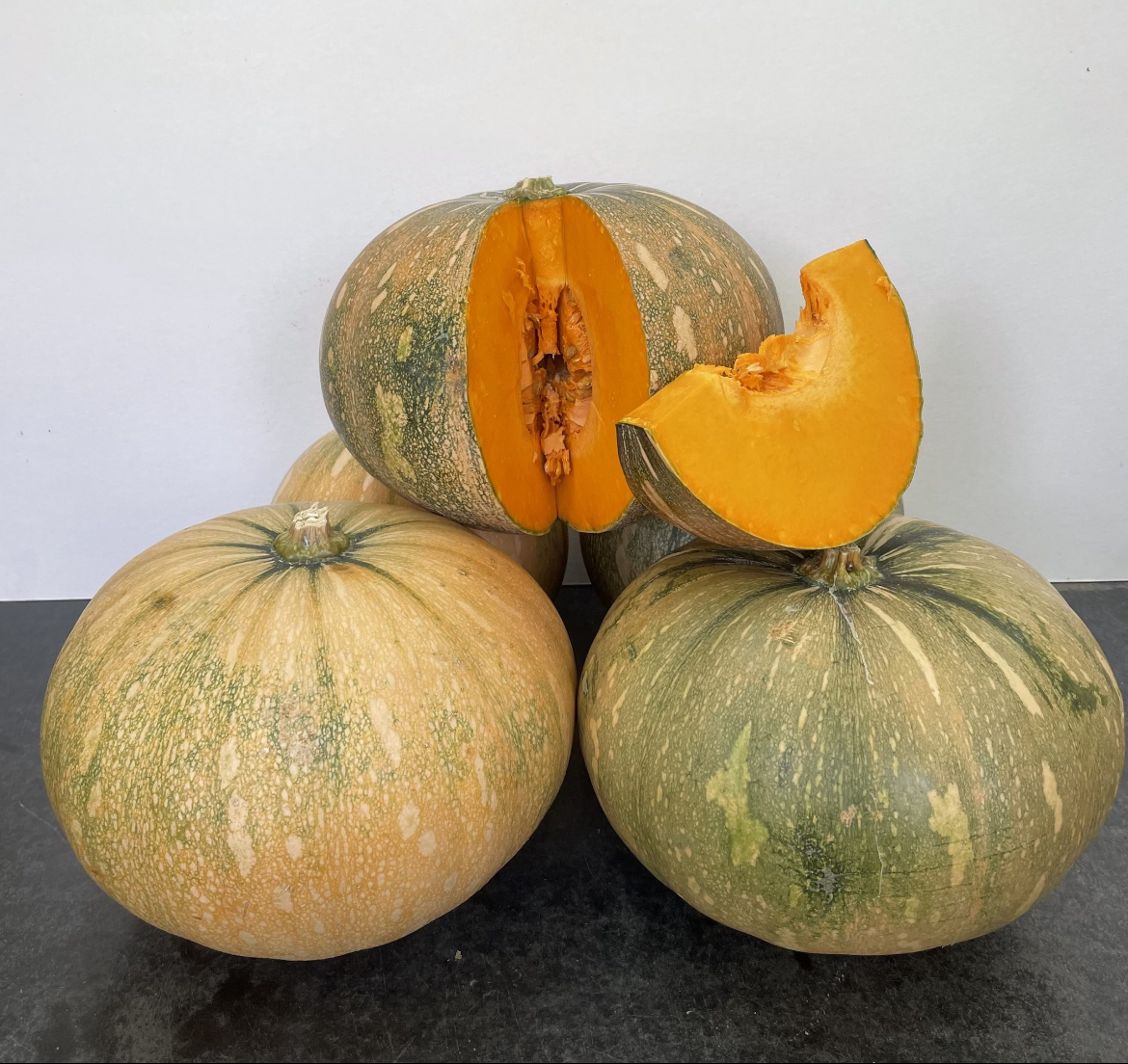
Green-and-tan mottled Puerto Rican calabazas with one cut open to show thick deep-orange flesh

About the speciesABOUT THE SPECIES — Puerto Rican calabaza with its thick orange flesh. Fruit not included; this listing contains seeds. Fruit shape, size and skin vary.

Squash & Gourds

Puerto Rican Calabaza Seeds

Cucurbita moschata Duchesne

Cucurbita moschata • Puerto Rican Pumpkin • Caribbean Squash

$4.89for 15 Seeds

SEEDS FOR CULTIVATION

FREE SHIPPING

In stock — packed and shipped within 1–2 business days

This listing contains Cucurbita moschata SEEDS FOR CULTIVATION—not fruit. Select your quantity above; FREE SHIPPING applies to every option.

Choose your pack size

Home garden

Grower pack

Free shipping applies to every pack size.

1

Puerto Rican/Caribbean Cucurbita moschata calabaza seeds for the vigorous vine behind sancocho, habichuelas and sopa de calabaza. 15–100 seeds, free shipping.

  • Free shipping on this listing
  • Secure encrypted checkout
  • Carefully packed in Puerto Rico
  • Detailed growing guide included
Open the Cucurbita moschata growing guide
Scientific name
Cucurbita moschata Duchesne
Family
Cucurbitaceae
Product type
Seeds for cultivation
Habit
Vigorous trailing annual vine
Light
Full sun
Sowing depth
About 1 inch
Germination
Usually 5–10 days in warm soil
Space
Large; vines can run 10–20 feet

In Puerto Rico, calabaza isn't a seasonal decoration—it's an everyday ingredient. Cubes of it melt into habichuelas guisadas to thicken and sweeten the beans, simmer in sancocho and asopao, become sopa de calabaza, and are fried into sweet, spiced arañitas and buñuelos.

Botanically it's Cucurbita moschata, the heat- and humidity-tolerant squash species that also includes butternut. Its dense, deep-orange flesh is sweet and nutty, cooks down smooth and holds its color.

The plant is a vigorous trailing vine with coiling tendrils and broad, soft-hairy leaves often marked with silver along the veins. It bears separate male and female flowers; bees carry pollen between them, and each pollinated female flower swells into a fruit.

This is Puerto Rican/Caribbean seed stock, not a uniform named cultivar. Expect natural variation in fruit shape, size and skin pattern—green, tan and speckled fruit can all appear.

What You Receive

  • 15 Puerto Rican calabaza (Cucurbita moschata) seeds
  • Seeds for cultivation
  • No named cultivar claimed; fruit characteristics vary
  • Free shipping
  • Access to the dedicated Calabaza growing guide

This listing contains Cucurbita moschata SEEDS FOR CULTIVATION—not fruit. Select your quantity above; FREE SHIPPING applies to every option.

Seeds for Cultivation — Fruit Not Included

Photographs show calabaza fruit and a young vine for species reference. You receive seeds only.

This is not a uniform named cultivar; fruit shape, size, skin and yield are not guaranteed.

Warm soil, fast start

Starting Calabaza from Seed

  1. 1

    Wait for warmth

    Sow when soil is warm—roughly 70°F (21°C) or higher. Cold, wet soil rots squash seed.

  2. 2

    Sow about 1 inch deep

    Plant 2–3 seeds per hill in rich, well-drained soil, flat side down.

  3. 3

    Water, then hold back

    Water in well and keep evenly moist—not soggy—until sprouts appear in about a week.

  4. 4

    Thin to the strongest

    Keep one or two vigorous seedlings per hill.

  5. 5

    Direct sow or transplant

    Direct sowing is ideal; if starting in pots, transplant young with the root ball intact.

  6. 6

    Give the vine room

    Mulch around plants and leave plenty of space—or a strong fence—for running vines.

CORRECT ✓

Warm soil, rich compost-amended beds, full sun, deep watering at the base and plenty of room to run.

AVOID ✕

Cold wet soil, shade, crowding, overhead watering late in the day, or disturbing roots at transplant.

Read the complete growing guide

Calabaza in the Puerto Rican Kitchen

Calabaza is added to habichuelas guisadas, where it softens and thickens the sauce; to sancocho, asopao and other hearty soups; mashed or puréed as sopa de calabaza; and sweetened into fritters and flan.

Its flesh stores well once cured, so a single vine can supply the kitchen for weeks.

Fresh fruit FAQ

Questions about fresh cacao pods

Is this a named variety?
No. It's Puerto Rican/Caribbean Cucurbita moschata seed stock. Fruit shape, size and skin pattern vary naturally.
Why do I have flowers but no fruit?
Early flowers are usually male. Fruit forms only on female flowers—those with a tiny squash at the base—once they are pollinated by bees or by hand.
How much space does it need?
A lot. Vines commonly run 10–20 feet. Give ground room, or train onto a strong fence and support heavy fruit.
When is calabaza ready to harvest?
When the skin hardens and resists a fingernail, the color deepens and the stem turns dry and corky.

Vine, Flowers and Pollination

Male flowers usually appear first on long stems; female flowers follow, each with a small ovary like a miniature squash behind the petals. Bees move pollen in the morning while flowers are open.

If fruit keeps yellowing and dropping, hand-pollinate: pick an open male flower, remove the petals and brush its pollen onto the center of an open female flower early in the day.

Fresh fruit FAQ

Questions about fresh cacao pods

Is this a named variety?
No. It's Puerto Rican/Caribbean Cucurbita moschata seed stock. Fruit shape, size and skin pattern vary naturally.
Why do I have flowers but no fruit?
Early flowers are usually male. Fruit forms only on female flowers—those with a tiny squash at the base—once they are pollinated by bees or by hand.
How much space does it need?
A lot. Vines commonly run 10–20 feet. Give ground room, or train onto a strong fence and support heavy fruit.
When is calabaza ready to harvest?
When the skin hardens and resists a fingernail, the color deepens and the stem turns dry and corky.

Growing for Big Harvests

Full sun, warmth and fertile soil drive vigorous growth. Water deeply at the base, especially during flowering and fruit fill, and side-dress with compost as vines run.

On a fence or trellis, sling developing fruit in fabric; on the ground, set fruit on dry mulch or a board to prevent rot.

Fresh fruit FAQ

Questions about fresh cacao pods

Is this a named variety?
No. It's Puerto Rican/Caribbean Cucurbita moschata seed stock. Fruit shape, size and skin pattern vary naturally.
Why do I have flowers but no fruit?
Early flowers are usually male. Fruit forms only on female flowers—those with a tiny squash at the base—once they are pollinated by bees or by hand.
How much space does it need?
A lot. Vines commonly run 10–20 feet. Give ground room, or train onto a strong fence and support heavy fruit.
When is calabaza ready to harvest?
When the skin hardens and resists a fingernail, the color deepens and the stem turns dry and corky.

Harvest and Maturity

Leave fruit on the vine until the rind is hard, the color deepens and the stem dries. Cut with a piece of stem attached and cure in a warm, dry spot for about a week to extend storage.

Fresh fruit FAQ

Questions about fresh cacao pods

Is this a named variety?
No. It's Puerto Rican/Caribbean Cucurbita moschata seed stock. Fruit shape, size and skin pattern vary naturally.
Why do I have flowers but no fruit?
Early flowers are usually male. Fruit forms only on female flowers—those with a tiny squash at the base—once they are pollinated by bees or by hand.
How much space does it need?
A lot. Vines commonly run 10–20 feet. Give ground room, or train onto a strong fence and support heavy fruit.
When is calabaza ready to harvest?
When the skin hardens and resists a fingernail, the color deepens and the stem turns dry and corky.

Common Cultivation Problems

  • Seed rot in cold, soggy soil
  • Only male flowers early—patience; females follow
  • Poor fruit set from low pollinator activity
  • Powdery mildew in humid, crowded plantings
  • Vine borers and cucumber beetles on young plants
  • Harvesting before the rind hardens

Fresh fruit FAQ

Questions about fresh cacao pods

Is this a named variety?
No. It's Puerto Rican/Caribbean Cucurbita moschata seed stock. Fruit shape, size and skin pattern vary naturally.
Why do I have flowers but no fruit?
Early flowers are usually male. Fruit forms only on female flowers—those with a tiny squash at the base—once they are pollinated by bees or by hand.
How much space does it need?
A lot. Vines commonly run 10–20 feet. Give ground room, or train onto a strong fence and support heavy fruit.
When is calabaza ready to harvest?
When the skin hardens and resists a fingernail, the color deepens and the stem turns dry and corky.

Why grow it

Why grow Puerto Rican calabaza?

  • Essential Puerto Rican cooking squash

  • Sweet, dense orange flesh

  • Heat- and humidity-tolerant species

  • Stores for weeks after curing

  • Honest seed-stock identification

  • Free shipping on every quantity

You may also like

Related products