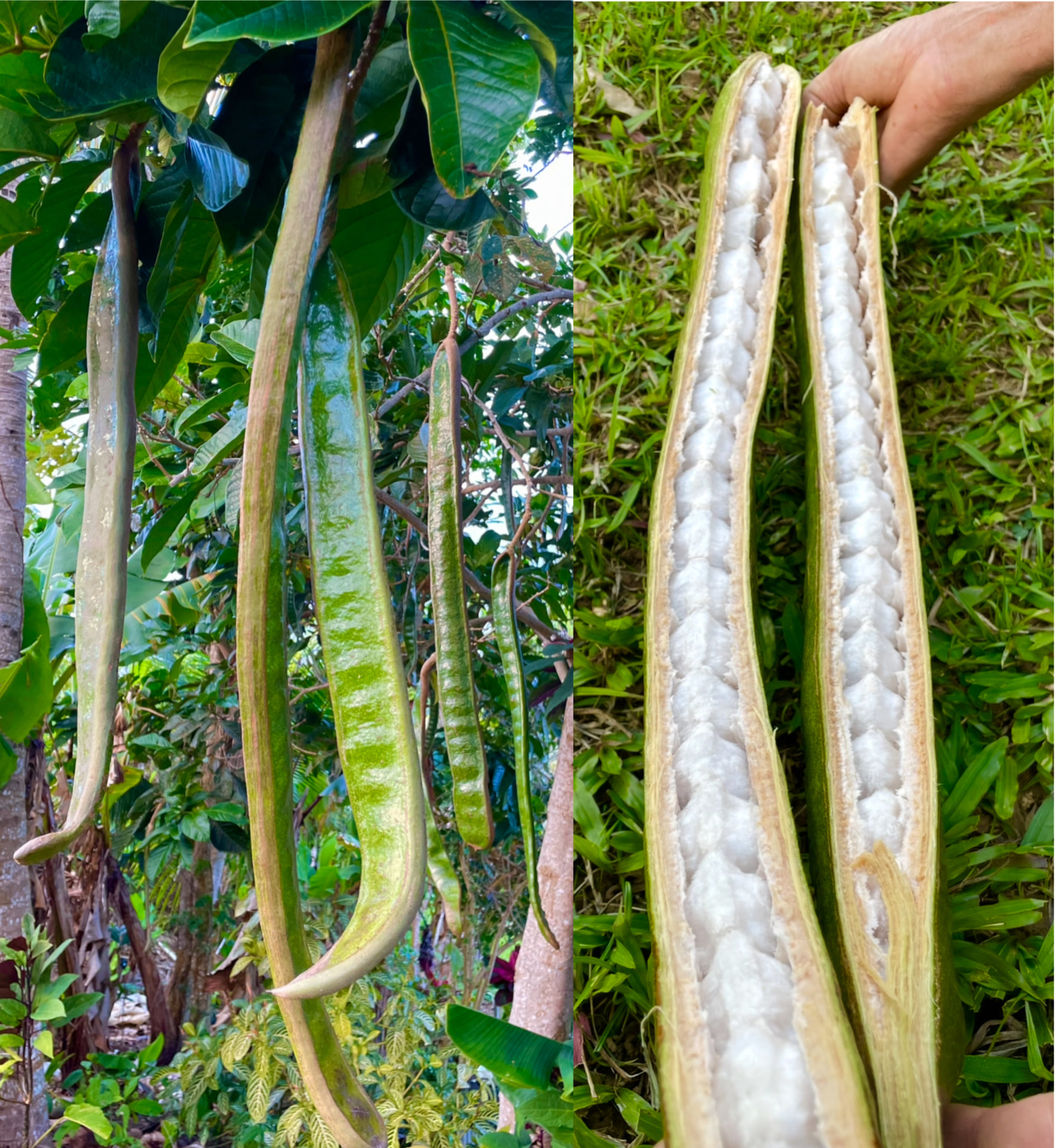
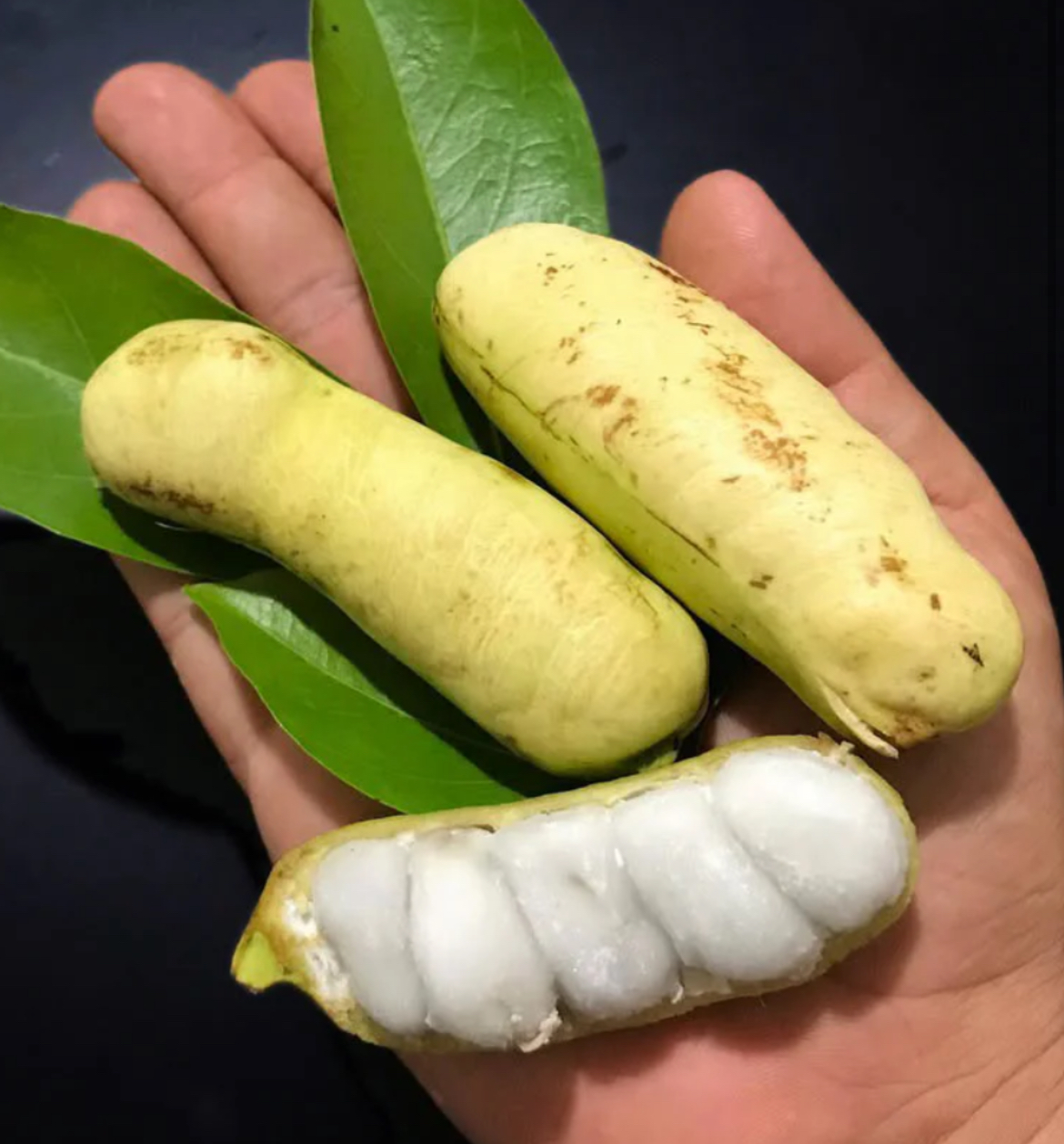
About the speciesABOUT THE SPECIES — mature pods shown for reference; fruit not included. Inside the pod, seeds are surrounded by a white fleshy edible pulp. THIS LISTING IS FOR A LIVE PLANT.
Tropical Fruit Plants
Puerto Rico Guamá Live Plant
Inga laurina (Sw.) Willd.
Inga laurina • Inga fagifolia (hist.) • Guamá
$25.89for 1 live plant, approx. 6–8 inches tall
LIVE PLANT
FREE SHIPPING
In stock — live plants are carefully prepared and dispatched within 1–2 business days
YOU RECEIVE: 1 LIVE GUAMÁ PLANT — approx. 6–8 inches tall. Scientific name: Inga laurina. Free shipping. This listing is for a young live plant; fruit and seeds are NOT included.
1
One live Guamá (Inga laurina, historically known as Inga fagifolia) plant, approximately 6–8 inches tall. A Puerto Rican Fabaceae tree long valued in traditional coffee-growing regions. Packed in Puerto Rico. Free shipping.
- Free shipping on this listing
- Secure encrypted checkout
- Carefully packed in Puerto Rico
- Detailed growing guide included
- Scientific name
- Inga laurina (Sw.) Willd.
- Historical synonym
- Inga fagifolia (L.) Willd. ex Benth.
- Family
- Fabaceae (legume family)
- Product type
- Live plant — not seeds
- Plant size
- Approximately 6–8 inches tall
- Quantity
- 1 live plant
- Common name
- Guamá (Puerto Rico)
- Climate
- Tropical / warm subtropical
- Light
- Bright protected light after shipping; acclimate gradually to stronger sun as the plant stabilizes
- Water
- Even moisture with good drainage; never continuously waterlogged
- Soil
- Organic-rich but well aerated and free draining
- Growth habit
- A juvenile tree — develops into a tropical tree with maturity
- Agroforestry role
- Traditionally used in Puerto Rico as coffee shade (USDA-NRCS)
- Cold sensitivity
- Protect from cold; container culture while manageable in cool climates
- Difficulty
- Moderate — needs warmth, light and good drainage
Guamá is more than another tropical fruit tree in Puerto Rico. Inga laurina has long been part of the island's agricultural landscape, particularly in traditional coffee-growing regions where Inga trees have been valued as shade for coffee plantings.
If you research this tree you will encounter two scientific names. Older Puerto Rican botanical, forestry and agricultural literature frequently records it as Inga fagifolia (L.) Willd. ex Benth.; the currently accepted name is Inga laurina (Sw.) Willd. Both names refer to the same species — not to two different trees being sold.
Guamá produces clusters of white flowers in which numerous conspicuous white stamens give the inflorescence a soft brush or pom-pom appearance. The tree later develops legume pods containing seeds surrounded by a fleshy white edible material. Fruit characteristics vary naturally, and no fruit production is guaranteed from this young plant.
This listing is for ONE live plant approximately 6–8 inches tall. Mature-pod photographs illustrate the species for identification only; fruit and seeds are not included in the shipment.
What You Receive
- ONE live Inga laurina (guamá) plant
- Approximately 6–8 inches tall
- Young tree of the species historically listed as Inga fagifolia
- Carefully prepared for shipping
- Free shipping
- Species-specific growing guide
YOU RECEIVE: 1 LIVE GUAMÁ PLANT — approx. 6–8 inches tall. Scientific name: Inga laurina. Free shipping. This listing is for a young live plant; fruit and seeds are NOT included.
Live Plant Notice — Fruit and Seeds Not Included
This listing is for ONE LIVE PLANT. Fruit and seeds shown in species photographs are NOT included.
You will receive a young tree approximately 6–8 inches tall. Natural plants vary in height, leaf number, branching, coloration and form; you will not necessarily receive the exact photographed specimen.
This is Inga laurina (Sw.) Willd. — the species that older literature often calls Inga fagifolia. It is not Inga vera, Inga spectabilis or Inga edulis, which are different species we also carry or have carried.
Shipping temporarily changes the plant's light, humidity, airflow and temperature. Minor leaf droop, a damaged leaflet or cosmetic shipping stress can occur and does not necessarily mean the plant is unhealthy.
No claim is made about exact pod size, pulp quantity, sweetness, fruiting age, yield or future fruit production.
Arrival & acclimation
Arrival & Acclimation — First 7 Days After Delivery
- 1
Unpack promptly
Open the box soon after delivery so the plant can leave the dark, enclosed shipping environment.
- 2
Inspect plant and root zone
Check the leaves, stem and the growing medium. Look at moisture before doing anything else.
- 3
Water by actual moisture, not by habit
Do not automatically saturate the plant. If the medium is still adequately moist, wait; if it is drying, water thoroughly and let excess drain away.
- 4
Provide bright, protected light
Start the plant in bright indirect or filtered light, sheltered from strong wind and cold drafts.
- 5
Shield from harsh midday sun
A plant fresh from transit can scorch in intense all-day sun. Protect it during the harshest hours at first.
- 6
Increase sun gradually
As the plant stabilizes over roughly 1–2 weeks, step up exposure beginning with gentle morning sun.
- 7
Keep drainage and even moisture
Maintain consistent moisture without leaving the roots permanently waterlogged.
- 8
Hold off on heavy fertilization
Avoid feeding right after arrival. Wait until the plant has settled and shows new growth.
CORRECT ✓
Pot up gradually into a container with drainage holes using an organic-rich but well-aerated mix, keeping the root ball intact and the stem at its original depth.
AVOID ✕
Do not place the small root system directly into a very large pot of heavy, soggy soil, and do not bury the stem deeper than it grew in the nursery cup.
Guamá and Puerto Rico's Coffee Landscape
USDA-NRCS identifies guamá (Inga laurina) among the native tree species traditionally used by coffee producers in Puerto Rico for shade. In the island's traditional coffee-growing regions, Inga trees have been planted above coffee for generations.
Inga trees can be useful in agroforestry for several reasons: their canopy moderates light and temperature for the crop below, their leaf litter contributes organic matter, and as members of the legume family they can participate in nitrogen-fixing relationships with root-zone microbes. They also add habitat complexity and integrate well with perennial tropical crops.
A note of honesty: planting one tree does not automatically fertilize everything around it or eliminate fertilizer requirements. Biological nitrogen fixation depends on appropriate root-microbe relationships and growing conditions, and any benefit to neighboring plants develops gradually within a managed system.
Look Closely at the Leaves
Guamá typically develops compound leaves with usually two pairs of smooth (glabrous), elliptic leaflets — the paired, glossy leaflets visible on the young plant in our photographs.
Between the leaflet pairs sits a small gland. These extrafloral glands can secrete nectar and attract ants — a small piece of botanical ecology that makes the tree interesting to observe up close. It is a natural trait of the species, not a pest-control guarantee.
Flowers and Pods
The white flowers of Inga carry numerous conspicuous white stamens, giving the flower clusters a soft brush or pom-pom appearance — a characteristic look across the genus.
The tree later develops legume pods containing seeds surrounded by a fleshy white edible material. Fruit and seed characteristics naturally vary from tree to tree. This listing is for the juvenile plant only; no exact pod size, pulp quantity, sweetness or fruiting age is promised.
Guamá, Guaba and Ice Cream Bean Are Not All the Same Tree
Common names in this genus overlap considerably across the Caribbean and Latin America, which is why scientific names matter. In Puerto Rico, guamá commonly refers to Inga laurina. Guaba is commonly associated with Inga vera. Inga spectabilis and Inga edulis — the latter widely called ice cream bean — are additional distinct species in the same genus.
None of these species is universally superior; they are simply different trees with different traits. If a seller or an old book lists a Puerto Rican guamá as Inga fagifolia, that is the historical name for this same Inga laurina.
Why the Name Inga fagifolia Still Appears
Accepted name: Inga laurina (Sw.) Willd. Historical synonym: Inga fagifolia (L.) Willd. ex Benth.
Older books, forestry references, agricultural literature and sellers may therefore use Inga fagifolia for this same species. Knowing both names is genuinely useful when researching the plant or comparing botanical sources — the two names do not indicate two different trees.
Long-Term Culture
- Best suited to tropical and warm subtropical outdoor culture with consistent warmth.
- Acclimate gradually to stronger sun; established trees handle abundant light in warm climates.
- Maintain even moisture with good drainage — never permanently waterlogged roots.
- Use soil with useful organic matter but good aeration.
- Container culture works well while the plant is young; repot gradually as roots fill the pot.
- Transplant into the ground in frost-free climates once established, with room for a maturing tree.
- Light formative pruning helps manage form; remove damaged growth as needed.
- Feed conservatively only after the plant is established and actively growing.
A Juvenile Tree, Not a Permanent Houseplant
A 6–8 inch nursery plant is a juvenile tree. It should not be treated permanently like a small houseplant — with time it needs more root space, more light and eventually the room a tree requires.
For customers in cold climates: guamá requires protection from cold and can be maintained in a container while manageable, moved under cover when temperatures fall. We do not promise successful permanent indoor fruit production.
Why grow it
Why grow Guamá?
A tree woven into Puerto Rico's traditional coffee-growing landscape
Recognized by USDA-NRCS among native species used as coffee shade on the island
Fabaceae legume with a genuine agroforestry role
Extrafloral leaf glands that secrete nectar and attract ants
White brush-like flowers and pods with edible fleshy pulp
Sold under both names: Inga laurina and historical Inga fagifolia
You may also like
Related products